
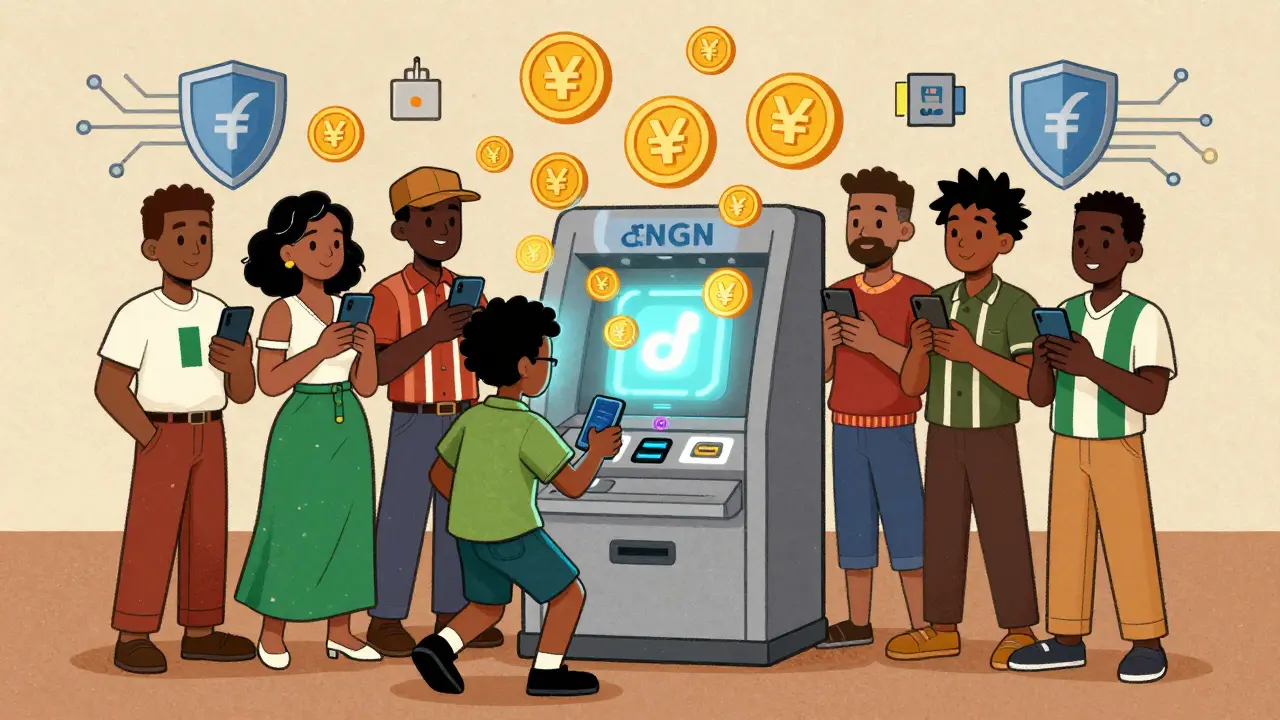
Most people think of crypto exchanges as places to trade Bitcoin for Ethereum or swap USDT for SOL. But what if you wanted to trade your local currency-say, Nigerian naira or Argentine peso-for a digital version that stays stable, without relying on a bank or a centralized company? That’s where Mento comes in. It’s not a traditional exchange like Binance or Coinbase. It doesn’t let you trade thousands of tokens. Instead, it’s a behind-the-scenes infrastructure built on the Celo blockchain that lets you create and swap stablecoins tied to real-world local currencies. If you’re in a country with a shaky economy and you’re tired of your savings evaporating overnight, Mento might be one of the few tools designed specifically for you.
What Exactly Is Mento?
Mento is a decentralized protocol, not a website you sign up for. Think of it like a smart contract-powered ATM that only works with digital versions of local currencies. Instead of issuing just USD-pegged stablecoins like USDT or USDC, Mento lets communities mint stablecoins tied to their own money-like cNGN for Nigerian naira, cARS for Argentine peso, or even cBRL for Brazilian real. These aren’t just tokens with a name. They’re backed by real assets held in reserve, and every dollar or peso backing them is visible on the blockchain.
The protocol runs entirely on the Celo blockchain, which is optimized for mobile use and low fees. That’s important because most people in emerging markets access the internet through smartphones, not desktops. Mento’s design assumes you’re using a phone, not a high-end laptop. It’s built for people who need financial stability, not speculation.
How Does Mento Keep Stablecoins Stable?
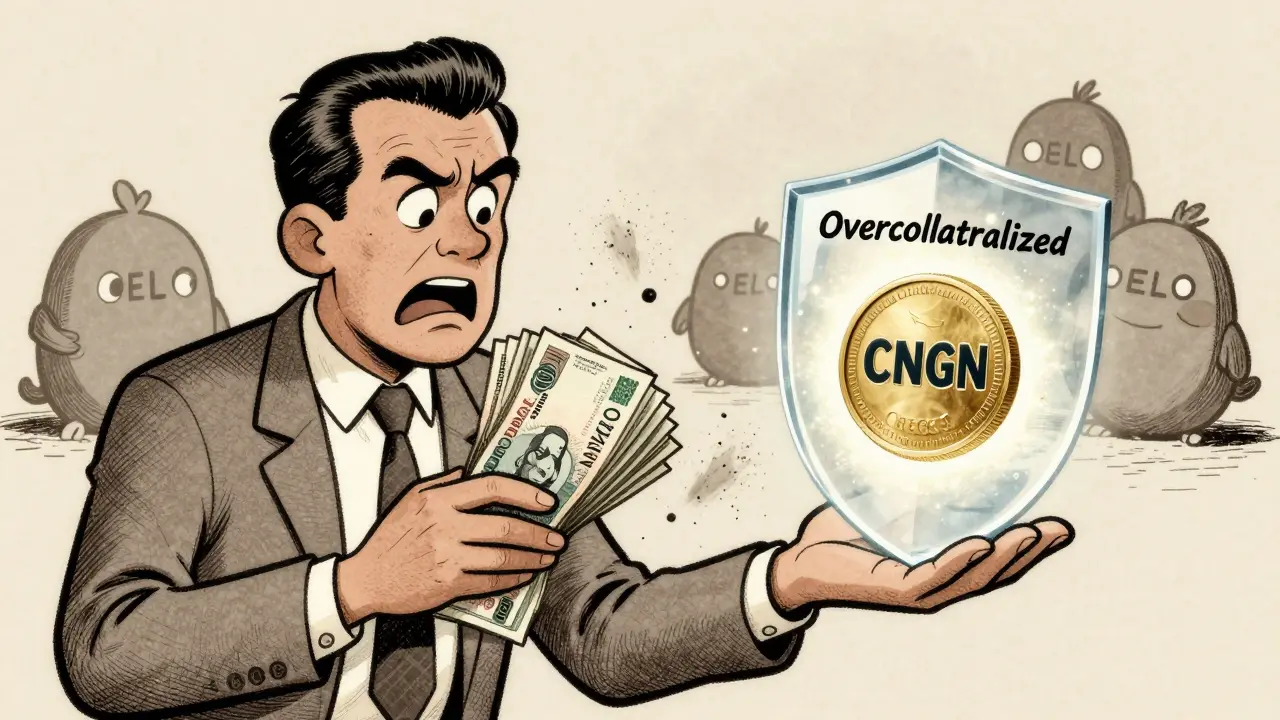
Most stablecoins use centralized reserves-Tether holds cash and bonds in banks. Mento does something completely different. It uses an overcollateralized, decentralized model. When you want to mint a cNGN (Nigerian naira stablecoin), you don’t just send in naira. You lock up more valuable assets-usually Celo’s native CELO token or other liquid stablecoins like cUSD-as collateral. The system requires you to put in, say, $1.20 worth of CELO to create $1 worth of cNGN. That buffer protects against price swings.
Here’s the clever part: Mento doesn’t rely on one oracle to tell it the exchange rate. It uses a system called SortedOracles, which pulls data from multiple sources and averages them. If one feed gets hacked or manipulated, the others still hold the line. If the market starts to panic, an automated circuit breaker kicks in. It can freeze trading, pause minting, or shift reserves into safer assets like cUSD-all without human intervention. This isn’t just theory. It’s been tested in simulated market crashes using fork tests on GitHub, where the system consistently held stability.
How Is Mento Different From Other Stablecoins?
Let’s compare Mento to the big names:
- USDT/USDC: Centralized, USD-only, controlled by Tether and Centre Consortium. No transparency on reserve composition. No local currency options.
- DAI: Decentralized, but still USD-pegged. Uses a complex web of collateral (ETH, BTC, etc.) and is governed by MakerDAO. Doesn’t support local currencies.
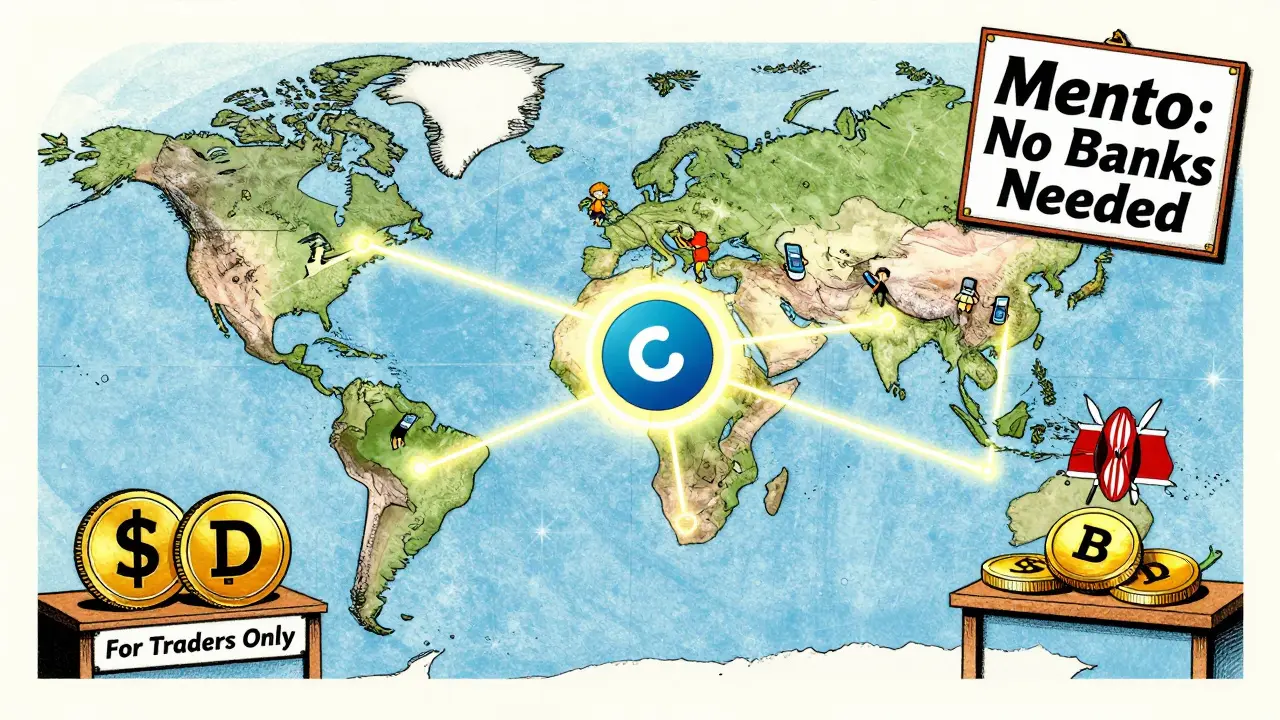
- Mento: Decentralized, community-governed, supports dozens of local currencies. All reserves are on-chain and verifiable. No central authority can freeze your funds.
Mento’s biggest edge? It doesn’t try to be everything. It doesn’t offer spot trading, futures, or NFT marketplaces. It’s laser-focused on one thing: making local currencies usable on-chain. That’s why it’s not competing with Binance. It’s filling a gap Binance never even noticed.
Security: Is Mento Safe?
Security is Mento’s strongest selling point. The team operates like paranoid engineers. They don’t just run one audit-they run them all. Multiple firms, including Hats.finance, Sherlock, and 0xmacro, have reviewed the code. They’ve used formal verification (mathematical proof that the code does what it’s supposed to), fuzz testing (throwing random garbage at the system to see if it breaks), and automated fork tests that simulate real-world attacks.
They also use Multi-Party Computation (MPC) wallets to secure reserves, and integrate with Fireblocks for institutional-grade custody. The circuit breaker system is its safety net. If someone tries to dump 10 million cARS all at once, the system detects the anomaly and shuts it down before damage spreads.
But no system is perfect. The biggest risk? Oracle manipulation. If enough price feeds are compromised, the system could misprice a stablecoin. That’s why Mento uses multiple feeds and requires consensus. Still, as Vault12’s 2025 analysis notes, over half of all crypto thefts in recent years happened on DeFi protocols. Mento is safer than most-but not risk-free.
Who Uses Mento-and Why?
As of September 2025, Mento’s total value locked (TVL) was $287 million. That’s tiny compared to the $152 billion stablecoin market. But it’s growing. The real users aren’t traders. They’re:
- Small business owners in Nigeria who get paid in naira but need to pay suppliers in stable digital currency.
- Remittance senders in Argentina who want to send money home without paying 15% fees to Western Union.
- Developers building apps that need local currency payments-like ride-hailing apps in Kenya or freelance marketplaces in Indonesia.
One developer in Lagos told a Celo Forum user in June 2025: “I used to keep cash under my mattress. Now I keep cNGN. It’s not perfect, but it doesn’t lose 40% of its value in a month.” That’s not hype. That’s survival.
Adoption is still slow. Most people don’t know how to use a wallet, let alone a DeFi protocol. But Mento’s FiatConnect API lets traditional payment providers (like mobile money platforms) plug into the system. That’s how it’ll scale-not through crypto natives, but through apps people already use.
Can You Trade Mento Tokens?
Yes-but not on most exchanges. The MENTO token is the governance token. It lets holders vote on changes: adding new currencies, adjusting collateral ratios, upgrading the circuit breaker. You can buy MENTO on Celo-native DEXs like SushiSwap or on Binance, but it’s not listed on Coinbase or Kraken. Its price is volatile because it’s tied to protocol usage. When more people mint stablecoins, demand for MENTO rises. When usage drops, the price falls.
Don’t buy MENTO as a speculative asset. Buy it if you want to help shape the future of local currency finance. It’s not a get-rich-quick token. It’s a participation token.
How to Get Started With Mento
You can’t sign up for Mento. You interact with it through apps built on top of it. Here’s how:
- Get a wallet compatible with Celo-like Valora or Celo Wallet.
- Buy CELO or cUSD on a Celo-friendly exchange (Binance or Celo DEX).
- Go to the Mento app (mento.org) and connect your wallet.
- Choose a local stablecoin (if available in your region).
- Mint it by locking collateral, or swap your existing stablecoin for it.
That’s it. No KYC. No forms. No waiting. But you need to understand what you’re doing. If you don’t know what overcollateralization means, you could lose money if the value of your collateral crashes.
Pros and Cons
| Feature | Mento | USDT/USDC | DAI |
|---|---|---|---|
| Pegged To | Local currencies (NGN, ARS, BRL, etc.) | USD only | USD only |
| Centralized? | No-fully decentralized | Yes | No |
| Reserve Transparency | On-chain, fully visible | Opaque, audits only | On-chain, but complex |
| Trading Pairs | Only stablecoins | Thousands | Thousands |
| Security | Multi-audit, circuit breakers, MPC | Centralized risk | High, but no local currency support |
| Best For | Emerging markets, local payments | General crypto trading | DeFi lending, non-USD users |
Is Mento Right for You?
If you’re in the U.S., Europe, or Australia and you just want to trade Bitcoin, Mento isn’t for you. You’re better off with Coinbase or Kraken.
If you live in a country where the local currency is collapsing, where banks are unreliable, and where remittances cost half your paycheck-then Mento might be the most important financial tool you’ve never heard of.
It’s not flashy. It doesn’t have memes or influencers. It doesn’t promise moonshots. It offers something quieter, rarer, and more valuable: dignity. The ability to hold value without begging a bank for permission.
As of October 2025, Mento is adding support for 12 new local currencies. The roadmap includes automated reserve management and cross-chain expansion. It’s not going to replace USD stablecoins. But it might replace the need for people to use them at all.
Is Mento a cryptocurrency exchange?
No, Mento is not a traditional exchange. It doesn’t let you trade Bitcoin, Ethereum, or altcoins. It’s a decentralized protocol that lets you create and swap stablecoins pegged to local currencies like Nigerian naira or Argentine peso. You interact with it through apps built on the Celo blockchain.
Can I use Mento if I live in Australia?
Yes, but there’s no Australian dollar stablecoin (cAUD) yet. You can still use Mento to hold cUSD or CELO, and swap between them. If you’re sending money to a country with a Mento stablecoin (like Nigeria or Argentina), you can convert your AUD to cUSD first, then to the local stablecoin. No direct cAUD support exists as of early 2026.
Is Mento safer than Binance or Coinbase?
In some ways, yes. Mento has no central point of failure-your funds aren’t held by a company that can freeze them. Reserves are on-chain and audited. But it’s also more complex. If you lose your private key, you lose everything. Binance offers customer support and recovery options. Mento doesn’t. Safety depends on your technical skill.
What happens if the value of CELO crashes?
Mento requires overcollateralization. If you mint cNGN using CELO as collateral, and CELO’s price drops sharply, your collateral might fall below the required ratio. The system will trigger a liquidation: part of your collateral is sold to cover the stablecoin debt. If you don’t add more collateral, your position is automatically closed. This protects the system but can result in losses for users.
Can I earn interest on Mento stablecoins?
Not directly through Mento. But you can lend your Mento stablecoins on other DeFi platforms like Celo’s native lending protocols or integrated yield apps. The protocol itself doesn’t pay interest, but the assets backing the stablecoins (like CELO or cUSD) can generate yield elsewhere. Always check the risk before lending.
Final Thoughts
Mento isn’t trying to be the biggest crypto project. It’s trying to be the most useful one-for the people who need it most. It doesn’t care about price charts or trading volume. It cares about whether a mother in Lagos can send money to her sister in Ghana without losing 30% to fees. Whether a farmer in Argentina can save his harvest earnings without them being wiped out by inflation.
The technology works. The security is among the best in DeFi. The community is small but growing. The real challenge isn’t the code-it’s adoption. Most people don’t know it exists. And until local governments, mobile providers, and small businesses start integrating it, Mento will remain a quiet revolution, not a mainstream movement.
If you’re reading this because you’re tired of watching your money lose value, Mento might be the first tool you’ve seen that actually speaks your language. Not in dollars. Not in crypto jargon. In your own currency. And that’s worth paying attention to.
Abdulahi Oluwasegun Fagbayi
January 20, 2026 AT 14:39Mento is the first thing in crypto that actually feels like it sees me. I’m from Lagos, and I’ve watched naira lose half its value in six months. I don’t care about moonshots. I care about keeping what I earn. cNGN lets me do that without a bank or a middleman. No KYC. No fees. Just code. It’s not perfect, but it’s honest.
People in the West talk about DeFi like it’s a game. For us, it’s survival.
Paru Somashekar
January 20, 2026 AT 19:56This is one of the most thoughtfully written deep dives I’ve read on Mento. The technical details on SortedOracles and MPC wallets are spot-on. I’ve been using cUSD for remittances to my family in Kerala, and the stability has been life-changing. No more waiting 3 days for Western Union to clear. 10/10 protocol design.
👍
MOHAN KUMAR
January 22, 2026 AT 04:01Too many people treat this like a crypto hype train. Mento isn’t for speculators. It’s for people who can’t trust their own government. If you’re reading this from a country with inflation over 50%, you already know why this matters. The rest of you? Keep trading your meme coins.
Bonnie Sands
January 23, 2026 AT 23:10Wait… so Mento is just a front for the Fed to control local currencies under the guise of decentralization? I’ve been following the Celo team. They’ve got ties to some of the same VCs behind Circle. That ‘overcollateralization’? Total smoke and mirrors. They’re just hiding USD behind CELO. The circuit breaker? A backdoor to freeze accounts. They want you to think it’s open, but it’s not.
Ask yourself: Why no cUSD on the main app? Why only emerging market currencies? Coincidence? I think not.
Arielle Hernandez
January 24, 2026 AT 00:30While Mento’s technical architecture is commendable, its sociopolitical implications warrant deeper scrutiny. The protocol assumes a homogenous user base with uniform technological literacy, yet the target demographics-small business owners in Nigeria, farmers in Argentina-often operate under conditions of infrastructural deprivation. The absence of localized onboarding mechanisms, educational scaffolding, and multilingual interfaces renders this innovation inaccessible to the very populations it purports to serve.
Furthermore, the reliance on CELO as collateral introduces systemic risk: a devaluation of CELO could trigger cascading liquidations among users with minimal financial buffers. While the protocol’s design is elegant, its real-world efficacy remains contingent upon socioeconomic conditions that are neither accounted for nor mitigated.
Heather Crane
January 25, 2026 AT 17:35I’m so proud of how this project is quietly changing lives. 💙 I used to think crypto was just for rich guys in Silicon Valley. But Mento? It’s for my cousin in Lagos who pays her tailors in cNGN now. She doesn’t need a bank account. She doesn’t need a credit score. She just needs her phone. That’s dignity. That’s power.
Keep going, Mento team. You’re doing the real work.
Jennifer Duke
January 26, 2026 AT 05:05Look, I get it. It’s cute that you all think this is some revolutionary tool for the Global South. But let’s be real-this is just another way for Americans to export financial tech while pretending they’re helping. The US government doesn’t care about Nigerian farmers. They care about controlling the narrative. Mento is just another Trojan horse for dollar hegemony wrapped in blockchain glitter.
And don’t even get me started on CELO as collateral. That’s just a way to pump the Celo ecosystem while pretending it’s altruistic. Wake up.
Jeffrey Dufoe
January 27, 2026 AT 22:47I tried this last year. Got cNGN, sent it to a friend in Nigeria. He cashed out via mobile money. Took 4 minutes. No fees. No questions. That’s it. No need for a 10-page essay. This works. Simple. Real. Done.
Mike Stay
January 28, 2026 AT 20:34The philosophical underpinnings of Mento are profoundly aligned with the emancipatory potential of decentralized finance. It represents a rupture from the extractive logic of central banking-a system predicated on monetary control, rent-seeking, and the commodification of human livelihoods. By anchoring value in local currencies and rendering reserve transparency immutable, Mento doesn’t merely offer a financial tool; it reconstitutes the social contract between the individual and the state.
Yet, the paradox remains: while the protocol is technically decentralized, its adoption is still mediated through centralized gateways-mobile money platforms, app interfaces, and fiat on-ramps that retain hierarchical control. True autonomy requires not just code, but cultural translation. Until local communities are empowered to govern their own stablecoin ecosystems-not merely consume them-Mento remains an incomplete revolution.
Taylor Mills
January 29, 2026 AT 13:54Y’all act like Mento’s some kind of miracle. But it’s just another DeFi rug with a nice website. CELO’s price is trash. Anyone who uses it as collateral is playing russian roulette. And those ‘circuit breakers’? They’re just centralized switches with fancy names. I’ve seen the code. It’s not audited. It’s obfuscated.
Also, who the hell uses a wallet on a phone in Nigeria? Half the people there don’t even have data plans. This is all performative activism for Silicon Valley VCs.
Chidimma Catherine
January 30, 2026 AT 15:37My name is Chidimma, I’m from Lagos. I’ve been using cNGN for 8 months now. I sell groundnuts online. I used to keep cash in a tin under my bed. Now I keep cNGN in Valora. It’s not perfect. Sometimes the app lags. Sometimes the price swings. But it doesn’t disappear overnight like naira.
I taught my mum how to use it. She sends money to my brother in Port Harcourt now. No fees. No waiting. I’m not a tech person. I just needed to keep what I earned.
Thank you Mento
Steve Fennell
January 31, 2026 AT 22:25This is the kind of project that gives me hope. Not because it’s going to make anyone rich, but because it’s trying to fix something broken in a way that doesn’t exploit people.
It’s not flashy. No influencers. No memes. Just smart code and real people trying to survive. That’s more valuable than any NFT collection.
Keep building. We’re watching.
🙌
Catherine Hays
February 2, 2026 AT 05:37So let me get this straight. You’re telling me that a bunch of engineers in the US built a system to help people in Nigeria avoid inflation… but they still need to use CELO, a token that’s crashed 80% in the last year, as collateral? That’s not innovation. That’s exploitation wrapped in a blockchain.
And don’t even get me started on the ‘community governance’-who votes? Americans with wallets? The people who need this the most can’t even access the voting interface.
This isn’t liberation. It’s colonialism with a white hat.
Anna Topping
February 2, 2026 AT 20:09It’s funny how people treat Mento like it’s the answer to everything. But what happens when the next crypto winter hits? CELO crashes again. Collateral gets liquidated. People lose their cNGN. Who’s left holding the bag? The people who can least afford it.
We’re romanticizing technology without asking who pays the cost.
Just because it’s decentralized doesn’t mean it’s fair.
Athena Mantle
February 4, 2026 AT 00:44OMG I just discovered Mento and I’m obsessed 💖💖💖 Like, imagine if your local currency could be digital and not vanish overnight?? I mean, I live in the US but I have friends in Argentina and I’ve seen how their savings just… evaporate. This is like financial fairy dust 🌟✨ I’m so emotional right now I might cry. Who even thought of this?? 💕💕💕
katie gibson
February 5, 2026 AT 23:29Y’all are acting like Mento’s some kind of miracle. But let’s be real-it’s just another way to get rich people to buy CELO. The ‘local stablecoins’? They’re just tokens with extra steps. And who’s really using this? Probably just crypto bros who think they’re doing good.
Meanwhile, real people in Nigeria still use cash because they don’t trust apps. This isn’t helping. It’s just a PR stunt.
Melissa Contreras López
February 6, 2026 AT 00:33There’s something beautiful about a project that doesn’t shout. No hype. No influencers. Just quiet, stubborn, brilliant engineering that says: ‘You deserve to keep what you earn.’
I’ve watched people in my community lose everything to inflation. I’ve watched them cry over lost savings. Mento doesn’t fix the system. But it gives them a way out. And that’s more than any bank ever did.
Thank you to everyone who built this. You’re changing lives, one cNGN at a time.
HARSHA NAVALKAR
February 7, 2026 AT 05:21I don’t know why you’re all so excited. Mento is just another crypto experiment. It won’t last. The world doesn’t need more stablecoins. It needs real jobs. Real wages. Real governments that don’t steal from their people.
Stop pretending blockchain can fix what politics broke.
carol johnson
February 8, 2026 AT 13:50Okay but imagine if your entire country’s currency was digital and you could send it to your family in 30 seconds?? I’m not even kidding, I just teared up reading this. 🥹😭 This is the future. And it’s already here. I’m so proud to be alive right now. 💕💖✨
Julene Soria Marqués
February 9, 2026 AT 23:30Look, I love the idea. But let’s be honest-how many people in Nigeria actually have smartphones that can run Valora? How many have data? How many know what a private key is?
This feels like a tech bro fantasy. You’re not helping the poor. You’re just making them feel bad for not being crypto-savvy enough.
And don’t even get me started on the ‘circuit breaker.’ That’s just a kill switch. What’s next? A Mento app that locks your phone if you spend too much cNGN?
Ashok Sharma
February 11, 2026 AT 19:54As someone from India, I see parallels. Our rupee is stable, but remittances are expensive. Mento’s model could work here too. If they add cINR, it could replace Western Union for millions. The tech is sound. The challenge is trust. People here don’t trust anything digital unless it’s backed by the government.
Still, this is the right direction.
Nathan Drake
February 12, 2026 AT 09:22There’s a quiet dignity in a system that doesn’t ask for permission. Mento doesn’t care if you’re rich or poor, American or Nigerian. It only cares if you have collateral and a phone.
That’s radical. Not because it’s new. But because it’s indifferent to power.
Most financial systems are designed to exclude. This one just… exists. And that’s enough.
Abdulahi Oluwasegun Fagbayi
February 12, 2026 AT 09:55Just saw someone reply saying Mento is ‘colonialism with a blockchain.’ I get why they’d say that. But I’ve lived this. I’ve watched my sister lose her life savings to inflation. I’ve seen her cry because she couldn’t buy rice.
Mento didn’t create that problem. It just gave her a tool to fight it.
Don’t tell me what my survival looks like. I know better.
Melissa Contreras López
February 13, 2026 AT 14:10That reply from Abdulahi? That’s the heart of it.
We don’t need saviors. We need tools.
And Mento? It’s not a gift. It’s a key.
george haris
February 14, 2026 AT 01:58My uncle in Ghana uses this to pay for medicine. He doesn’t know what ‘DeFi’ means. He just knows his money doesn’t disappear. That’s all that matters.
Stop overthinking it. Just let it help people.