

Have you ever clicked on a swap button only to watch your funds vanish into the ether? Or worse, paid a fee so high it made your eyes water? In the world of decentralized finance (DeFi), finding a reliable platform is harder than it looks. Enter KnightSwap, a decentralized exchange (DEX) that has been generating chatter since its emergence. But does it actually deliver on its promises, or is it just another flashy interface built on shaky code?
I’ve spent years testing crypto platforms from my desk in Perth, and I don’t trust anything until I see the data. KnightSwap claims to offer seamless swaps, robust liquidity tools, and transparent governance. That sounds great on paper. But when you dig into the details-the tokenomics, the security audits, the real-world user experience-a different picture starts to emerge. Let’s cut through the marketing noise and look at what KnightSwap really offers you today.
What Exactly Is KnightSwap?
KnightSwap is a blockchain-based decentralized exchange protocol designed for token swaps, liquidity provision, and innovative tokenomics. Unlike centralized exchanges like Coinbase or Binance, where a company holds your keys and controls your trades, KnightSwap operates without a middleman. You connect your wallet, approve the transaction, and the smart contract handles the rest.
The platform was built to empower users with direct access to DeFi markets. It relies on automated market makers (AMMs) rather than traditional order books. This means you’re trading against a pool of funds provided by other users, not a market maker. The native currency driving this ecosystem is the KNIGHT token, which serves as the utility asset for governance, fee discounts, and staking rewards within the network.
But here’s the catch: while the concept is solid, the execution details are sparse. There is no public information about the founding team’s identities, which is a major red flag in an industry plagued by rug pulls. Transparency isn’t just a buzzword; it’s a survival mechanism. If you can’t find out who wrote the code, should you really be sending them your money?
How Does KnightSwap Work? A Step-by-Step Breakdown
Using KnightSwap feels similar to using other DEXs like Uniswap or PancakeSwap, but there are subtle differences in how the interface guides you. Here is the typical flow:
- Connect Your Wallet: You’ll need a Web3 wallet like MetaMask, Trust Wallet, or Phantom. KnightSwap supports multiple chains, though specific chain compatibility details are often buried in their documentation.
- Select Tokens: Choose the token you want to sell and the one you want to buy. The platform automatically calculates the exchange rate based on current liquidity pool depths.
- Approve the Transaction: Before swapping, you must approve the smart contract to spend your tokens. This is a crucial security step. Always double-check the contract address.
- Confirm the Swap: Once approved, you confirm the trade. The gas fee (network transaction cost) will vary depending on the blockchain congestion.
For advanced users, KnightSwap also allows you to become a liquidity provider (LP). By depositing pairs of tokens into a pool, you earn a share of the trading fees generated by other users. However, this comes with the risk of impermanent loss, where the value of your deposited assets changes compared to holding them in your wallet.
Fee Structure and Hidden Costs
One of the biggest complaints about centralized exchanges is opaque pricing. KnightSwap attempts to solve this by using a standard DeFi fee model. Typically, you’ll pay a small percentage fee on each swap-often around 0.3%-which goes directly to the liquidity providers.
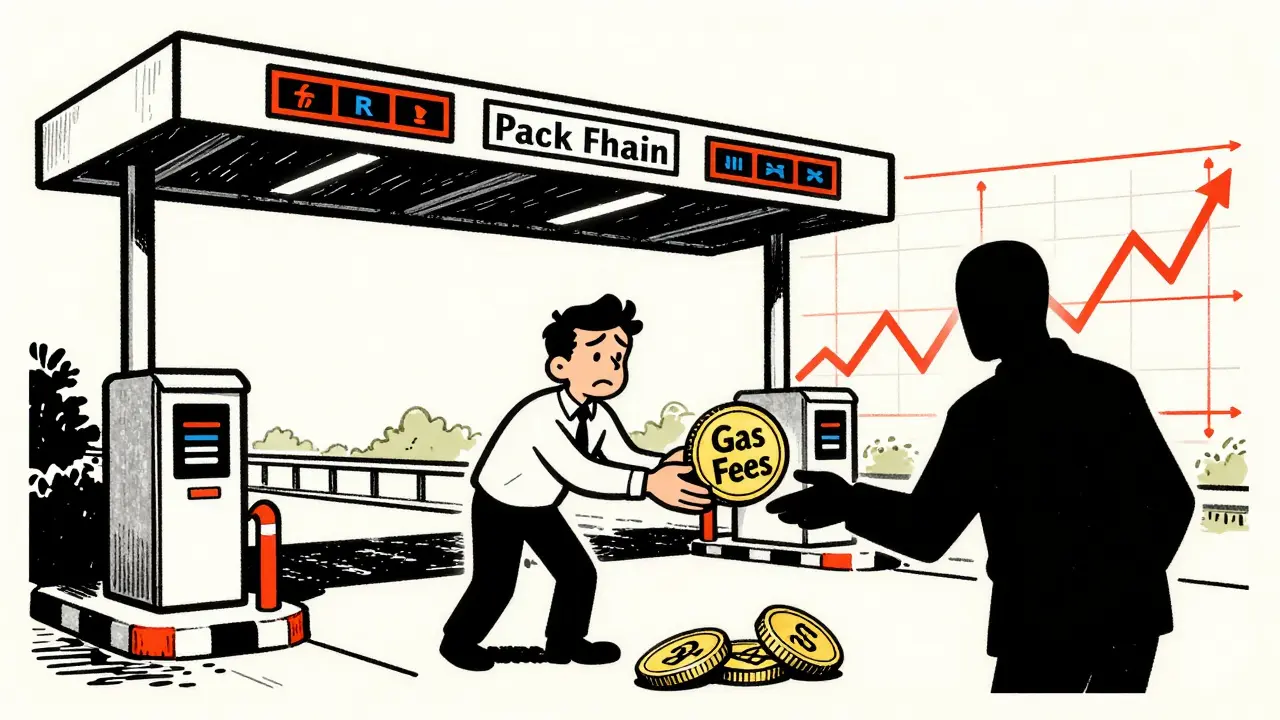
However, don’t forget the gas fees. These are paid to the blockchain network (like Ethereum or BNB Chain) to process your transaction. During peak times, these can skyrocket. If you’re swapping $10 worth of tokens, a $5 gas fee is a terrible deal. KnightSwap doesn’t subsidize these costs, so you need to time your trades carefully.
| Cost Type | KnightSwap (DEX) | Centralized Exchange (e.g., CoinSpot) |
|---|---|---|
| Trading Fee | ~0.3% (goes to LPs) | 0.1% - 1.0% (varies by method) |
| Gas Fees | User pays network cost (variable) | None (included in spread/fee) |
| Withdrawal Fee | Network dependent | Fixed per coin |
| Spread | Determined by liquidity depth | Tight, set by exchange |
If you are making frequent, small trades, a centralized exchange might actually be cheaper because they absorb the gas costs. KnightSwap shines for larger transactions or when you want full custody of your assets at all times.
Security and Smart Contract Risks
This is the most critical section. In DeFi, you are the bank. If the vault gets hacked, there is no customer support line to call. KnightSwap relies on smart contracts to execute trades. Are these contracts secure?
As of mid-2026, there is limited public information regarding independent security audits from top-tier firms like CertiK or OpenZeppelin. Clipstrust, a review platform, has noted KnightSwap’s "solid technological foundation," but vague praise isn’t enough. Without seeing the audit reports, you have to assume some level of risk.
Furthermore, the KNIGHT token itself has shown volatility. Data from tracking platforms indicates significant price swings. While volatility is normal in crypto, extreme drops without clear news catalysts can signal underlying issues with token demand or liquidity depth. Always check the latest audit status before depositing significant capital.
Is KnightSwap Right for You?
KnightSwap is not for everyone. It requires a certain level of technical comfort. If you lose your private key, your money is gone forever. If you send tokens to the wrong address, they disappear.
Who benefits most from KnightSwap?
- Privacy Advocates: Users who want to trade without KYC (Know Your Customer) checks.
- DeFi Enthusiasts: Those looking to provide liquidity and earn yield beyond simple holding.
- Advanced Traders: Individuals comfortable monitoring gas prices and slippage settings.
Who should avoid it?
- Beginners: If you’ve never used a non-custodial wallet, start with a reputable centralized exchange first.
- Risk-Averse Investors: If the idea of smart contract bugs keeps you up at night, stick to regulated platforms.

Tax Implications for KnightSwap Users
A common misconception is that decentralized exchanges are tax-free. They are not. Every time you swap tokens on KnightSwap, you trigger a taxable event in many jurisdictions, including Australia, the US, and the UK. Selling Bitcoin for ETH is a disposal of Bitcoin.
Platforms like Crypto Tax Calculator now integrate with KnightSwap Finance to help track these transactions. This is good news for compliance but bad news if you haven’t been keeping records. Make sure you export your transaction history regularly. Ignorance of the law is not a valid defense with tax agencies.
Final Verdict: Proceed with Caution
KnightSwap offers a functional, decentralized alternative to traditional exchanges. Its focus on liquidity provision and tokenomics innovation makes it interesting for DeFi natives. However, the lack of transparent team information and publicly available, detailed security audits raises concerns.
Use KnightSwap if you understand the risks of DeFi and want full control over your assets. Start small. Test the waters with amounts you can afford to lose. And always, always verify contract addresses yourself. Don’t click links from social media posts. In the crypto world, paranoia is a feature, not a bug.
Is KnightSwap a safe exchange to use?
Safety in DeFi is relative. KnightSwap uses smart contracts, which carry inherent risks if bugs exist. While it is listed on major trackers like CoinGecko and Binance, the lack of prominent third-party security audit reports from firms like CertiK means users must exercise caution. Never invest more than you can afford to lose, and always verify contract addresses manually.
What is the KNIGHT token used for?
The KNIGHT token is the native utility token of the KnightSwap ecosystem. It is primarily used for governance voting, paying reduced trading fees, and staking to earn rewards. Holding the token may also grant access to exclusive features or early participation in new liquidity pools.
Does KnightSwap require KYC verification?
No, KnightSwap is a decentralized exchange (DEX) and does not require Know Your Customer (KYC) verification. You connect via a Web3 wallet, and your identity remains anonymous. However, remember that blockchain transactions are public and traceable, so privacy is not absolute.
How do I pay taxes on KnightSwap transactions?
Every swap on KnightSwap is a taxable event in most countries. You should use crypto tax software that integrates with KnightSwap Finance to track your cost basis and capital gains. Consult with a local tax professional to ensure compliance with your country's regulations, such as those enforced by the ATO in Australia or the IRS in the US.
Can I provide liquidity on KnightSwap?
Yes, KnightSwap allows users to become Liquidity Providers (LPs). By depositing pairs of tokens into a pool, you earn a portion of the trading fees. Be aware of impermanent loss, which occurs when the price of your deposited assets changes significantly compared to when you deposited them.