
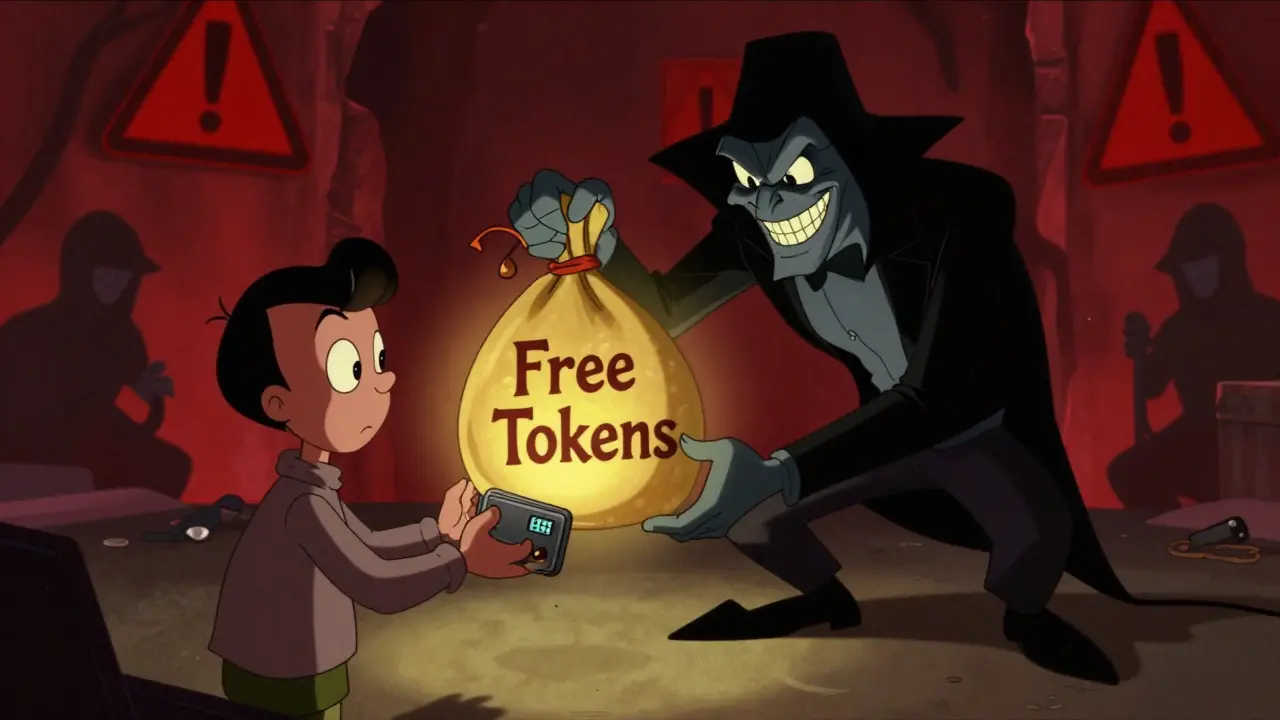
Have you seen the buzz around the WKIM Mjolnir airdrop by KingMoney? It sounds too good to be true. You get free tokens just for signing up or completing simple tasks. But in the world of cryptocurrency, especially with older projects like KingMoney (KIM), "too good" usually means "dangerous." If you are looking for details on how to claim this airdrop, you need to stop and read this first. There is a high probability that this specific "Mjolnir" campaign does not exist or is a sophisticated scam designed to steal your private keys.
The Reality of KingMoney (KIM)
To understand why you should be skeptical, we first need to look at the project itself. KingMoney (a Bitcoin-based digital currency launched in August 2019) was created with a very specific niche in mind: network marketing. Unlike Bitcoin, which aims to be a global store of value, KingMoney was built as a fork of Bitcoin to solve money transmission problems within multi-level marketing (MLM) structures.
The project claims to offer faster transaction times than Bitcoin, citing block creation times of roughly two to three minutes. It also features a unique emission schedule. The initial bonus rate was set at 3,250 units per block for the first year, dropping significantly to 70 units thereafter, with a gradual decrease over forty years until rewards hit zero. The maximum supply is capped at 747.44 million KIM tokens. While these technical specs sound robust on paper, the real-world adoption tells a different story.
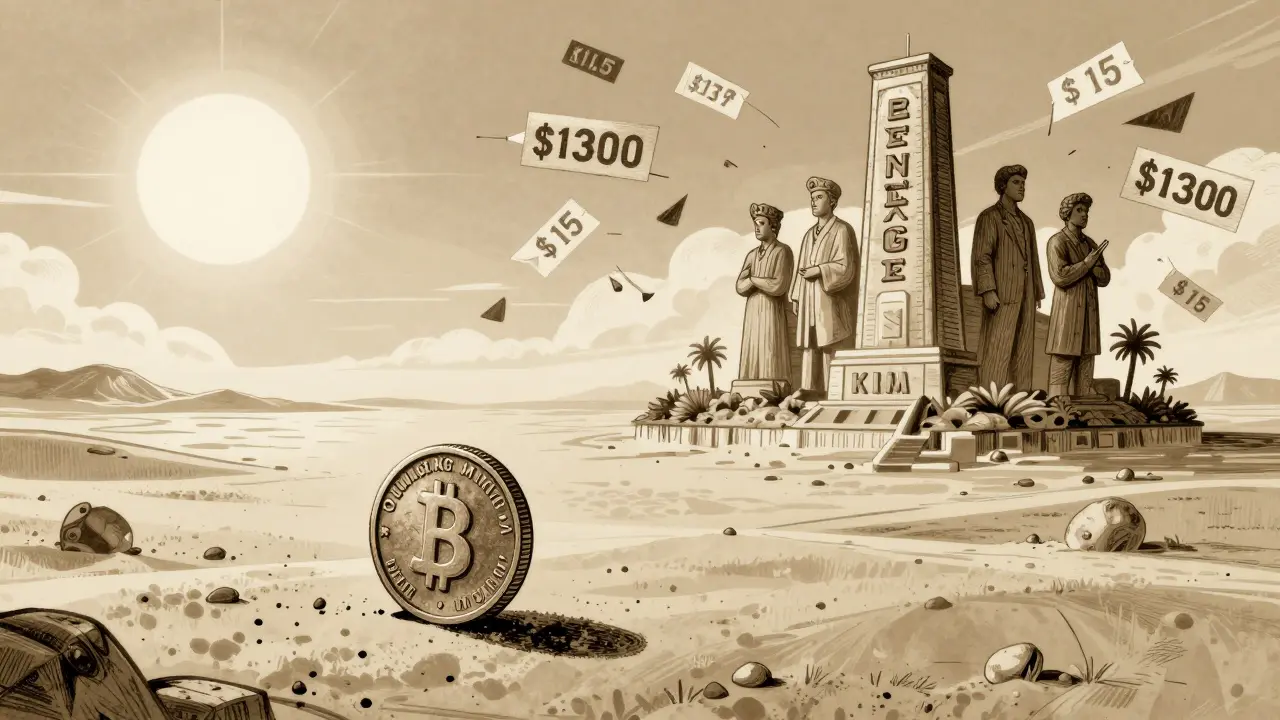
As of May 2026, KingMoney remains a highly obscure asset. It is not listed on major exchanges like Binance, Coinbase, or even mid-tier platforms like Crypto.com for active trading. Market data shows extreme discrepancies. Some trackers list it at over $1,300, while others show prices under $15. This isn't a sign of volatility; it's a sign of zero liquidity. When there are no buyers, the price is meaningless. This lack of mainstream presence makes any sudden "major airdrop" announcement highly suspicious.
Does the "WKIM Mjolnir" Airdrop Exist?
Here is the hard truth: there is no verified public record of a "WKIM Mjolnir" airdrop from the official KingMoney team. The term "WKIM" likely refers to a wrapped version of the KIM token, but "Mjolnir" appears to be a fabricated branding element used by scammers.
Scammers often take legitimate, low-profile projects and create fake airdrops using flashy names. They use social media bots to generate hype, claiming that early participants will receive thousands of dollars worth of tokens. They then direct users to fake websites that mimic the official KingMoney interface. These sites ask you to connect your wallet or enter your seed phrase to "claim" the rewards. Once you do, they drain your wallet.
If you have been directed to a site promising WKIM Mjolnir tokens, check the URL carefully. Does it match the official domains linked from their verified Twitter or Telegram accounts? If not, close the tab immediately. The official KingMoney community has never announced a program with this name in any credible blockchain explorer or news outlet.
How to Spot an Airdrop Scam
You don't need to be a blockchain expert to spot a scam. Here are the red flags associated with fake KingMoney airdrops:
- Unsolicited DMs: Did someone message you on Telegram or Discord out of the blue offering free KIM tokens? Legitimate projects do not spam users via direct messages.
- Wallet Connection Requests: Any site asking you to connect your MetaMask or Trust Wallet to claim an airdrop is trying to install a malicious smart contract. Real airdrops are usually distributed directly to your address without interaction.
- Seed Phrase Requests: No legitimate service will ever ask for your 12- or 24-word recovery phrase. If a site asks for this, it is 100% a scam.
- Urgency: Phrases like "Claim now before slots fill up" or "Limited time only" are psychological triggers used to make you act without thinking.
- Unverified Links: Scammers buy domains that look similar to the real ones (e.g., kingmoney-airdrop.com vs. kingmoney.org). Always verify the source.
Understanding the KingMoney Ecosystem
Even if you ignore the scams, understanding the actual KingMoney ecosystem helps you evaluate its potential. KingMoney operates on a Proof-of-Work consensus mechanism, similar to Bitcoin, but with modifications intended to prevent 51% attacks. The network recalculates processing power every three days, and mining rewards halve every 175,000 blocks (approximately one year).
The project’s focus on network marketing limits its appeal. Multi-level marketing companies have historically had a poor reputation, and associating a cryptocurrency with this industry creates significant barriers to mass adoption. Furthermore, KingMoney is currently mined privately rather than through public pools, which centralizes control and reduces the security benefits of decentralization.
The circulating supply is reported to be around 205,000 KIM, but with a total supply nearing 600 million, the vast majority of tokens are either locked or held by early miners. This concentration of wealth means that even if the token gained traction, a small number of holders could manipulate the price easily.
Safety First: Protecting Your Assets
If you are interested in cryptocurrency investments, prioritize safety over freebies. Here is how to protect yourself:
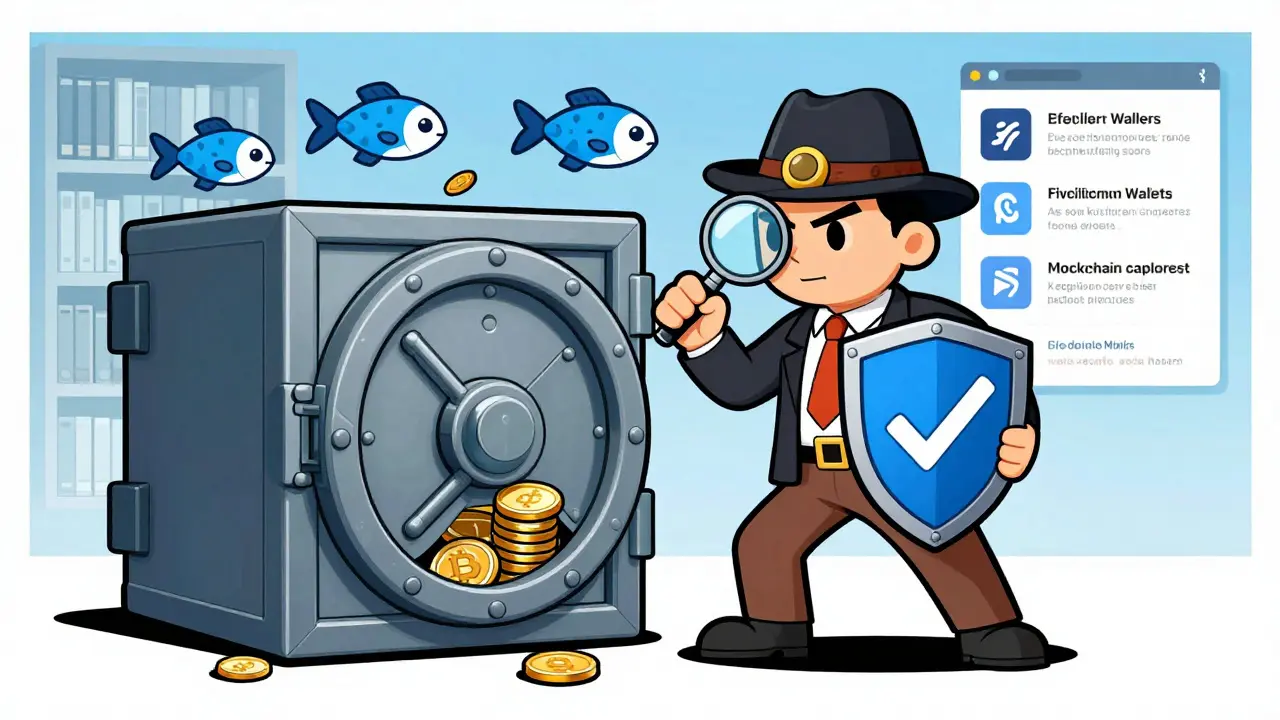
- Use a Burner Wallet: Never connect your main wallet, where you hold significant funds, to unverified dApps or airdrop sites. Use a separate wallet with minimal funds for testing new projects.
- Verify Official Channels: Only trust information from the official KingMoney website and their verified social media accounts. Do not rely on third-party blogs or YouTube videos that promise "guaranteed returns."">
- Check Blockchain Explorers: If an airdrop is real, transactions will be visible on the blockchain. Check the KingMoney block explorer for any large, unusual transfers related to the "Mjolnir" campaign. If nothing shows up, it doesn't exist.
- Educate Yourself: Learn about common phishing techniques. Understanding how smart contracts work can help you recognize when a transaction request looks suspicious.
Alternatives to KingMoney
If you are looking for cryptocurrencies with active communities, regular updates, and legitimate airdrop programs, consider exploring more established projects. Networks like Ethereum, Solana, and Polygon frequently launch verified airdrops for their ecosystem partners. These projects have transparent governance, active development teams, and listings on major exchanges.
For those interested in privacy or fast transactions, projects like Monero or Litecoin offer proven track records and widespread acceptance. Investing time in learning about these established networks provides a safer path to potential gains than chasing obscure forks with dubious reputations.
Is the WKIM Mjolnir airdrop legit?
No, there is no evidence that the WKIM Mjolnir airdrop is legitimate. It appears to be a scam targeting fans of the KingMoney (KIM) project. Always verify announcements through official channels before participating.
What is KingMoney (KIM)?
KingMoney is a Bitcoin fork launched in 2019, designed specifically for use in network marketing and multi-level marketing industries. It features faster block times and a unique reward structure but has limited mainstream adoption.
Can I buy KIM tokens on major exchanges?
No, KingMoney (KIM) is not available on major cryptocurrency exchanges like Binance or Coinbase. It has extremely low liquidity and is primarily traded through peer-to-peer arrangements or specialized platforms.
How do I avoid airdrop scams?
Never share your seed phrase, avoid connecting your main wallet to unverified sites, and only trust information from official project channels. If an offer seems too good to be true, it almost certainly is.
What is the current price of KIM?
The price of KIM is highly unreliable due to low liquidity. Different tracking platforms show vastly different prices, ranging from under $15 to over $1,300. This discrepancy indicates a lack of real trading activity.
Ellie Riddell
May 8, 2026 AT 23:15lol another "free money" scam wrapped in Norse mythology branding. mjolnir? really? the marketing team must have been watching too much marvel.
i've seen this exact play with three other dead coins this month alone. connect wallet, lose everything. it's not even creative anymore.
Sharada Vakkund
May 9, 2026 AT 06:23Thank you for writing this out clearly because I was actually curious about KingMoney since someone mentioned it in a random discord server yesterday. It is so helpful to see the red flags listed explicitly like the seed phrase request and the fake URLs.
I always thought if a project was old enough it had to be somewhat legitimate but this shows age doesn't mean safety. The part about the price discrepancy between $15 and $1300 is wild. How does that even happen without any real trading volume?
It makes me wonder how many people are still holding these tokens from 2019 hoping for a miracle. Do you think there is any way to recover funds if someone already connected their wallet to one of these fake sites?
Sudarshan Anbazhagan
May 9, 2026 AT 17:55one must understand that the fundamental flaw in your analysis lies in the assumption that liquidity is the only metric for value which is a rather simplistic view of economic theory
kingmoney operates within a specific niche of network marketing which requires a different valuation model than standard fiat currencies or major cryptocurrencies like bitcoin
the fact that it is not listed on binance does not negate its utility within the multi-level marketing structures it was designed to serve
furthermore the emission schedule you cited is actually quite robust when compared to other altcoins that suffer from hyperinflation due to lack of monetary policy discipline
you are ignoring the potential for private mining pools to stabilize the network during periods of low external interest which is a feature not a bug
thus dismissing the mjolnir airdrop as merely a scam without considering the possibility of an internal community reward mechanism is intellectually lazy
John Gonzalez Bentham
May 11, 2026 AT 12:13ur all just haters cause u dont get free kims
im claiming mine right now and ill make u all eat ur words
scam this scam that just do yer homework ppl
Sarah C
May 13, 2026 AT 09:50I completely agree with the post author here. It is so important to double-check everything before clicking any links. I feel for anyone who might have fallen for this because it can be really stressful losing crypto.
The tips about using a burner wallet are great advice that everyone should follow. I started doing that after reading similar warnings last year and it saved me from a few bad interactions.
Thanks for sharing this info!
Tobias Gjerlufsen
May 14, 2026 AT 11:29look at you trying to educate the masses while you yourself probably cant even code a basic smart contract
this article is pure fear mongering designed to keep you away from high risk high reward opportunities
if kingmoney was truly dead why would there be bots pushing it
because there is value there you just refuse to see it because you are a sheep following the herd to ethereum and solana
wake up sheeple
Gavin Wonnacott
May 16, 2026 AT 00:35I simply cannot believe the level of ignorance displayed in this thread. You lot are playing with fire and pretending it is a candle.
The concept of a 'wrapped' token for a coin with zero liquidity is absurd. It is a mathematical impossibility for such a scheme to hold water unless it is a direct theft operation.
I have dealt with sophisticated phishing attacks in corporate environments and this reeks of the same amateurish tactics. Please stop engaging with this garbage.
Jerry CUNNINGHAM SR
May 16, 2026 AT 06:46I appreciate the detailed breakdown of the risks involved here. It is crucial for the community to remain vigilant against these types of fraudulent activities.
I have noticed an increase in similar scams targeting smaller, less-known cryptocurrencies. The attackers know that enthusiasts of niche projects are often more desperate for gains and therefore more vulnerable to manipulation.
Please ensure you verify all sources through official channels as suggested in the post. Safety should always be the priority.
Kimberly Herbstritt
May 18, 2026 AT 00:41Actually I think the author is being a bit harsh on the MLM aspect. Not all network marketing is bad and some people find success in it.
Maybe the airdrop is real and the official channels are just slow to update? It happens sometimes with smaller teams.
I wouldn't jump to conclusions so quickly.
Destiny Kilby
May 19, 2026 AT 04:37I heard about this from a friend who said they saw it on twitter
it seems very suspicious though because no one has talked about it on the main forums
i am going to wait and see what happens before i do anything
Samara McCallum
May 20, 2026 AT 07:44oh wow
another day another scam
why do people keep falling for this stuff
its like watching a car crash in slow motion
i hope nobody lost anything big
Shelby Cantu
May 20, 2026 AT 12:04Stay safe everyone!
Don't click those links.
Sheldon Friesen
May 21, 2026 AT 16:23Great points raised here!!!
I especially liked the section on spotting red flags.
It is so easy to get excited about free tokens but as we all know there is no such thing as a free lunch in crypto!!!
Keep educating yourselves and stay skeptical!!!
Tricia Alach
May 21, 2026 AT 18:37i thnik this is a good post
lots of peopl get tricked
be carefull guys
Ruben Michel
May 22, 2026 AT 18:09The notion that one can discern legitimacy through casual observation is fundamentally flawed. One must examine the underlying blockchain architecture and the transaction history meticulously.
In this case, the absence of verifiable transactions related to the 'Mjolnir' campaign on the explorer is conclusive evidence of its non-existence.
To suggest otherwise is to invite financial ruin upon oneself. The market punishes ignorance severely.