

Trading crypto derivatives without handing over your private keys sounds like the holy grail of finance. You want the leverage, you want the speed, but you don't want a centralized exchange freezing your account or going bankrupt on you. That is exactly where Kine Protocol fits in. It is a decentralized exchange (DEX) built to let you trade perpetual contracts with up to 200x leverage across multiple blockchains, including the BNB Smart Chain (BSC), Ethereum, Polygon, and Avalanche.
But here is the catch: high leverage in a decentralized environment comes with unique risks. Slippage, oracle latency, and liquidation mechanics work differently than they do on Binance or Bybit. If you are thinking about moving capital to Kine Protocol, especially on BSC where gas fees are low, you need to know if the infrastructure can actually hold up during a market crash. Let's look at the hard data, the user experiences, and the technical realities of this platform as we move through 2026.
How Kine Protocol Works: The Peer-to-Pool Model
Most decentralized exchanges use an automated market maker (AMM) model or an order book. Kine Protocol does something different. It uses a peer-to-pool trading mechanism. Instead of matching you with another trader who wants to take the opposite side of your bet, you trade against a liquidity pool that is over-collateralized.
Why does this matter? In a traditional order book, if there aren't enough buyers or sellers, you suffer from slippage-your price gets worse the more you trade. With Kine's pool model, the liquidity is guaranteed by the protocol itself. This means you can enter and exit positions quickly without worrying about finding a counterparty. According to technical analyses from late 2025, this setup allows for execution with significantly lower slippage compared to standard AMMs, particularly for trades between $500 and $5,000.
The protocol runs on Layer 2 technology and utilizes on-chain staking. This architecture is what enables the "zero gas fee" trading experience for most assets. You pay a small trading fee, but you don't burn money on network transaction costs every time you open or close a position. For BSC users, who are already used to cheap transactions, this might not seem like a huge deal. But for those coming from Ethereum mainnet, it is a massive quality-of-life improvement.
Key Features and Trading Limits
When you log into Kine Protocol, you are looking at a platform designed for active traders. Here is what you get:
- Leverage: Up to 200x. This is higher than many competitors like GMX (which caps at 50x) and matches the top tier of dYdX. However, remember that 200x leverage is essentially gambling; a 0.5% move against you wipes out your entire margin.
- Supported Assets: You can trade perpetual contracts for Bitcoin, Ethereum, Solana, Polygon, Avalanche, Dogecoin, and Uniswap. Each asset has specific "Position Limits" to protect the liquidity pool from excessive risk.
- Fees: The standard trading fee is 0.05% per executed order. There are zero gas fees for these actions. Note that some specific tokens like HT, OKB, and WOO have a higher fee of 0.8%, so check the ticker before you click buy.
- Cross-Chain Access: You can access the same interface and liquidity pools whether you connect via MetaMask on Ethereum, BSC, Polygon, or Avalanche. The funds stay on the chain you deposit them on, which simplifies things.
The setup process is fast. If you have a Web3 wallet like MetaMask installed, you can be connected and ready to trade in under two minutes. No KYC, no email verification, just wallet connection. This anonymity is a core part of the DeFi appeal, but it also means there is no customer support hotline to call if you make a mistake.
Kine Protocol vs. The Competition
You don't have to choose Kine Protocol. The decentralized derivatives market is crowded. How does it stack up against the giants?
| Feature | Kine Protocol | dYdX | GMX |
|---|---|---|---|
| Max Leverage | 200x | 200x | 50x |
| Chains Supported | Ethereum, BSC, Polygon, Avalanche | StarkNet, Ethereum | Avalanche, Arbitrum |
| Gas Fees for Trading | Zero | Low (Layer 2) | Low (Layer 2) |
| Liquidity Depth | Moderate (~35% less than dYdX) | High | High |
| Market Share (Late 2025) | ~2.3% | ~41.2% | ~28.7% |
dYdX is the clear leader in market share and liquidity depth. If you are moving large amounts of capital-say, over $10,000 in a single trade-you will likely find better prices on dYdX because their pool is deeper. Kine Protocol shines in accessibility and multi-chain presence. If you hold assets on BSC or Polygon and don't want to bridge them to StarkNet or Arbitrum, Kine is one of the few viable options for high-leverage trading.
However, there is a discrepancy in reporting. Some reviews cite Kine's max leverage at 150x, while official documentation states 200x. Always check the current limits in the interface before placing a trade, as these can change based on the health of the liquidity pool.
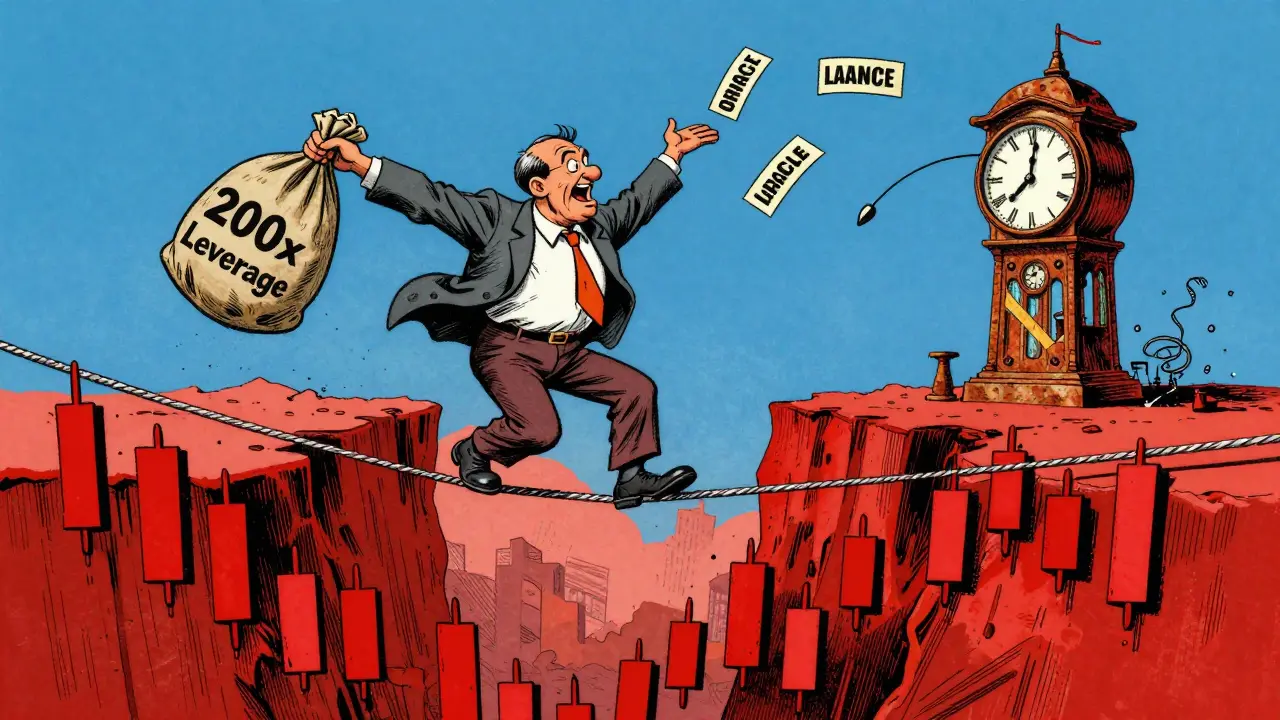
The Risks: Latency and Liquidations
This is the section that matters most for your bankroll. Decentralized exchanges rely on oracles-external data feeds-to determine the price of Bitcoin or Ethereum. If the oracle is slow, your liquidation engine might be too.
Data from stress tests conducted during the March 2025 market crash revealed a critical weakness. When prices moved violently (more than 15% in an hour), Kine Protocol's oracle-dependent price feeds showed a latency of 8 to 12 seconds. Compare that to dYdX's sub-5-second response time. In the world of 100x leverage, 10 seconds is an eternity. Your position could be marked for liquidation at a price that was valid ten seconds ago, even if the market had already stabilized. This led to reports of "over-liquidations," where users lost more than they should have due to delayed price updates.
User reviews from platforms like Slashdot highlight this issue. One trader reported a 17.3% discrepancy between their actual position value and the liquidation price triggered by the protocol during high volatility. While Kine claims its V3 upgrade (scheduled for early 2026) will fix this with a revamped oracle system, you should treat the current version with caution during volatile markets. Avoid maxing out leverage when news events are breaking.
Tokenomics and Governance Concerns
Kine Protocol has a native token, KINE. As of late 2025, the token faced significant headwinds. Technical indicators were largely bearish, with only 3 buy signals against 11 sell signals across major charts. The price had declined nearly 98% year-over-year, despite the protocol seeing growth in Total Value Locked (TVL).
There is also a concern about inflation. On-chain analysis suggests that only about 12.7% of the total KINE supply was circulating at the time of review. This means a massive amount of tokens are locked and waiting to be released. When those tokens hit the market, they could create significant selling pressure, driving the price down further unless demand increases dramatically.
Governance is another gray area. Critics from The Block pointed out a lack of transparent voting mechanisms for token holders. If you hold KINE, you might think you have a say in how the protocol evolves, but the absence of verifiable public voting creates centralization risks. The team remains anonymous, which is common in crypto but adds a layer of trust risk. You are trusting code and reputation, not a regulated entity.
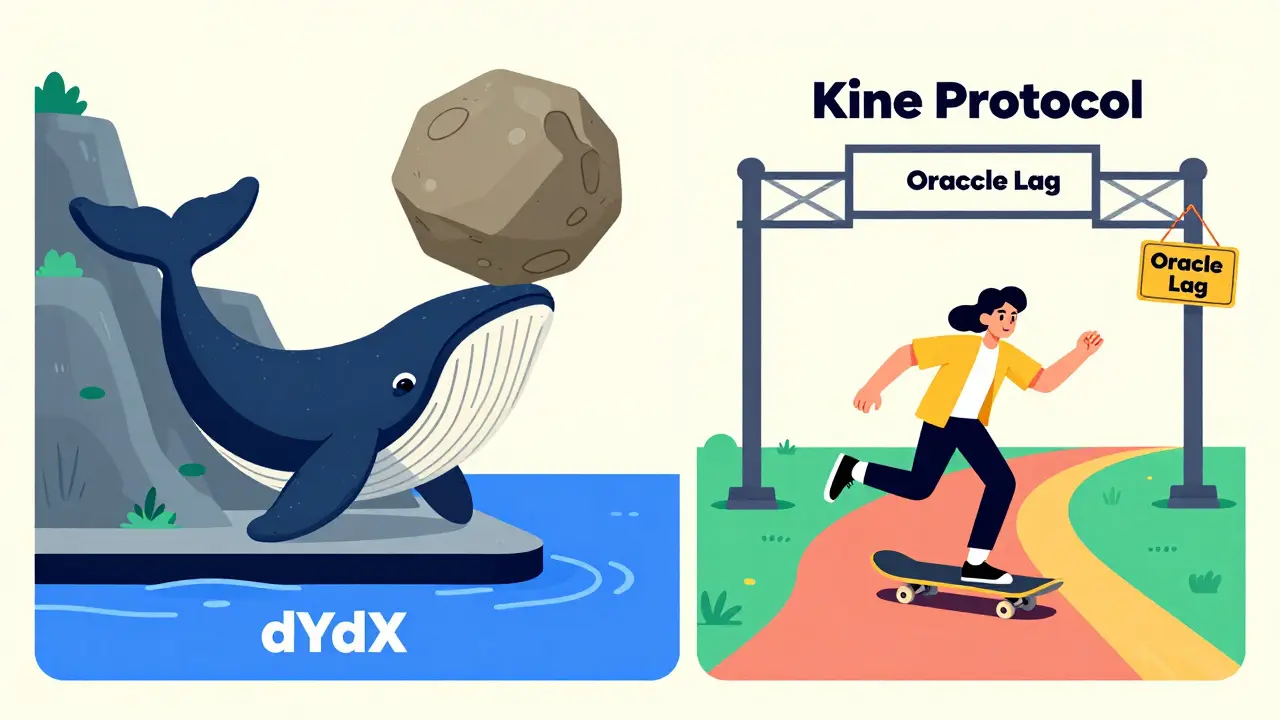
Who Should Use Kine Protocol?
Kine Protocol is not for everyone. It is best suited for:
- Mid-sized traders: Those trading between $500 and $5,000 per position will find the slippage manageable and the zero-gas feature valuable.
- Multi-chain users: If you live on BSC or Polygon and want to trade perps without bridging, Kine is one of your few choices.
- Experienced DeFi users: You need to understand how oracles work, how to manage cross-margin, and how to monitor liquidation prices manually. Do not use this if you are new to leverage trading.
If you are a whale moving hundreds of thousands of dollars, stick to dYdX or centralized exchanges for now. If you are a beginner, start with spot trading. 200x leverage on a decentralized platform with potential oracle latency is a recipe for disaster for someone who doesn't understand risk management.
Final Verdict
Kine Protocol offers a compelling alternative to centralized exchanges by providing high leverage and privacy. Its peer-to-pool model reduces slippage for average traders, and its multi-chain support makes it incredibly accessible. The zero-gas fee structure is a genuine benefit that saves money over time.
However, the risks are real. The oracle latency issues during high volatility are a serious flaw that needs fixing. The upcoming V3 upgrade promises to address this, but until then, you should avoid trading during high-volatility news events. Additionally, the bearish outlook on the KINE token and the concerns around governance transparency mean you should not invest heavily in the token itself while using the platform.
Use Kine Protocol for what it is good at: efficient, low-cost trading on secondary chains like BSC and Polygon. Keep your leverage conservative, watch your liquidation prices closely, and always have a plan for exiting if the market goes sideways.
Is Kine Protocol safe to use?
Kine Protocol is audited and operates on public blockchains, which provides a layer of security. However, like all DeFi platforms, it carries smart contract risks. More importantly, its reliance on oracles has shown latency issues during high volatility, leading to potential over-liquidations. It is safer than unregulated centralized exchanges regarding fund custody, but you must manage your own risk regarding leverage and market conditions.
Can I use Kine Protocol on BNB Smart Chain?
Yes, BNB Smart Chain (BSC) is one of the four primary networks supported by Kine Protocol, alongside Ethereum, Polygon, and Avalanche. You can connect your MetaMask wallet set to BSC and trade directly without bridging your assets to other chains.
What is the maximum leverage on Kine Protocol?
The protocol offers up to 200x leverage on certain assets. However, each asset has individual position limits that may restrict the maximum leverage available depending on the size of your collateral and the current state of the liquidity pool.
Are there gas fees for trading on Kine?
No, Kine Protocol charges zero gas fees for opening and closing positions. You only pay a trading fee of 0.05% per executed order (or 0.8% for specific tokens like HT, OKB, and WOO). This is made possible by its Layer 2 architecture and on-chain stake system.
How does Kine compare to dYdX?
dYdX has deeper liquidity and faster oracle response times, making it better for large trades and high-volatility environments. Kine Protocol supports more chains (including BSC and Polygon) and offers a simpler zero-gas experience. Kine is generally better for mid-sized traders on non-Ethereum chains, while dYdX is preferred for larger volumes.