
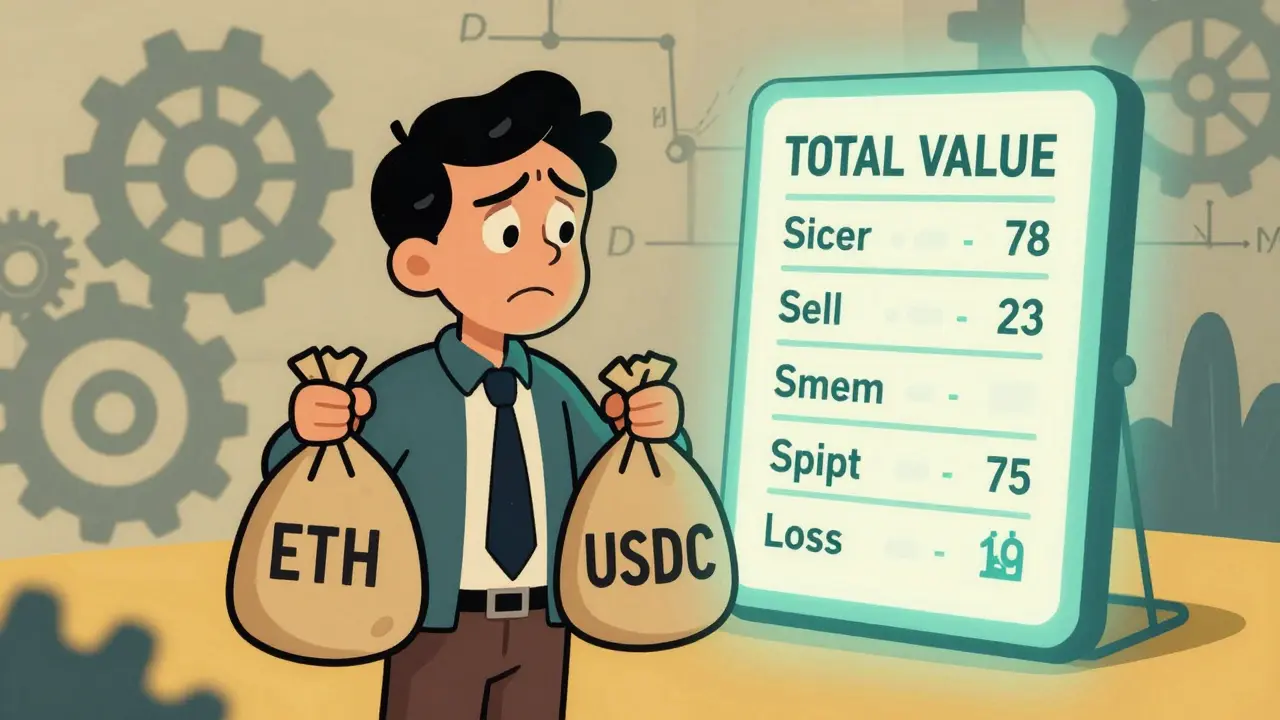
Imagine you deposit $10,000 worth of Ethereum and USDC into a liquidity pool. The market moves slightly in your favor, but when you check your balance, the total value is actually lower than if you had just held those assets in your wallet. This isn't a bug; it's a feature of how decentralized exchanges work. It is called impermanent loss, which is the difference in value between holding crypto assets versus providing them as liquidity in an Automated Market Maker (AMM) pool when price ratios change. For years, this concept terrified new liquidity providers. Today, thanks to sophisticated calculators and tracking tools, it is a manageable risk.
If you are providing liquidity on platforms like Uniswap or PancakeSwap, you cannot afford to guess your exposure. You need precise data. Impermanent loss calculators and portfolio tracking tools have evolved from simple web widgets into complex financial instruments that integrate with blockchain explorers and tax software. This guide breaks down the best tools available, how they work, and how to use them to protect your capital in the current DeFi landscape.
Why Impermanent Loss Happens (And Why 'Impermanent' Is Misleading)
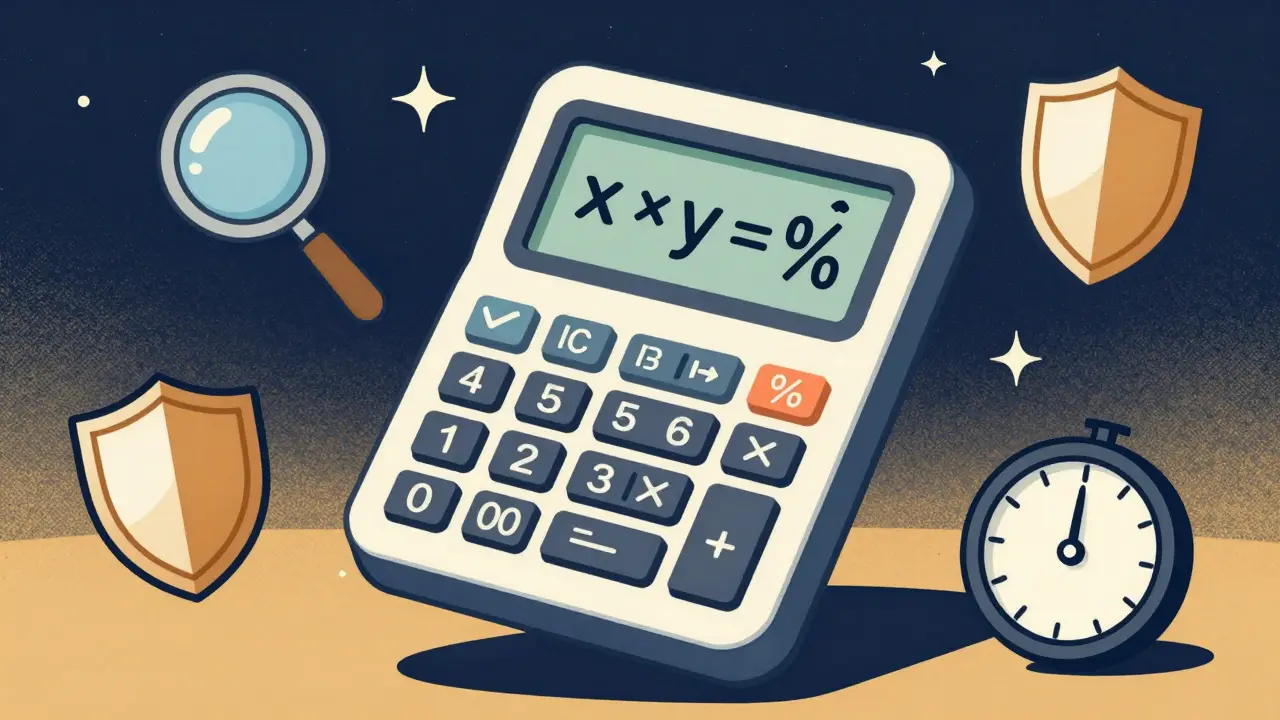
To understand why you need a calculator, you first need to understand the math behind the money. Most major AMMs operate on the constant product formula: x * y = k. This means that as one asset becomes more valuable, the protocol automatically sells some of it to buy more of the cheaper asset to maintain balance.
Let's say you provide ETH and USDC. If the price of ETH doubles, the AMM will have sold some of your ETH for USDC during the rally. When you withdraw, you hold less ETH and more USDC than you started with. If you compare this mix to simply holding the original amounts, you are often worse off. That gap is impermanent loss.
The term 'impermanent' suggests the loss disappears if prices return to normal. While mathematically true, experts argue this is dangerous marketing speak. As Laura Shin noted in her analysis of Chainlink data, price reversals happen in only about 32.7% of cases within specific timeframes. In most scenarios, the loss becomes permanent the moment you withdraw at a different price ratio. This is why calculating the potential downside before entering a pool is critical.
Top Impermanent Loss Calculators Compared
Not all calculators are created equal. Some are simple educational aids, while others are integrated into comprehensive tax and portfolio management suites. Here is how the leading tools stack up against each other.
| Tool Name | Best For | Key Features | Limitations |
|---|---|---|---|
| CoinGecko IL Calculator | Quick Estimates & Fee Offset Analysis | Integrates APY calculations, supports variable weight pools, estimates net returns after fees. | Lacks historical portfolio integration; manual input required. |
| Koinly Impermanent Loss Tool | Automated Portfolio Tracking & Tax Reporting | Connects to wallets via API, tracks real-time IL across multiple protocols, high accuracy (98.7%). | Premium features require subscription ($49/month); free version has limited depth. |
| CryptoTaxPrep Calculator | Visualizing Token Rebalancing | Detailed visual charts showing exact token quantities before/after price changes; free to use. | No APY integration; less useful for ROI projections. |
| Coinbase Educational Tool | Beginners Learning the Concept | Simplified interface, focuses on explaining the mechanics rather than complex calculation. | Lacks advanced calculation capabilities for active traders. |
Deep Dive: CoinGecko’s All-in-One Approach
CoinGecko’s Impermanent Loss and APY Calculator remains the industry standard for quick, pre-deposit analysis. Launched in late 2020, it gained popularity because it doesn't just show you the loss-it shows you whether the trading fees will cover it.
The tool requires three main inputs: the initial price ratio, the expected percentage change in asset prices, and the pool’s fee structure. For example, if you expect ETH to rise by 50%, CoinGecko calculates that you might face roughly 5.72% impermanent loss in a standard 50:50 pool. However, if the pool generates enough volume to pay out a 10% APY over that period, your net result could still be positive.
Recent updates, including version 3.0 released in late 2023, added support for Uniswap V3 concentrated liquidity positions. This is crucial because V3 allows users to narrow their price range, increasing capital efficiency but also amplifying impermanent loss risk if the price moves outside that range. CoinGecko’s ability to model these variable weights makes it indispensable for advanced users.
Koinly: Automating Risk Assessment
While CoinGecko is great for hypothetical scenarios, Koinly excels at analyzing what has already happened. By connecting your wallet addresses or importing CSV files from exchanges, Koinly automatically tracks your liquidity provision activities.
Its impermanent loss module pulls historical price data from APIs like CoinGecko to calculate the exact IL incurred over specific time periods. According to user reviews on Trustpilot, Koinly achieves 98.7% accuracy in its calculations. The premium tier, priced at $49 per month, offers API integration that can track IL across twelve different DeFi protocols simultaneously.
This automation is vital for tax compliance. As the IRS and other global tax authorities begin to treat liquidity withdrawal events as taxable occurrences, having a precise record of your impermanent loss helps justify cost basis adjustments. Koinly’s reports are widely accepted by tax professionals for this purpose.
CryptoTaxPrep: Visual Clarity for Complex Pools
For users who struggle with abstract percentages, CryptoTaxPrep offers a visually driven approach. Its calculator provides detailed rebalancing charts that show exactly how many tokens you hold before and after a price shift.
Instead of just saying "you lost 13%," it shows that you now hold 0.8 ETH and 1,200 USDC instead of 1 ETH and 1,000 USDC. This granularity helps users understand the mechanical nature of AMMs. While it lacks the APY offset features of CoinGecko, its free access and intuitive design make it a favorite among retail investors who prioritize understanding over automated tax reporting.

How to Use These Tools Effectively
Having the right tool is only half the battle. Using it correctly requires a strategic mindset. Here is a step-by-step framework for integrating impermanent loss calculators into your DeFi workflow.
- Define Your Time Horizon: Impermanent loss is highly sensitive to time. Short-term volatility causes significant IL, but long-term trends may recover. Use calculators to simulate losses over your intended holding period (e.g., 1 week vs. 6 months).
- Factor in Trading Fees: Never look at IL in isolation. Always subtract the projected impermanent loss from the expected trading fee revenue. If the net result is negative, do not provide liquidity unless you have a strong conviction in the price convergence.
- Check Price Oracle Accuracy: Calculators rely on price feeds. For low-liquidity tokens, oracles may lag by 5-10 seconds, leading to inaccurate IL estimates. Stick to large-cap pairs (ETH/USDC, BTC/USDT) for the most reliable calculations.
- Monitor Concentrated Ranges: If using Uniswap V3, ensure your chosen price range aligns with your market outlook. Narrow ranges increase yield but drastically increase IL risk if the price exits the range. Use CoinGecko’s V3-specific settings to model this.
- Review Historical Data: Use Koinly or similar tools to review past performance. Did you underestimate IL in previous positions? Adjust your future strategies based on actual data, not just theoretical models.
Common Pitfalls to Avoid
Even experienced investors make mistakes when dealing with impermanent loss. Here are the most frequent errors:
- Ignoring Gas Fees: Calculators rarely account for network transaction costs. On congested networks like Ethereum Mainnet, gas fees can eat into profits significantly. Ensure your expected fee revenue exceeds both IL and gas costs.
- Misinterpreting Opportunity Cost: IL is an opportunity cost, not a direct loss of principal. You haven't lost money; you've missed out on potential gains from holding. Understanding this distinction prevents panic selling.
- Overlooking Stablecoin Pairs: Pairs involving two stablecoins (e.g., USDC/USDT) have minimal impermanent loss risk because their price ratio remains near 1:1. Use calculators to confirm this low-risk profile before allocating capital.
- Failing to Compound Rewards: Some calculators assume static fee accumulation. In reality, reinvesting rewards can mitigate IL over time. Look for tools that support compounding simulations.
The Future of IL Calculation
As DeFi evolves, so do the tools that manage its risks. We are moving toward a future where impermanent loss estimates are built directly into exchange interfaces. Uniswap Labs has indicated that IL estimates will become standard UI elements in upcoming versions.
Additionally, machine learning models are being developed to forecast IL probabilities based on historical volatility patterns. CryptoTaxPrep and other providers are experimenting with predictive analytics to warn users of high-risk conditions before they deposit funds.
For now, however, relying on established tools like CoinGecko, Koinly, and CryptoTaxPrep remains the safest strategy. By combining their strengths-CoinGecko for pre-deposit simulation, Koinly for post-deposit tracking, and CryptoTaxPrep for visual clarity-you can navigate the complexities of DeFi liquidity provision with confidence.
What is the best free impermanent loss calculator?
CoinGecko’s Impermanent Loss and APY Calculator is widely considered the best free option. It offers robust features including APY integration, support for variable weight pools, and accurate mathematical modeling without requiring a subscription or wallet connection.
Does impermanent loss affect stablecoin pairs?
Impermanent loss is minimal in stablecoin pairs (like USDC/USDT) because their price ratio remains relatively constant. However, if one stablecoin depegs or loses value relative to the other, impermanent loss can occur. Always use a calculator to verify the stability of the pair.
Can trading fees offset impermanent loss?
Yes, trading fees can offset impermanent loss. In active pools with high volume, the fees earned by liquidity providers often exceed the theoretical impermanent loss. Tools like CoinGecko allow you to input expected APY to determine if the net return is positive.
Is impermanent loss taxable?
Tax treatment varies by jurisdiction. In the US, the IRS has suggested that withdrawing liquidity may constitute a taxable event. Accurate calculation of impermanent loss is essential for determining cost basis and reporting capital gains or losses correctly. Consult a tax professional for specific advice.
How does Uniswap V3 change impermanent loss?
Uniswap V3 introduces concentrated liquidity, allowing users to allocate capital within specific price ranges. This increases capital efficiency and potential yields but also amplifies impermanent loss risk if the asset price moves outside the selected range. Specialized calculators must account for these narrower ranges.