

You’ve probably heard of Uniswap or maybe even dYdX. But what about Hpdex? It’s a name that pops up if you’re digging into the HPB Blockchain ecosystem, but it doesn’t exactly scream “mainstream.” If you’re seeing Hpdex on your tax forms or wondering if it’s safe to trade there, you’re not alone. Most people stumble upon this platform because they hold High Performance Blockchain (HPB) assets and need a place to swap them.
Here is the reality check: Hpdex isn’t trying to be the next Ethereum killer. It’s a niche player. As of late 2025, data from CoinMarketCap shows it operates primarily on the HPB MainNet with some plans for Ethereum integration. That sounds fancy, but in practice, it means you are trading in a much smaller pond than the big decentralized exchanges (DEXs). If you are looking for high-frequency trading bots or deep liquidity for obscure altcoins, this might not be your playground. But if you are holding HPB tokens and want to stay within that specific ecosystem, understanding how Hpdex works is crucial.
What Exactly Is Hpdex?
Let’s break down what we are actually dealing with. Hpdex is a decentralized exchange (DEX) built specifically on the HPB Blockchain infrastructure. Unlike centralized exchanges like Binance or Coinbase where you trust them with your money, Hpdex lets you keep custody of your keys. You connect your wallet, swap tokens, and go about your day.
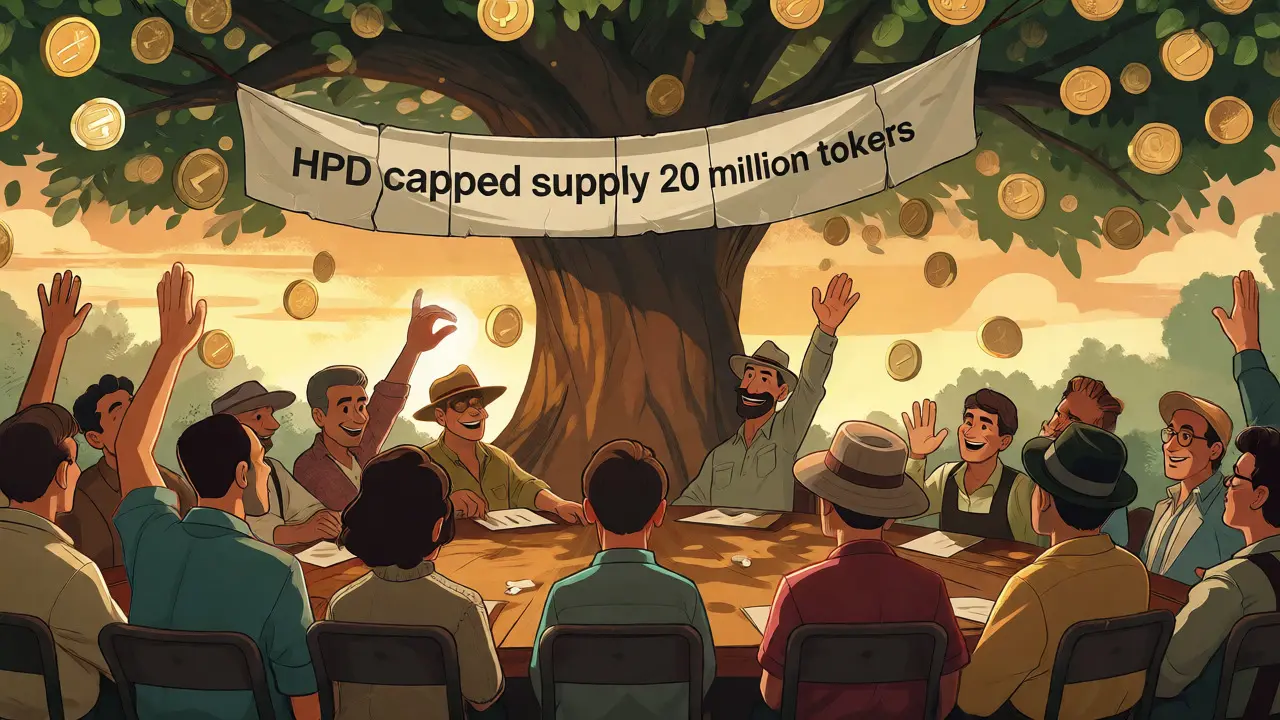
The platform describes itself as "completely driven by the community." In crypto speak, this usually means governance rights are distributed among token holders rather than held by a single company. The native token here is HPD, which has a fixed total supply of 20,000,000 units. This fixed cap is interesting because it contrasts with many other tokens that have inflationary models to reward validators or stakers.
One thing to note is its architecture. While newer DEXs like Hyper Liquid or Apex use complex Layer 2 solutions or their own custom blockchains to offer speed comparable to centralized exchanges, Hpdex sticks to a more traditional Automated Market Maker (AMM) model on the HPB chain. It aims to provide "executable transaction prices," which is just a technical way of saying it tries to minimize slippage-the difference between the price you see and the price you get.
Liquidity and Trading Experience
Here is where things get tricky. When you look at major DEX reviews from October 2025, platforms like Hyper Liquid are praised for processing massive volume. They feel fast and responsive. Hpdex? Not so much. It occupies a niche position. Because it is anchored to the HPB ecosystem, the variety of tokens available for trading is limited compared to Ethereum-based DEXs.
If you try to swap a random new meme coin on Hpdex, you might find yourself swimming against the tide. Liquidity pools are smaller. This means two things:
- Higher Slippage: If you make a large trade, you might move the market price significantly, getting a worse deal than expected.
- Fewer Pairs: You won’t find every token under the sun. You will mostly find pairs involving HPB, HPD, and perhaps stablecoins like USDT or USDC if they are bridged correctly.
There is no public dashboard showing real-time user counts or daily active addresses that I could find in recent reports. This lack of transparency is common for smaller chains, but it makes assessing the "health" of the exchange difficult. You are essentially relying on the depth of the liquidity pool itself. If the pool is thin, you should avoid large trades.
Tokenomics: The Role of HPD
Every DEX needs an economic engine. For Hpdex, that is the HPD token. With a max supply of 20 million, it is a relatively small-cap asset. But what does holding HPD actually do for you?
Unfortunately, detailed documentation on utility is sparse. In most AMM DEXs, the native token provides fee discounts, governance voting power, or staking rewards. Given Hpdex's community-driven claim, governance is likely the primary function. However, without clear whitepapers detailing emission schedules or burn mechanisms, it is hard to predict long-term value accrual for HPD holders.
| Feature | Hpdex | Hyper Liquid | Uniswap V3 |
|---|---|---|---|
| Blockchain | HPB MainNet | Hyperliquid L1 | Ethereum / L2s |
| Primary Focus | Community Governance & HPB Ecosystem | Perpetual Futures | Spot Trading & LP Management |
| Native Token Supply | Fixed (20 Million) | Inflationary/Burn Model | Variable/Emission Based |
| User Base Size | Niche/Small | Growing/Fast | Massive |
This table highlights why you wouldn't choose Hpdex over Uniswap unless you specifically need exposure to the HPB network. Uniswap has billions in Total Value Locked (TVL); Hpdex is a drop in the ocean by comparison.

Security and Trustworthiness
Is Hpdex a scam? Probably not. It hasn’t appeared on major scam trackers like the DFPI’s Crypto Scam Tracker or TechForing’s list of fake exchanges. That is a good sign. It suggests basic operational legitimacy.
However, absence of evidence is not evidence of security. Unlike larger protocols that undergo rigorous audits by firms like CertiK or Hacken, Hpdex’s audit history isn’t prominently displayed in indexed search results. For a DeFi protocol, smart contract risks are always present. If the code governing the liquidity pools has a bug, your funds could be at risk regardless of how "community-driven" the platform claims to be.
Furthermore, because it runs on the HPB blockchain, its security depends partly on the underlying chain’s consensus mechanism. HPB uses a hybrid consensus model combining Proof of Work and Proof of Stake elements, designed for high throughput. While theoretically secure, it is less battle-tested than Ethereum’s proof-of-stake transition, which has been running smoothly for years.
Tax Implications and Reporting
Here is a practical reason why you might care about Hpdex: taxes. If you live in Australia, like I do, or anywhere else with strict capital gains laws, every swap is a taxable event. Interestingly, tools like Crypto Tax Calculator have dedicated guides for Hpdex. This confirms two things:
- People are actually using it enough to generate reportable transactions.
- The API or CSV export format is compatible with standard tax software.
Don’t ignore this. If you swapped HPD for another token, you likely realized a gain or loss. Since Hpdex is decentralized, there is no central entity sending you a tax form. You are responsible for tracking these trades. Ensure you connect your wallet to a portfolio tracker that supports HPB networks, otherwise, you’ll be manually entering hundreds of rows of data come tax season.
Who Should Use Hpdex?
So, who is this platform for? It is definitely not for the casual investor who wants to buy Bitcoin with a credit card. It is also not for the pro trader looking for leverage and order books.
You should consider Hpdex if:
- You already hold HPB tokens and want to participate in the ecosystem without leaving the chain.
- You are interested in community governance and want a voice in how the HPB ecosystem evolves.
- You are comfortable with lower liquidity and higher potential slippage in exchange for decentralization.
You should skip Hpdex if:
- You need high-speed execution for large orders.
- You want access to thousands of different tokens.
- You prefer the ease of use found on centralized exchanges or major L2 DEXs.
Final Verdict
Hpdex is a functional, legitimate, but niche decentralized exchange. It serves its purpose within the HPB ecosystem but lacks the broader appeal and robust features of market leaders. Its fixed-supply token model is attractive for scarcity hunters, but the lack of transparent activity metrics and expert endorsements keeps it in the shadows.
If you are diving into HPB, Hpdex is your necessary tool. Just treat it with caution. Test with small amounts first, verify your tax records, and don’t assume the liquidity will match what you are used to on Ethereum or Solana.
Is Hpdex safe to use?
Hpdex appears to be a legitimate project as it is not listed on major scam databases. However, like all DeFi platforms, it carries smart contract risks. Always start with small transactions to test the waters before committing significant capital.
Does Hpdex require KYC verification?
As a decentralized exchange, Hpdex generally does not require Know Your Customer (KYC) identity verification. You typically only need to connect a compatible Web3 wallet to trade.
What is the total supply of the HPD token?
The HPD token has a fixed maximum supply of 20,000,000 units. This capped supply distinguishes it from many other exchange tokens that may have inflationary emission schedules.
Can I trade Ethereum tokens on Hpdex?
Currently, Hpdex is primarily deployed on the HPB MainNet. While there are stated plans to integrate with the Ethereum ecosystem, current trading is largely restricted to assets native to or bridged onto the HPB blockchain.
How do I handle taxes for Hpdex trades?
Since Hpdex is a DEX, you must track your own transactions. Use a crypto tax calculator that supports HPB network APIs or manual CSV imports to ensure you report swaps as taxable events according to your local regulations.