
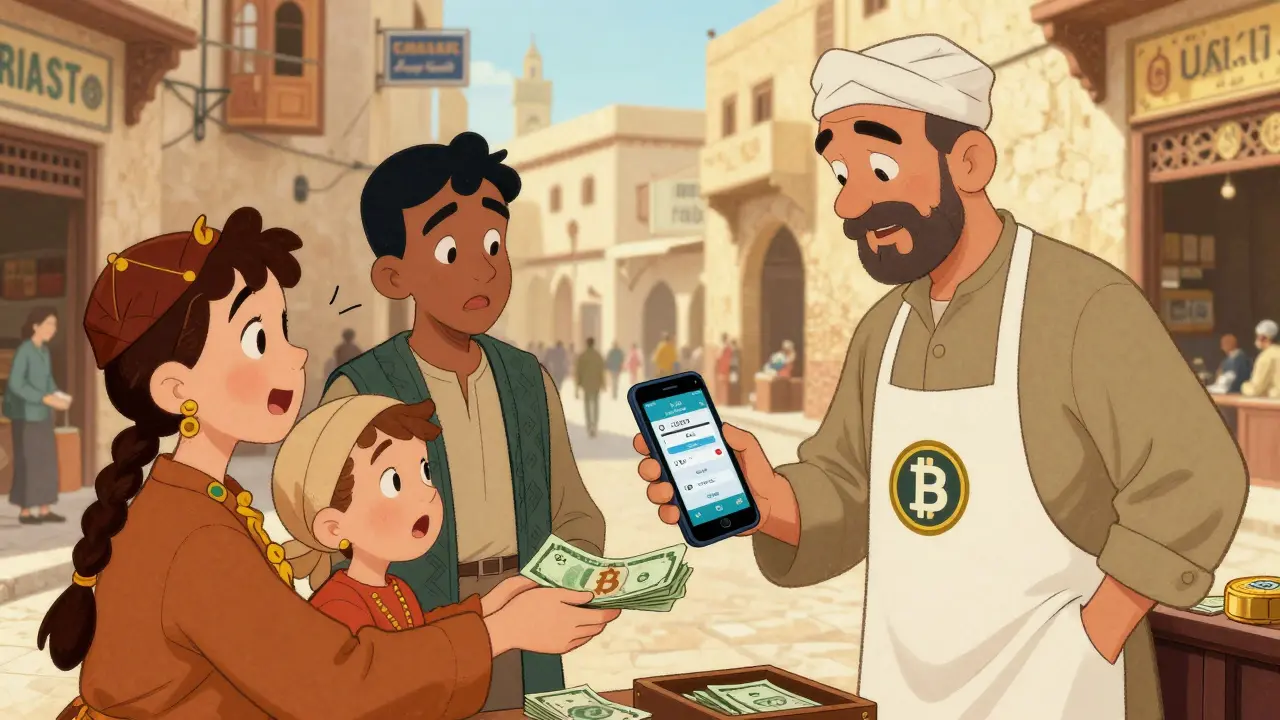
Even though it’s illegal, thousands of Moroccans are using cryptocurrency to send money abroad every day. It’s not because they want to break the law - it’s because they have no other choice. Traditional banks make it nearly impossible to move money internationally, especially for people without access to formal banking or those sending money to family overseas. Cryptocurrency, despite being banned since 2017, has become the quiet workaround for millions.
Why the Ban Exists - and Why It Doesn’t Work
In November 2017, Morocco’s Central Bank, Bank Al-Maghrib, declared all cryptocurrency transactions illegal. The official reasons were clear: no consumer protection, risk of money laundering, extreme price swings, and violations of foreign exchange rules. But the ban didn’t stop people from using crypto - it just pushed it underground.Today, the crypto market in Morocco is growing fast. Experts estimate it will hit $292.4 million by 2026. That’s not a small number. It means people are still trading, holding, and sending crypto - even if they’re doing it in secret. Why? Because the alternatives are worse.
Traditional remittance services like Western Union or MoneyGram charge up to 10% in fees to send $200 to France or Spain. Banks take days to process transfers, demand paperwork you don’t always have, and often refuse service to people without formal employment records. Crypto? A few clicks, under an hour, and fees under 1%.
How It Actually Works - The Real Process
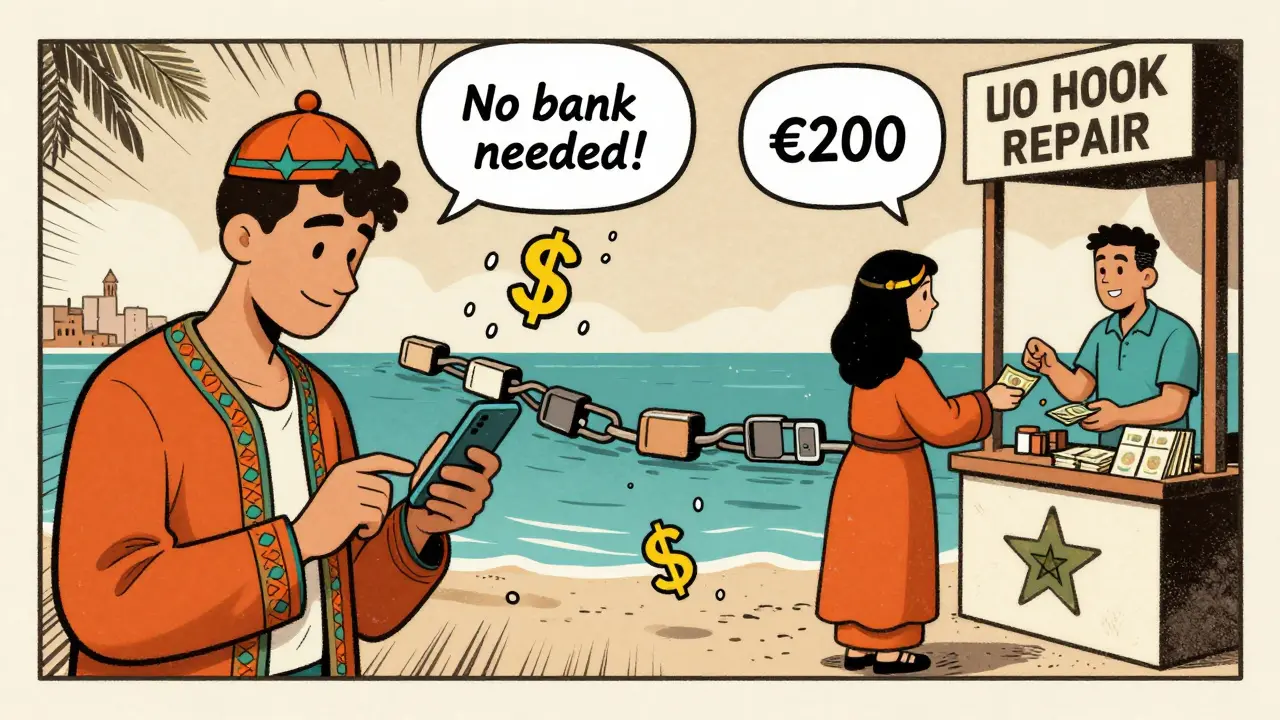
Most Moroccans don’t trade Bitcoin for fun. They use it like digital cash. Here’s how it works in practice:- A Moroccan living in Spain sends €200 to his family in Casablanca using USDT (Tether), a stablecoin pegged to the US dollar.
- He buys USDT on a peer-to-peer platform like Paxful or LocalBitcoins, paying in dirhams through a trusted local seller.
- The USDT is sent to his sister’s wallet in Morocco - no bank account needed.
- She cashes it out through a local crypto exchange agent, getting dirhams in hand within minutes.
This system skips banks entirely. No forms, no delays, no limits on how much you can send. The only requirement? A smartphone and someone you trust to swap crypto for cash.
These local agents - often small shop owners, phone repair stalls, or even university students - act as informal crypto ATMs. They buy crypto from senders and give cash to receivers. It’s not regulated, but it’s reliable. Many have been doing this for years. They know their customers. They keep records. They don’t need a license to be useful.
The Role of Stablecoins - The Real MVP
Bitcoin’s wild price swings make it risky for everyday payments. That’s why most Moroccans don’t use it. They use stablecoins - especially USDT and USDC. These coins are tied to the US dollar, so their value doesn’t jump up and down like Bitcoin.USDT is the most popular. It’s accepted everywhere in the underground crypto network. You can buy it with cash, send it across borders, and cash it out without worrying that your $200 gift turns into $180 because the market dropped overnight.
Stablecoins act like digital dirhams that work globally. They’re the reason crypto works for remittances - not speculation.
Why the Government Can’t Stop It
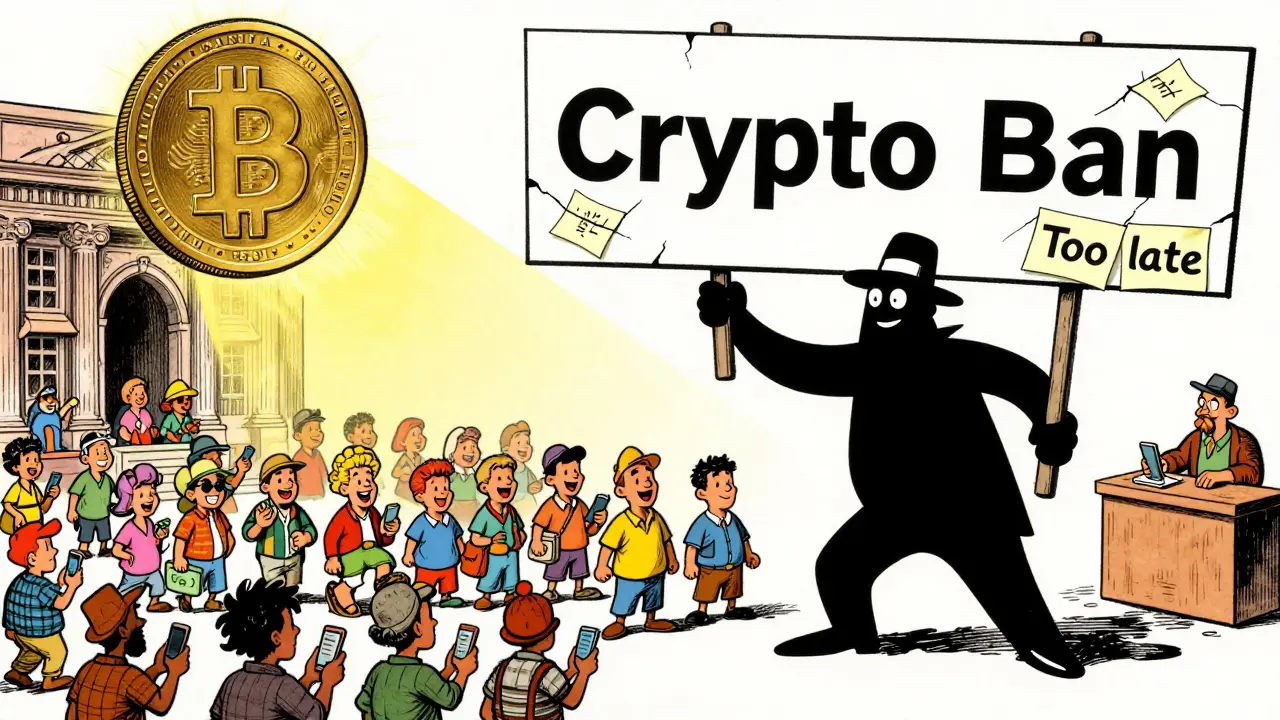
Bank Al-Maghrib claims it can track crypto transactions. But here’s the problem: blockchain is decentralized. There’s no central server to shut down. No bank branch to raid. No single company to fine.Most transactions happen through peer-to-peer apps or over WhatsApp. People meet in person to swap cash for crypto. These are one-off, localized deals - hard to trace, impossible to stop at scale. Even if the government blocked crypto websites, the real activity isn’t on websites. It’s in back alleys, cafes, and group chats.
Plus, there’s no real punishment. If you get caught, you might get a warning. You won’t go to jail. There’s no legal framework to prosecute individuals. So the risk is low. The reward? Saving hundreds of dollars a year on remittance fees.
The New Twist: A Government Crypto Plan?
In July 2025, Bank Al-Maghrib dropped a bombshell: they’re drafting a law to legalize and regulate cryptocurrency. Not because they changed their mind about risks - but because they realized they can’t win the war.Instead of banning crypto, they want to control it. Their plan? Launch their own digital currency - a Central Bank Digital Currency (CBDC) - for international payments. This isn’t Bitcoin. It’s a government version of USDT, fully backed by the state, trackable, and limited to approved users.
They’re even working with Egypt and the World Bank to build a North African digital payment network. The goal? Replace underground crypto with official digital dirhams for cross-border transfers.
That sounds good - until you ask: who gets access? Will ordinary Moroccans with no bank history be allowed to use it? Or will it only work for big businesses and the wealthy?
If the CBDC requires ID verification, bank accounts, or income proof, it won’t replace crypto. It’ll just add another barrier. The underground system works because it doesn’t ask questions.
The Human Side: Families, Diaspora, and Survival
Morocco has over 4 million people living abroad - mostly in France, Spain, and Belgium. Many work in construction, cleaning, or hospitality. They don’t have access to formal remittance services. Their employers don’t pay them through banks. They earn cash, and they need to get it home.A mother in Tanger sends $150 every month to her elderly parents in Marrakech. She used to pay $15 in fees. Now, she uses crypto. She saves $180 a year. That’s a month’s worth of medicine.
A student in Rabat gets $300 from her uncle in Canada. Without crypto, she’d wait 5 days and pay $30 in fees. With crypto, she gets it in 20 minutes. No paperwork. No questions.
This isn’t about gambling or getting rich. It’s about survival. It’s about dignity. It’s about not being forced to choose between paying high fees or not sending money at all.
What Happens When the Law Changes?
If Morocco legalizes crypto in 2026, it won’t be a revolution - it’ll be a recognition. The underground system is already functioning. The government just wants to bring it into the light - and take a cut.But if the new rules require KYC (know-your-customer) checks, bank accounts, or taxes on every transaction, the underground network won’t disappear. It’ll adapt. People will still use it. Because for many, the cost of compliance is higher than the risk of breaking the law.
The real test won’t be whether crypto becomes legal. It’ll be whether the government can offer something better - faster, cheaper, and easier - than what people are already doing in secret.
So far, they haven’t.
Daniel Verreault
December 30, 2025 AT 03:18bro this is wild. morocco banned crypto but people are still using it like it’s oxygen. usdt is the real hero here - stable, fast, cheap. no bank? no problem. just find a guy with a phone and a shop and boom - cash in minutes. the system’s broken, so people built their own. and honestly? it’s more efficient than any government solution i’ve seen.
Jacky Baltes
December 31, 2025 AT 16:46The underlying tension here is between formal institutional control and informal economic resilience. The state’s regulatory framework assumes centralized points of failure - banks, exchanges, KYC protocols - but the crypto underground operates through distributed trust networks. These aren’t criminals; they’re adaptive actors optimizing for survival within a rigid system. The CBDC may look like progress, but if it replicates the same exclusionary barriers, it will merely rebrand the problem.
Rick Hengehold
January 1, 2026 AT 03:05They banned it. People ignored it. Now they want to tax it. Classic.
Brandon Woodard
January 1, 2026 AT 13:57How delightfully ironic. A government that claims to protect its citizens from financial chaos is, in fact, forcing them into a black-market ecosystem that’s more reliable than the official channels. Bravo. Truly. A masterclass in policy failure.
Ryan Husain
January 3, 2026 AT 00:31This is a textbook case of regulation outpacing reality. The state assumed it could ban technology, but it forgot that human need is the ultimate driver of innovation. Crypto isn’t being used for speculation - it’s being used as a utility. And utilities don’t disappear when you outlaw them. They evolve. The CBDC might be a step toward legitimacy, but only if it’s truly accessible. Otherwise, it’s just another gatekeeper.
Jack and Christine Smith
January 4, 2026 AT 19:44omg this is so real. my cousin in casablanca uses crypto to get money from her bro in spain. she said the guy who swaps it for cash is this old guy who fixes phones in the market. he’s got a notebook with names and amounts. no app. no bank. just trust. i cried reading this. this is how people survive.
Jackson Storm
January 5, 2026 AT 01:15you guys are missing the real story - it’s not about crypto, it’s about remittance fees. 10% is robbery. if you send $200, you’re giving $20 just to move money. that’s like paying rent on your own family. usdt cuts that to 1% or less. it’s not a tech revolution - it’s an economic justice movement. and the government? they’re still stuck in 2017 thinking they can stop math.
Raja Oleholeh
January 6, 2026 AT 21:48India also has this problem. But we don’t need crypto. Our government will fix it. Moroccans are weak. They should follow our model.
Prateek Chitransh
January 6, 2026 AT 21:51Interesting how the same people who scream about ‘western financial imperialism’ are now quietly using a dollar-pegged stablecoin as their lifeline. The irony is thick enough to spread on toast. But hey - survival doesn’t care about ideology. It just wants cash in hand.
Michelle Slayden
January 7, 2026 AT 17:02It is, without question, a profound indictment of institutional failure. The central bank’s policy has not only proven ineffective, but it has also inadvertently incentivized the creation of a parallel financial infrastructure that operates with greater efficiency, transparency, and accessibility than the sanctioned system. One must ask: is the goal of regulation to protect, or to control?
christopher charles
January 8, 2026 AT 01:04ok but seriously - imagine being able to send money to your mom in morocco and not paying $20 in fees. i know people who do this every week. they use paxful, meet up at a cafe, hand over cash, get usdt sent, then the other person cashes out at a local shop. it’s like a secret club. no one’s getting arrested. everyone’s happy. why is this illegal again??
Vernon Hughes
January 8, 2026 AT 03:58Stablecoins are the unsung heroes of global migration. The state can ban all the websites it wants. But you can’t ban human connection. Or need. Or love.
Alison Hall
January 10, 2026 AT 03:06This is why I believe in tech. Not for hype. But for people. Real people. Real families. This isn’t crypto bros. This is someone’s mom getting medicine because she saved $180 a year.
Amy Garrett
January 10, 2026 AT 07:14soo many people dont get it-its not about bitcoin. its about usdt. its about not paying 10% to send money home. its about a sister getting cash in 20 mins not 5 days. why is this even a debate??
Haritha Kusal
January 10, 2026 AT 20:17my friend in morocco told me this story last year and i didnt believe her… until i saw her cousin get cash from a phone repair guy. its so simple. no fancy tech. just trust. and now the gov wants to make it complicated again? no thanks.
Mike Reynolds
January 11, 2026 AT 23:23I’ve worked with diaspora communities for years. This isn’t illegal behavior - it’s institutional avoidance. When the system fails you, you don’t wait for permission to fix it. You just do it. The fact that the government is now trying to regulate it means they’ve lost. The people already won.