
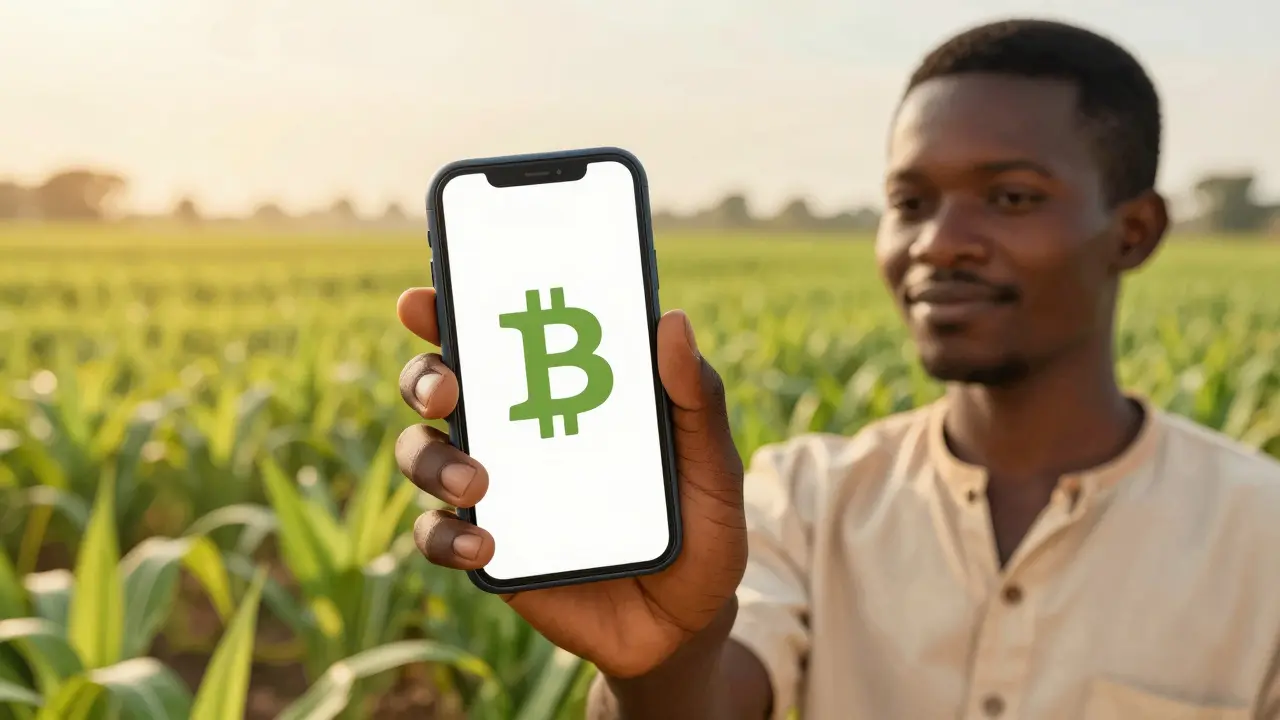
For over 1.4 billion unbanked adults globally, cryptocurrency offers a lifeline. cryptocurrency is a digital asset that enables peer-to-peer transactions without banks, using blockchain technology to secure and verify transfers. Unlike traditional banking, it needs no physical branches, paperwork, or minimum balances-just a smartphone and internet. This simple access point could change everything for people left out of the financial system.
How Cryptocurrency Bypasses Traditional Banking
Traditional banks often feel impossible for the unbanked. Requiring ID documents, physical branch visits, and minimum balances excludes millions. But cryptocurrency wallets can be created in minutes with just a smartphone. In Kenya, where mobile money is common, people use apps like Paxful to send Bitcoin instantly. No bank account needed-just a wallet address. A farmer in rural Nigeria can receive payments for crops without traveling hours to a bank. All it takes is a basic smartphone and stable internet. The barrier to entry is incredibly low, making financial participation possible for those previously left out.
Slashing Remittance Costs
Remittances are lifelines for many developing economies. In 2023, global remittances reached $858 billion, with $647 billion going to low- and middle-income countries. Traditional services like Western Union charge 6-15% in fees. Sending $100 to the Philippines might cost $12. Cryptocurrency changes this. A Bitcoin transfer can cost under $1 and arrive in minutes. The World Bank reports that crypto remittances save users billions annually. For example, in El Salvador, where Bitcoin is legal tender, people use the Chivo wallet to send money home with minimal fees. This isn’t just theory-it’s happening now, putting more money in families’ pockets.
| Method | Fee | Time |
|---|---|---|
| Traditional (Western Union) | $6-$15 | 1-5 days |
| Cryptocurrency (Bitcoin) | Under $1 | Minutes |

Protecting Against Inflation
High inflation is a daily struggle in many developing nations. Venezuela’s currency has lost over 99% of its value since 2017. Argentina faces 200%+ inflation. Traditional savings accounts become worthless. But cryptocurrencies like Bitcoin have a fixed supply, making them a hedge against inflation. In Venezuela, over 10% of adults use crypto to preserve wealth. While prices fluctuate, Bitcoin’s global value often rises when local currencies collapse. This isn’t a perfect solution-volatility remains a risk-but it’s a tool for those with no other options. For many, crypto is the only way to protect their savings from rapid devaluation.
Real Challenges Hold Back Adoption
Despite the promise, hurdles remain. In Nigeria, the central bank banned banks from handling crypto in 2021, creating legal uncertainty. Rural areas often lack reliable internet-only 35% of Sub-Saharan Africa has consistent connectivity. Security is another issue. Scammers target new users unfamiliar with private keys. A 2025 study found 40% of crypto users in developing countries experienced fraud attempts. Volatility also scares people. A 20% price drop in a day could wipe out savings for someone living paycheck to paycheck. These challenges mean crypto isn’t a magic bullet-it needs careful handling and support.

Experts Say: Complement, Don’t Replace
Georgetown University researchers emphasize cryptocurrency should complement, not replace, traditional banking. In rural Africa, where bank branches are hours away, crypto fills critical gaps. Farmers use it to receive payments without traveling. But for everyday banking like loans or checking accounts, existing banks can integrate crypto features. For example, some African banks now offer crypto-based savings accounts that convert to local currency. This hybrid approach leverages the strengths of both systems. The key is balancing innovation with stability-ensuring crypto serves the unbanked while banks handle broader financial needs.
Path Forward: Regulation, Education, Infrastructure
Success depends on three pillars: clear regulations, better infrastructure, and education. Ghana and Nigeria are testing central bank digital currencies (CBDCs) to blend crypto benefits with government oversight. Education is crucial-teaching people how to safely use wallets and protect keys. Organizations like the World Bank fund digital literacy programs in Kenya and Uganda. Infrastructure improvements, like expanding mobile internet, are also vital. As more countries adopt balanced policies, crypto’s role in financial inclusion will grow. But it’s a marathon, not a sprint. Every step toward regulation and education brings us closer to a world where everyone has access to financial tools.
Can cryptocurrency really help the unbanked?
Yes. Cryptocurrency requires only a smartphone and internet, bypassing the need for traditional bank accounts. In Kenya, over 80% of adults use mobile money services like M-Pesa, which integrates with crypto wallets. This allows even those without banks to send and receive money securely. However, it’s not a standalone solution-it works best alongside existing financial systems.
How does crypto compare to traditional remittance services?
Traditional remittances often cost 6-15% in fees and take days. Cryptocurrency transfers typically cost under $1 and complete in minutes. For example, sending $100 via Bitcoin to Nigeria might cost $0.50 and arrive instantly, while Western Union would charge $10 and take 24-48 hours. This saves millions in fees annually for migrant workers.
What are the biggest risks of using crypto in developing countries?
Security risks top the list-scammers target users who don’t understand private keys. Volatility is another danger; a 20% price drop could erase savings for low-income users. Infrastructure gaps also matter-rural areas often lack reliable internet, making transactions impossible. Regulatory uncertainty, like Nigeria’s 2021 bank ban, adds further risk. These challenges require education and safety measures before widespread adoption.
Are governments supporting cryptocurrency adoption?
Some are, but cautiously. Ghana and Nigeria are testing central bank digital currencies (CBDCs) to blend crypto benefits with government control. El Salvador made Bitcoin legal tender in 2021, though adoption remains mixed. Most governments still lack clear regulations, creating uncertainty. Experts agree balanced policies are needed-protecting users while allowing innovation-to unlock crypto’s full potential for financial inclusion.
Do I need a bank account to use cryptocurrency?
No. One of cryptocurrency’s biggest advantages is that it requires no bank account. You only need a smartphone, internet access, and a wallet app. In countries like Kenya, people use mobile money apps like M-Pesa to buy Bitcoin, then send it globally without ever visiting a bank. This makes it uniquely accessible for the unbanked population.
Katie Haywood
February 6, 2026 AT 06:26Oh yeah, crypto for financial inclusion. Because nothing says 'helping the unbanked' like requiring a smartphone and internet in places where electricity is a luxury. But sure, let's pretend this is a magic bullet. 🤷♀️
Matt Smith
February 7, 2026 AT 15:57Let's be real: crypto is a scam. It's just a way for rich people to get richer while poor folks get scammed. Every 'success story' is just a lucky few. The rest? Gone. 🤦♂️
Josh Flohre
February 8, 2026 AT 09:07While the article presents cryptocurrency as a panacea for financial inclusion, it completely ignores the systemic risks inherent in volatile digital assets. The lack of regulatory oversight in developing nations exacerbates these risks, making the situation more precarious than traditional banking systems. This is not progress-it's reckless.
sachin bunny
February 9, 2026 AT 16:07Wait, crypto is helping? Bro, it's just a tool for the elite to control money. Governments are using it to track everyone. You think they care about the unbanked? They just want more data. 🤔
Danica Cheney
February 10, 2026 AT 08:40Crypto is a gamble with no safety net.
Kyle Pearce-O'Brien
February 10, 2026 AT 11:01While the piece lauds cryptocurrency's potential for financial inclusion, it fails to address the inherent structural issues of decentralized finance. The absence of centralized governance creates systemic vulnerabilities, particularly in regions with nascent regulatory frameworks. This is not a sustainable model-it's a high-risk gamble with potentially catastrophic consequences for vulnerable populations. 🤷♂️
Matthew Ryan
February 10, 2026 AT 11:33It's interesting how crypto can bypass banks, but I wonder if it's really practical for daily use. Maybe in some places, but not everywhere. Just something to think about.
Nathaniel Okubule
February 11, 2026 AT 23:19Cryptocurrency does offer a way for people without banks to access financial services. However, it's important to ensure that users are educated on how to use it safely. Without proper knowledge, the risks could outweigh the benefits.
David Bain
February 13, 2026 AT 03:39The intersection of cryptocurrency and financial inclusion presents a paradoxical scenario. On one hand, it democratizes access; on the other, it introduces volatility and regulatory uncertainty. The philosophical question remains: can decentralized systems truly serve those who need stability the most?
Freddie Palmer
February 14, 2026 AT 06:04Yes, crypto can help, but what about the infrastructure? Many areas don't have reliable internet, so how does that work? Also, the fees for crypto transactions can vary widely-sometimes they're high. Is it really better than traditional remittances?
perry jody
February 16, 2026 AT 02:07Let's not forget the real-world impact! In places like Kenya, mobile money and crypto together are changing lives. It's not perfect, but it's a step forward. 🌍✨
Paul Jardetzky
February 17, 2026 AT 19:02Crypto's low fees for remittances are a game-changer! Sending money home is cheaper and faster, which means more money stays with families. It's not a silver bullet, but it's a huge help. 💪
Jesse Pasichnyk
February 18, 2026 AT 00:28America's banking system is way better than crypto. Why would anyone want to use this? It's risky and unregulated. Stick with the good old US banking system.
aryan danial
February 19, 2026 AT 10:45The notion that cryptocurrency is a panacea for financial inclusion is fundamentally flawed. While it does offer certain advantages such as reduced transaction costs, the volatility and lack of regulatory oversight create significant risks. In regions with limited technological infrastructure, this 'solution' exacerbates existing inequalities. It's ironic how proponents overlook these realities in their enthusiasm.
Oliver James Scarth
February 19, 2026 AT 23:00The notion that cryptocurrency serves as a tool for financial inclusion is, frankly, misguided. While it may offer theoretical benefits, the reality is that it introduces significant volatility and regulatory challenges. In nations with fragile economies, this could destabilize rather than empower. A more measured approach is required.
Joshua Herder
February 20, 2026 AT 10:44Let's not get carried away. Yes, crypto can help in some cases, but the reality is far more complicated. In places with unstable governments, crypto can be used for illicit activities. Plus, the volatility means people could lose everything overnight. It's not the solution everyone thinks it is.
Brittany Coleman
February 21, 2026 AT 18:06It's interesting how crypto bypasses banks but also has risks. Maybe it's part of the solution but not the whole thing. Needs more thought.
Molly Andrejko
February 22, 2026 AT 22:13It's so important to remember that while crypto has potential, we must also support traditional banking infrastructure. A balanced approach ensures everyone benefits, not just those with smartphones. Let's work together! 😊
Alisha Arora
February 24, 2026 AT 03:41People think crypto is great, but it's a scam. Scammers target the unbanked. They lose money. It's not helping-it's hurting.
Jim Laurie
February 26, 2026 AT 00:41While crypto can provide access to financial services, it's crucial to address security risks. Many users don't understand private keys, leading to losses. We need better education to make this sustainable. 🤝
Alex Garnett
February 27, 2026 AT 05:24Cryptocurrency is a dangerous fad that exploits the vulnerable. Without proper regulation, it's a recipe for disaster. Those who push this as a solution are either naive or malicious.
Olivette Petersen
March 1, 2026 AT 00:02It's clear crypto has potential, but we need to address infrastructure and education. With the right support, it could be a powerful tool for inclusion. Let's focus on making it work for everyone!
Robin Ødis
March 1, 2026 AT 20:47Let me explain why crypto isn't the solution. First, volatility is a huge risk for people living paycheck to paycheck. Second, scams are rampant in developing countries. Third, infrastructure isn't there. Fourth, governments are wary. It's not a magic fix-it's a problem. You're all missing the point.
Reda Adaou
March 2, 2026 AT 05:20Crypto can help, but it's not the only answer. We need to support both traditional banking and new tech. Everyone deserves access, and that means working together.
orville matibag
March 2, 2026 AT 18:49Interesting perspective. In many cultures, trust in banks is low, so crypto fills a gap. But it's not without risks. It's a complex issue with no easy answers.
Ryan Chandler
March 3, 2026 AT 21:52Imagine a world where your phone is your bank. Crypto could make that real for millions. But it's not just about technology-it's about people, culture, and trust. Let's build bridges, not walls.