
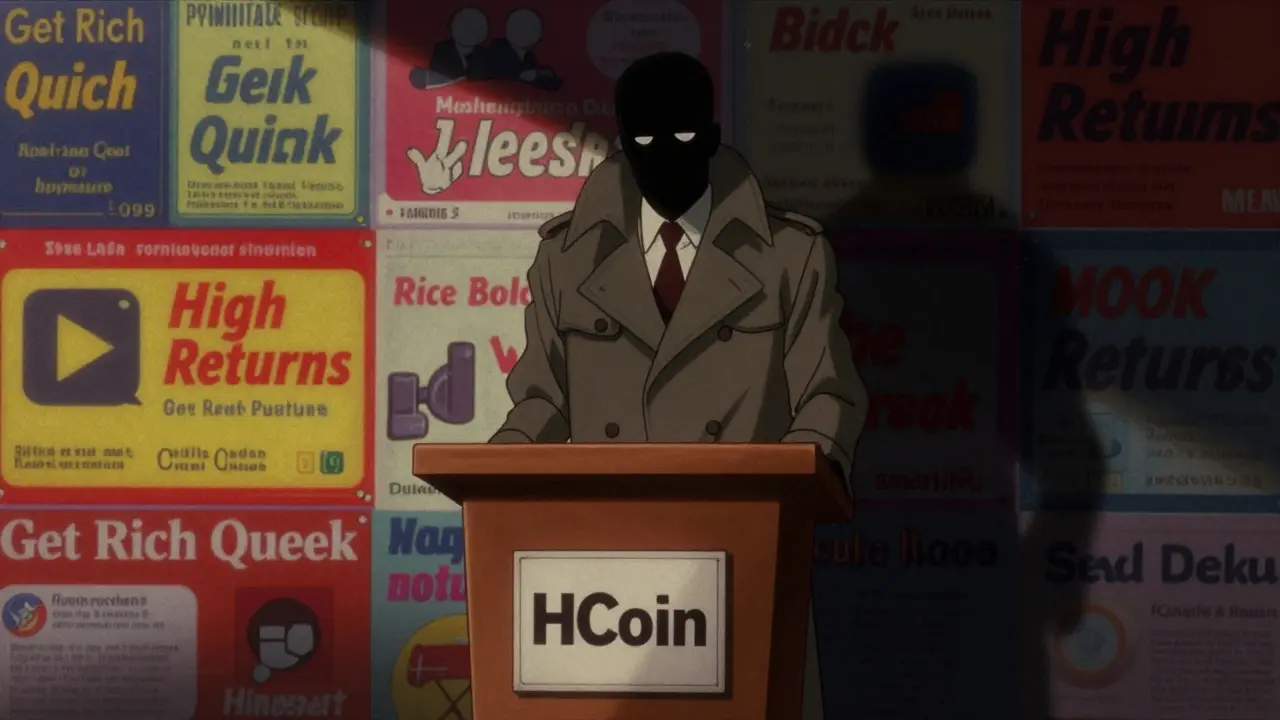
You’ve probably stumbled across HCoin while scrolling through social media ads or clicking on a link promising high returns. The site looks professional enough. The promises sound too good to be true. But here is the hard truth: in the world of cryptocurrency, if you can’t find clear information about an exchange, that silence is often louder than any marketing slogan.
I’ve spent years analyzing digital asset platforms, and when I look at HCoin, a cryptocurrency exchange platform that has generated significant questions regarding its legitimacy within the digital asset trading community, the red flags aren't just waving-they’re screaming. This isn’t just a casual opinion. It’s based on a lack of verifiable data, absence from major industry rankings, and a complete void of user feedback. If you are holding your breath waiting for a green light to deposit money into HCoin, let me help you exhale. You should walk away.
The Silence Speaks Volumes: Why HCoin Disappears from Major Reviews
In 2025 and moving into 2026, the crypto market matured significantly. We saw Bitcoin trade above $113,000 and institutional investors pouring billions into ETFs. With this maturity came scrutiny. Reputable exchanges don’t hide. They publish proof of reserves, list their regulatory licenses, and appear in comprehensive reviews by trusted outlets like Coin Bureau, Koinly, and Ventureburn.
HCoin does none of these things.
When you search for "best crypto exchanges 2025" or "top crypto platforms," HCoin is nowhere to be found. Coin Bureau’s extensive analysis, which evaluates over 50 platforms using more than 150 data points, did not include HCoin. Koinly’s list of the top 10 exchanges for US users featured giants like Coinbase, Kraken, and Binance US, but HCoin was absent. This isn’t an oversight. It’s a signal. If an exchange cannot meet the basic transparency standards required for inclusion in these reports, it likely doesn’t have the infrastructure, security, or legal compliance to protect your funds.
The only positive mention of HCoin comes from Tokenhell, a review site that labeled it "legitimate" in November 2025. However, this claim lacks substance. There were no cited security certifications, no regulatory licenses mentioned, and no audit reports provided. A single, vague endorsement from a lesser-known source does not outweigh the collective silence of the entire industry’s leading analysts.
Security and Transparency: The Missing Foundations
Let’s talk about what actually matters when you hand over your life savings to a digital platform. Security isn’t a feature; it’s the foundation. Established exchanges like Kraken boast an 11-year record with zero hacks or exploits. They conduct rigorous penetration testing and run industry-leading bug bounty programs. Coinbase offers FDIC insurance on customer cash deposits and maintains strict regulatory compliance across the US, UK, and Europe.
Now, look at HCoin. What is their security protocol? Who audits their smart contracts? Do they hold proof-of-reserve audits to prove they actually have the assets they claim to manage? The answer to all these questions is: we don’t know. The available research contains absolutely no documentation on HCoin’s security measures. In an industry where FTX collapsed overnight due to mismanagement and lack of transparency, operating without public security credentials is negligence.
Compare this to Binance US or Crypto.com, which clearly outline their fee structures, supported cryptocurrencies, and security features. HCoin provides none of this. Without knowing how your funds are stored-whether in cold storage, multi-signature wallets, or insured accounts-you are gambling, not investing.
User Experience and Community: The Ghost Town Effect
A healthy crypto exchange thrives on community engagement. Users discuss trades on Reddit, leave reviews on Trustpilot, and share tips on Twitter. These platforms build trust through visible, real-world usage. When I searched for user feedback on HCoin, I found nothing. No Reddit threads debating its fees. No Trustpilot reviews complaining about withdrawal delays. No social media buzz.
This "ghost town" effect is a critical warning sign. Established exchanges like Robinhood and eToro have millions of active users generating constant content. HCoin’s invisibility suggests either minimal user adoption or a deliberate effort to avoid scrutiny. If no one is talking about it, ask yourself why. Are they hiding poor performance? Are they struggling with liquidity? Or worse, are they preparing for a rug pull?
Furthermore, there is no information on HCoin’s onboarding process. Do they require KYC (Know Your Customer) verification? What payment methods do they accept? Leading exchanges like Coinbase clearly state they support bank transfers, cards, and PayPal. Kraken lists stocks, ETFs, and NFTs alongside crypto. HCoin offers no such clarity. You cannot assess the learning curve or technical support quality because the operational details simply do not exist in the public domain.

Fee Structures and Trading Pairs: The Unknown Costs
Hidden fees can eat away at your profits faster than market volatility. Transparent exchanges publish their fee schedules upfront. Kraken offers fees ranging from 0% to 0.4%, with a subscription model called "Kraken Plus" for frequent traders. Coinbase charges between 0% and 3.99% depending on the method used. Even smaller players like Bitstamp and Gemini provide clear breakdowns.
HCoin’s fee structure is undocumented. Are they charging hidden spreads? High withdrawal fees? Unexpected maintenance costs? Without this information, you have no way to calculate your actual return on investment. Additionally, there is no list of supported cryptocurrencies or trading pairs. Do they offer Bitcoin? Ethereum? Stablecoins? Or just obscure altcoins with low liquidity? The absence of this basic data makes it impossible to evaluate the platform’s utility.
| Feature | HCoin | Kraken | Coinbase |
|---|---|---|---|
| Regulatory Status | Unknown / Unverified | Licensed in US, UK, EU | Licensed in US, UK, EU |
| Security Record | No Data Available | 11+ Years Zero Hacks | Top-tier Security & Insurance |
| Proof of Reserves | Not Published | External Audits Published | Regular Attestations |
| User Reviews | None Found | Extensive Positive Feedback | High Volume of Reviews |
| Fee Transparency | Undocumented | Clear Schedule (0-0.4%) | Clear Schedule (0-3.99%) |
Regulatory Risks in 2026: Why Compliance Matters Now More Than Ever
The regulatory landscape has shifted dramatically. In March 2025, the SEC settled with an unnamed exchange, highlighting increased enforcement actions against non-compliant platforms. As we move through 2026, regulators are cracking down harder than ever. Exchanges must now demonstrate clear compliance frameworks to operate legally.
HCoin shows no evidence of meeting these standards. There are no mentions of SEC registration, MiCA compliance in Europe, or FCA licensing in the UK. Operating in this gray area exposes users to massive risk. If regulators shut down HCoin tomorrow, would you be able to recover your funds? Would there be a legal recourse? With established exchanges, the answer is yes. With HCoin, the answer is almost certainly no.
Institutional investors are prioritizing platforms with "proof of reserve audits" and clear regulatory positioning. Retail investors should follow suit. The era of wild west crypto exchanges is ending. Platforms that refuse to adapt to transparency requirements will likely fail or be forced out of business.
Alternatives That Actually Work: Where Should You Trade Instead?
If you’re looking for a safe, reliable place to trade crypto, there are plenty of excellent options that prioritize your security and transparency. Here are three top recommendations for 2026:
- Kraken: Ideal for experienced traders who value security and low fees. Their 11-year spotless record and robust customer support make them a standout choice. They also offer advanced features like margin trading and staking.
- Coinbase: Perfect for beginners. Their interface is intuitive, regulatory compliance is top-notch, and they offer FDIC insurance on cash balances. While fees can be higher, the peace of mind is worth it for new users.
- Crypto.com: Great for those who want a diverse ecosystem. They support over 313 cryptocurrencies, offer competitive fees (0-2.99%), and provide additional services like Visa debit cards and NFT marketplaces.
These platforms are included in major reviews, have thousands of verified user testimonials, and publish regular security updates. They invite scrutiny because they have nothing to hide.
Final Verdict: Avoid HCoin at All Costs
To summarize, HCoin fails every test of legitimacy and reliability. It lacks regulatory oversight, has no documented security protocols, offers no transparent fee structure, and is completely absent from user communities and industry reviews. The single positive review from Tokenhell is insufficient to counterbalance the overwhelming lack of evidence.
In the crypto space, trust is earned through transparency. HCoin has earned nothing. Do not risk your capital on a platform that operates in the shadows. Choose an exchange that respects your intelligence and protects your assets. Your financial future depends on making informed decisions, not blind leaps of faith.
Is HCoin a scam?
While there is no definitive proof that HCoin is a scam, the lack of transparency, regulatory compliance, and user feedback raises serious concerns. It exhibits many characteristics of fraudulent platforms, including anonymity and absence from reputable reviews. It is safest to assume it is high-risk and avoid it.
Why is HCoin not listed on major review sites?
Major review sites like Coin Bureau and Koinly use strict criteria including security audits, regulatory licenses, and user volume. HCoin likely fails to meet these standards due to its lack of verifiable data and small market presence.
What are the safest crypto exchanges in 2026?
The safest exchanges include Kraken, Coinbase, and Binance US. These platforms are regulated, have strong security records, publish proof of reserves, and have large, active user bases.
Does HCoin require KYC verification?
There is no public information regarding HCoin's KYC (Know Your Customer) requirements. This lack of clarity is a red flag, as legitimate exchanges always disclose their identity verification processes to comply with anti-money laundering laws.
Can I trust Tokenhell's review of HCoin?
Tokenhell's review lacks specific evidence such as security audits or regulatory citations. Relying on a single, vague endorsement from a minor review site is risky. It is better to consult multiple authoritative sources like Coin Bureau or official regulatory databases.