

The landscape of digital money in the United States just changed forever. If you have been watching the crypto space, you know that stablecoins-the digital tokens pegged to the US dollar or other fiat currencies-have become the backbone of daily trading and payments. But until recently, they operated in a gray area with patchy rules. That ends with the GENIUS Act, officially known as the Guiding and Establishing National Innovation for U.S. Stablecoins Act of 2025. Signed into law on July 18, 2025, this legislation marks the first time the federal government has created a comprehensive rulebook for these assets.
This isn't just bureaucratic paperwork. It is a strict set of restrictions designed to protect your money, secure the US dollar's dominance, and clean up the industry. For anyone holding, issuing, or planning to use stablecoins, understanding these new rules is no longer optional-it is essential for staying compliant and safe.
What Exactly Is the GENIUS Act?
To understand the impact, we need to define what the law actually covers. The GENIUS Act focuses specifically on payment stablecoins. These are digital assets designed to be used as a means of payment or settlement, where the issuer promises to redeem them for a fixed amount of monetary value (like one US dollar) and maintains that stable value.
If you use a token like Tether (USDT) or USD Coin (USDC) to buy goods, pay for services, or move money between exchanges, you are dealing with payment stablecoins. The law does not cover every type of cryptocurrency; it targets those acting as currency substitutes. The goal is to ensure that when you hold $100 worth of stablecoins, there is truly $100 backing it up, ready for you to withdraw.
The act establishes a unified regulatory approach, meaning that instead of navigating different rules in California, New York, and Texas, issuers must follow a single federal standard. However, states still play a role, which we will get to later. The core promise here is consistency and consumer protection across the entire country.
Who Can Issue Stablecoins Under the New Law?
One of the biggest shifts introduced by the GENIUS Act is who gets the license to print digital dollars. In the past, tech startups and non-bank entities could launch stablecoins with relatively little oversight. Now, the door is closed to most of them.
Under the new framework, only specific types of financial institutions can issue payment stablecoins:
- Insured Depository Institutions: This includes traditional banks and credit unions that already hold FDIC insurance.
- Bank Subsidiaries: Companies owned by banks can issue stablecoins if they meet strict criteria.
- Nonbank Financial Institutions: These entities can apply, but only if they receive explicit approval from the Federal Reserve and prove they have the capability to comply with all regulations.
This restriction effectively bars independent crypto firms from issuing their own stablecoins unless they partner with or transform into a regulated financial entity. It brings stablecoin issuance back into the heart of the traditional banking system, leveraging existing trust mechanisms and oversight structures.
The Ironclad Reserve Requirements
The heart of any stablecoin is its reserve. Without full backing, a stablecoin is just a speculative bet. The GENIUS Act mandates a 1:1 reserve ratio. For every token in circulation, the issuer must hold an equivalent amount of high-quality assets.
But "high-quality" is strictly defined. Issuers cannot park funds in risky corporate bonds or opaque real estate deals. The approved assets include:
- Physical currency (cash)
- US Treasury bills
- Repurchase agreements (repos)
- Other low-risk assets explicitly approved by regulators
Transparency is key. Issuers must regularly report the composition of their reserves and undergo audits by registered public accounting firms. This addresses the long-standing criticism of the sector, where some issuers were vague about what backed their tokens. You now have legal assurance that your digital dollars are supported by tangible, liquid assets.

Custody, Segregation, and Anti-Money Laundering
Holding the reserves is only half the battle. How those assets are managed matters just as much. The GENIUS Act imposes strict custody rules to prevent fraud and mismanagement.
First, assets backing stablecoins must be segregated. This means they cannot be commingled with the issuer’s own operating funds. If the company goes bankrupt, creditors cannot seize the stablecoin reserves to pay off debts. Your money stays yours.
Second, custodial services for these reserves-or for private keys associated with stablecoins-can only be performed by entities under federal or state banking regulator oversight. This adds another layer of security, ensuring that the vaults holding your digital cash are watched by professionals subject to rigorous inspections.
Furthermore, issuers must fully comply with the Bank Secrecy Act (BSA). This requires robust anti-money laundering (AML) and counter-financing of terrorism (CFT) measures. Expect stricter Know Your Customer (KYC) checks and more detailed transaction reporting. The days of anonymous large-scale stablecoin transfers are over.
| Requirement | Detail |
|---|---|
| Issuers Allowed | Banks, credit unions, bank subsidiaries, Fed-approved nonbanks |
| Reserve Ratio | Strict 1:1 backing with low-risk assets (T-bills, cash) |
| Audits | Mandatory regular audits by registered public accounting firms |
| Custody | Assets must be segregated; custodians must be regulated |
| Compliance | Full Bank Secrecy Act (AML/CFT) adherence required |
| Rehypothecation | Prohibited, except for short-term liquidity via approved repos |
The Role of the Stablecoin Certification Review Committee
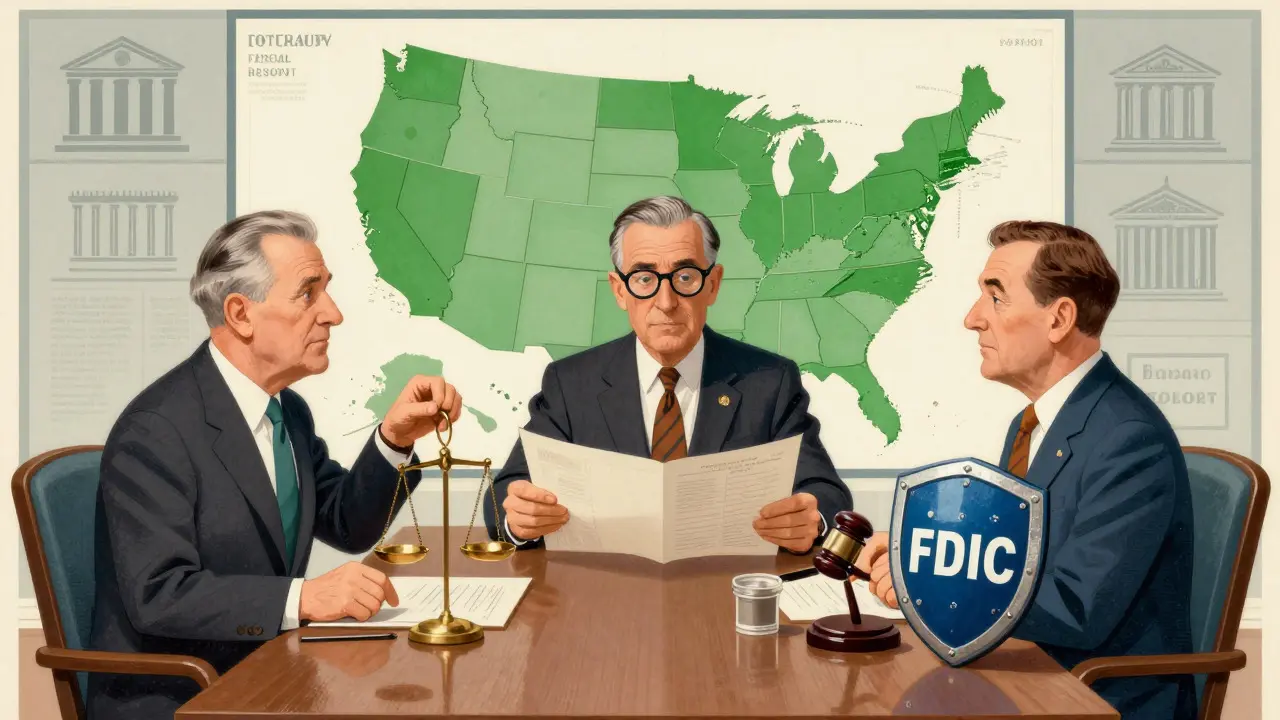
Who watches the watchers? The GENIUS Act creates a powerful oversight body called the Stablecoin Certification Review Committee (SCRC). Chaired by the Secretary of the Treasury, this committee includes the Federal Reserve Chair and the FDIC Chair.
The SCRC has significant influence. One of its main jobs is to determine if state-level stablecoin regulations are "substantially similar" to the federal framework. This is crucial because while the GENIUS Act sets the federal baseline, states still have some authority. If a state’s rules diverge too much, the SCRC can step in to ensure uniformity. This aims to prevent a fragmented patchwork of laws that could confuse businesses and consumers.
However, there is a nuance here. State-issued stablecoins are exempt from some aspects of this framework, which could lead to inconsistencies. Legal experts note that while the SCRC promotes alignment, complete regulatory harmony might still be elusive as individual states experiment with their own approaches within the federal bounds.
Timeline and Implementation: What You Need to Know
The law was signed in July 2025, but it doesn’t hit the ground running immediately. The GENIUS Act is scheduled to take effect on January 18, 2027, or 120 days after implementing regulations are issued, whichever comes first. This provides an 18-month window for market participants to adapt.
Why the delay? Because compliance is complex. Banks need to update their systems, auditors need to develop new standards for crypto assets, and regulators need to draft the detailed rules that flesh out the broad strokes of the law. This timeline allows for a smoother transition, reducing the risk of disruption in the financial markets.
For users, this means the current ecosystem will continue to operate under existing guidelines until the deadline. However, issuers are likely starting to prepare now to avoid being left behind. If you are using a stablecoin issued by a non-compliant entity, expect that product to either change hands, partner with a bank, or disappear before 2027.
Global Context and Future Implications
The US is not alone in regulating stablecoins. Hong Kong passed its Stablecoin Ordinance in May 2025, joining other jurisdictions tightening control over digital assets. The GENIUS Act positions the US to compete globally for innovation while maintaining strict oversight. By focusing on the US dollar's reserve currency status, the law aims to keep the world’s primary reserve asset at the center of the digital economy.
This move signals to global investors that the US is serious about digital assets. It reduces uncertainty, which often drives innovation. When companies know the rules, they are more likely to build long-term infrastructure rather than quick fixes. For the average person, this translates to safer products, better consumer protections, and potentially greater integration of stablecoins into everyday banking apps.
When does the GENIUS Act go into effect?
The GENIUS Act is scheduled to take effect on January 18, 2027, or 120 days after final implementing regulations are issued, whichever occurs earlier. This provides an approximate 18-month transition period for issuers to comply.
Can non-bank crypto companies still issue stablecoins?
Generally, no. Only insured depository institutions (banks/credit unions), bank subsidiaries, and nonbank financial institutions with explicit Federal Reserve approval can issue payment stablecoins. Independent crypto startups will need to partner with or become regulated financial entities.
What assets must back stablecoins under the new law?
Issuers must maintain a 1:1 reserve ratio using low-risk assets such as physical currency, US Treasury bills, repurchase agreements, and other regulator-approved instruments. Risky assets like corporate bonds are largely excluded.
How does the GENIUS Act protect consumers?
It protects consumers through mandatory 1:1 reserves, segregation of assets (preventing commingling with issuer funds), regular third-party audits, and strict AML/CFT compliance. Additionally, custodians must be regulated entities, adding a layer of security against fraud.
Does the GENIUS Act affect all cryptocurrencies?
No, it specifically targets "payment stablecoins"-digital assets designed for payment or settlement that are pegged to a fixed monetary value. It does not directly regulate volatile cryptocurrencies like Bitcoin or Ethereum, though it impacts how they are traded alongside stablecoins.
What is the role of the Stablecoin Certification Review Committee (SCRC)?
The SCRC, chaired by the Treasury Secretary and including the Fed and FDIC chairs, oversees the implementation of the act. It determines if state regulations are substantially similar to federal standards, aiming to ensure national consistency in stablecoin oversight.