

Imagine walking into a bank and asking for a $10 million loan. No credit check. No collateral. No paperwork. You take the cash, buy a house, sell it immediately for a profit, pay back the loan, and walk out with the difference-all within five minutes. If you tried this in traditional finance, security would tackle you before you reached the door.
In decentralized finance (DeFi), this isn’t just possible; it’s routine. This is the power of flash loans, which are uncollateralized loans that must be borrowed and repaid within a single blockchain transaction. They represent one of the most unique financial primitives ever created, leveraging the atomic nature of blockchain technology to eliminate default risk entirely.
What Are Flash Loans and How Do They Work?
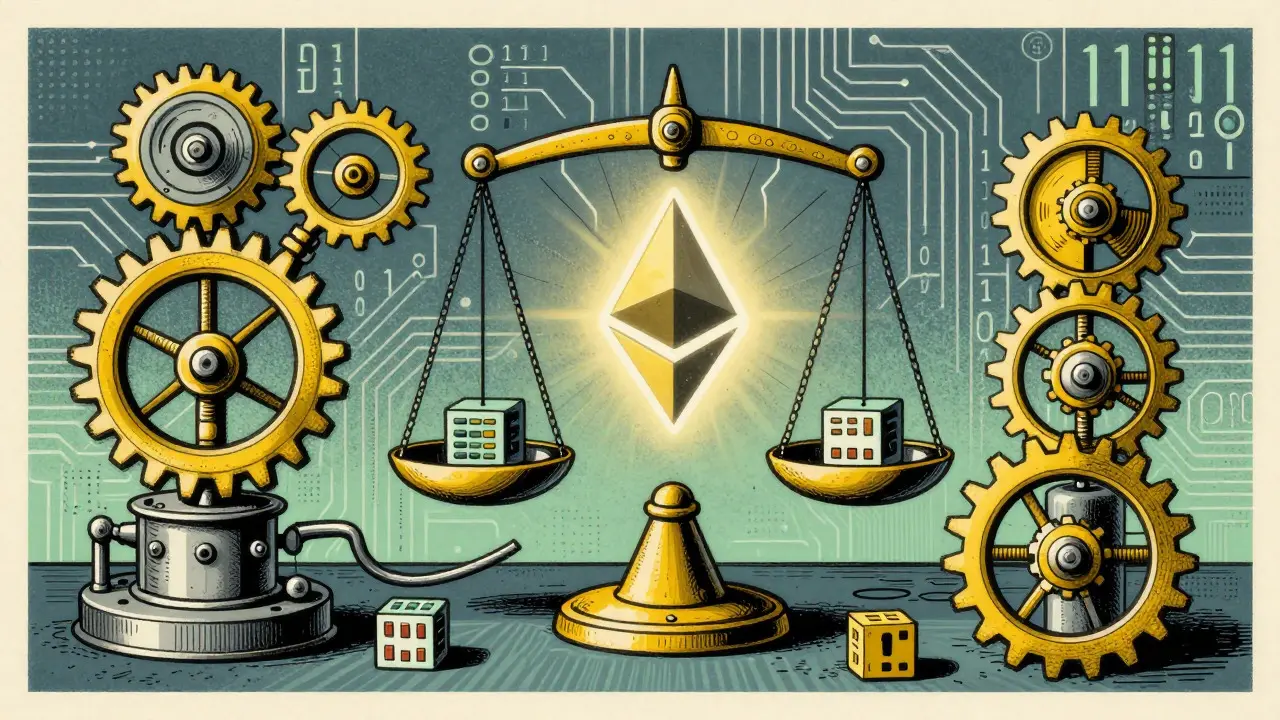
To understand flash loans, you first need to grasp the concept of "atomicity" in blockchain transactions. In simple terms, atomicity means that a transaction either happens completely or not at all. There is no halfway state. If any step in the process fails, the entire transaction reverts, returning the blockchain to its previous state as if nothing happened.
Aave, a leading decentralized lending protocol on Ethereum, pioneered this mechanism. When you initiate a flash loan, the smart contract checks three things:
- The requested asset exists in the pool.
- You execute your strategy (arbitrage, refinancing, etc.).
- You return the borrowed amount plus a small fee (typically 0.09% on Aave) before the transaction ends.
If step three succeeds, the transaction is confirmed, and you keep your profit. If it fails-meaning you didn’t repay the loan-the smart contract automatically reverses the entire sequence. The lender never loses money because the loan effectively never existed from the blockchain’s perspective.
This "all-or-nothing" structure creates a zero-default-risk environment for lenders. It allows protocols to lend massive amounts of capital without worrying about bad debt, provided the borrower has the technical skill to write a successful smart contract.
The Core Use Cases: Why Borrow Without Collateral?
You might wonder why anyone would bother with such complexity. The answer lies in efficiency and access to capital. Flash loans enable sophisticated strategies that would otherwise require millions in upfront liquidity. Here are the three primary ways developers and traders use them:
1. Arbitrage Opportunities
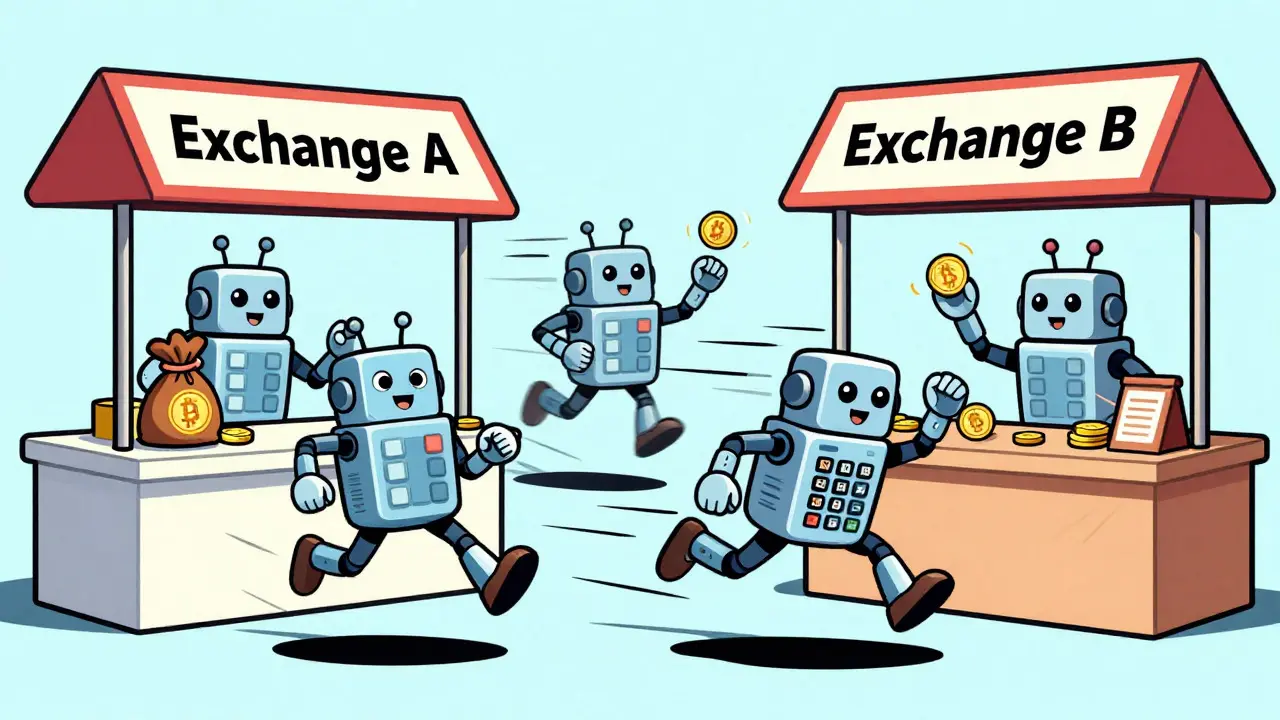
Arbitrage involves buying an asset on one exchange where the price is low and selling it on another where the price is high. In traditional markets, you need significant capital to make meaningful profits from small price discrepancies. With flash loans, you can borrow $1 million worth of Ethereum (ETH), buy it cheaply on Exchange A, sell it expensively on Exchange B, repay the loan, and pocket the difference-all in one go.
2. Debt Refinancing
Suppose you have a loan open on Platform X with a high interest rate, but Platform Y offers a better rate. Moving your collateral usually requires paying off Loan X first, which might mean selling assets at a loss. A flash loan lets you borrow enough to repay Loan X instantly, transfer your collateral to Platform Y, take out a new loan there, and repay the flash loan. You’ve refinanced without ever touching your own funds.
3. Self-Liquidation
If your collateral value drops below the required threshold in a DeFi lending protocol, you face liquidation penalties. Instead of letting the protocol seize your assets, you can use a flash loan to cover the shortfall, avoid the penalty, and then repay the flash loan using proceeds from other positions.
Flash Loans vs. Traditional Loans: A Side-by-Side Comparison
Understanding how flash loans differ from conventional lending helps highlight their unique role in the financial ecosystem. Let’s break down the key differences.
| Feature | Flash Loans | Traditional Loans |
|---|---|---|
| Collateral Required | No | Yes (usually) |
| Credit Check | No | Yes |
| Repayment Timeline | Single Transaction (seconds) | Months to Years |
| Default Risk | Zero (atomic revert) | High |
| Technical Barrier | High (requires coding) | Low (form-filling) |
| Primary Users | Developers, Bots, Traders | General Public, Businesses |
The table above shows that flash loans are not replacements for mortgages or car loans. They are specialized tools for optimizing capital efficiency in digital markets. While traditional loans rely on trust and legal enforcement, flash loans rely on code and mathematical certainty.
Who Actually Uses Flash Loans?
A common misconception is that everyday users click a button to get a flash loan. In reality, approximately 85% of flash loans are executed by automated systems and bots. These are sophisticated algorithms scanning the blockchain for inefficiencies.
The user base breaks down into two main groups:
- Sophisticated Developers: Individuals who write custom Solidity, a programming language for writing smart contracts on Ethereum, scripts to exploit specific market conditions.
- Automated Trading Bots: Pre-built software solutions that monitor multiple decentralized exchanges (DEXs) like Uniswap and Balancer simultaneously, executing trades faster than humanly possible.
For the average investor, flash loans remain largely inaccessible due to the steep learning curve. You don’t just need money; you need code. However, as DeFi interfaces become more user-friendly, we may see abstracted versions of these tools emerge, allowing non-coders to benefit from arbitrage opportunities indirectly.
Risks and Security Concerns
While flash loans are risk-free for lenders, they carry significant risks for borrowers and the broader ecosystem. The same mechanism that enables profitable arbitrage can also facilitate attacks.
Flash Loan Attacks
Attackers often use flash loans to manipulate the price of assets. By borrowing hundreds of millions of dollars in seconds, they can artificially inflate or deflate the price of a token on a decentralized exchange. This manipulated price can then trigger false signals in other protocols, allowing attackers to drain funds from vulnerable smart contracts. According to analyses by Amberdata, these attacks have resulted in hundreds of millions of dollars in losses since 2020.
Gas Costs
Even if your flash loan strategy fails, you still pay "gas fees"-the cost of computational power on the Ethereum network. If your complex multi-step transaction reverts, you lose the gas fees but not the borrowed principal. For inexperienced developers, debugging failed transactions can become expensive quickly.
Smart Contract Bugs
Since flash loans depend entirely on code, any bug in your implementation can lead to total loss of funds (not from the loan itself, but from associated assets). Unlike traditional banks where customer service can reverse errors, blockchain transactions are final once confirmed. Thorough testing on testnets is mandatory.
How to Get Started with Flash Loans
If you’re a developer interested in building with flash loans, here is a realistic roadmap. Expect a learning curve of several weeks to months.
- Master Solidity: You need a deep understanding of how smart contracts interact with the Ethereum Virtual Machine (EVM). Focus on error handling and gas optimization.
- Study ERC-20 Standards: Most flash loans involve tokens adhering to the ERC-20 standard. Understand how transfers, approvals, and balances work under the hood.
- Use Existing Frameworks: Don’t start from scratch. Aave provides official sample repositories on GitHub. Study their `flashloan-sample` project to see best practices in action.
- Test on Testnets: Never deploy directly to the mainnet. Use Sepolia or Goerli testnets to simulate transactions without risking real capital.
- Analyze Gas Limits: Complex interactions consume more gas. Optimize your code to ensure the transaction doesn’t run out of gas mid-execution, which would cause a revert.
Resources like the Chainlink Education Hub and Ethereum Stack Exchange offer valuable community support. As of late 2024, over 347 questions tagged with "flash-loans" have been answered by experts, providing a rich knowledge base for newcomers.
The Future of Uncollateralized Borrowing
As of 2026, flash loans have facilitated over US$2 trillion in volume across EVM-compatible chains. They are no longer experimental; they are foundational infrastructure for DeFi composability. Protocols like Aave continue to refine their offerings, with v3 upgrades introducing enhanced security measures against manipulation attacks.
Looking ahead, cross-chain flash loans represent the next frontier. Currently, most flash loans operate within a single blockchain. Projects like Chainlink’s CCIP (Cross-Chain Interoperability Protocol) aim to enable borrowing on Ethereum and repaying on Polygon, vastly expanding potential use cases. However, this introduces new complexities regarding latency and settlement finality.
Regulatory clarity remains elusive. Central banks, including the Bank of Canada, are closely monitoring these instruments. While they recognize the efficiency gains, concerns about systemic risk and market manipulation persist. Until clear guidelines emerge, flash loans will likely remain a niche tool for the technically adept.
Do I need collateral to take out a flash loan?
No. Flash loans are defined by their lack of collateral requirements. The security comes from the atomic nature of the blockchain transaction. If you do not repay the loan plus fees within the same transaction, the entire event reverts, meaning the lender never actually released the funds.
Can beginners use flash loans easily?
Not currently. Flash loans require advanced programming skills, specifically in Solidity and smart contract development. Most users interact with them through automated bots or by hiring developers. Direct interaction typically involves writing and deploying custom code.
What is the fee for a flash loan on Aave?
Aave charges a flat fee of 0.09% on the borrowed amount for flash loans. This fee is paid regardless of the outcome, provided the transaction reaches the repayment step. Other protocols like Balancer may have different fee structures based on pool liquidity.
Are flash loans safe?
For lenders, yes, because of the atomic revert mechanism. For borrowers, safety depends on code quality. Smart contract bugs can lead to lost gas fees or exploited assets. Additionally, flash loans are frequently used in malicious attacks to manipulate prices, so users should be aware of the broader ecosystem risks.
What are the most common assets used in flash loans?
The most commonly borrowed assets include stablecoins like Dai (DAI) and USD Coin (USDC), as well as major cryptocurrencies like Ethereum (ETH) and Wrapped Ether (WETH). These assets offer high liquidity, making them ideal for large-scale arbitrage and refinancing strategies.