

Money isn't just changing; it's splitting into two distinct but connected worlds. On one side, you have the fiat currency you've trusted for decades-dollars, euros, yen-backed by governments and central banks. On the other, you have digital currencies, ranging from private stablecoins to government-issued Central Bank Digital Currencies (CBDCs). For years, experts argued that one would replace the other. Today, in 2026, we see something different: a complex coexistence where both systems operate side-by-side, each handling specific jobs better than the other.
This dual-currency paradigm didn't happen overnight. It started with the 2008 financial crisis sparking Bitcoin's creation, but it truly accelerated after the 2019 Libra proposal forced central banks to wake up. Now, according to the Bank for International Settlements (BIS), 90% of the world's central banks are actively developing their own digital versions of money. The question is no longer "if" digital money will exist, but how it fits alongside the cash in your wallet.
The Two Pillars: CBDCs and Stablecoins
To understand this coexistence, you first need to distinguish between the two main types of digital currency competing for space. They serve different masters and solve different problems.
Central Bank Digital Currencies (CBDCs) are digital forms of sovereign fiat money issued directly by central banks. Think of them as digital cash. They are legal tender, just like a $20 bill, but they live on a distributed ledger. As of 2025, only four countries have fully launched retail CBDCs: Jamaica (JAM-DEX), the Bahamas (Sand Dollar), Zimbabwe (ZiG), and Nigeria (e-Naira). China's digital yuan is in an advanced pilot phase, processing $26.4 billion in transactions across 26 regions involving 261 million users.
In contrast, Stablecoins are private digital tokens pegged to the value of fiat currencies, typically backed 1:1 by reserves. Giants like USDC and USDT run on public blockchains like Ethereum and Solana. They aren't issued by governments; they're issued by private companies. Their primary job is efficiency. While CBDCs focus on monetary sovereignty and domestic stability, stablecoins focus on speed and cost, especially for cross-border moves.
| Feature | CBDCs (e.g., e-Naira, Digital Yuan) | Stablecoins (e.g., USDC, USDT) |
|---|---|---|
| Issuer | Central Banks (Government) | Private Companies |
| Technology | Permissioned DLT (Private/Hybrid) | Public Blockchains (Ethereum, Solana) |
| Primary Use Case | Domestic retail payments, monetary policy | Cross-border transfers, remittances |
| Transaction Speed | Fast (varies by system) | Under 30 seconds |
| Cost | Low to Moderate | ~$0.05 per transaction |
| Regulatory Status | Legal Tender | Varies (MiCA in EU, fragmented in US) |
Why They Need Each Other: Efficiency vs. Sovereignty
You might wonder why we can't just pick one. The answer lies in their strengths. Fiat and its digital twin, the CBDC, provide safety and trust. If a bank fails, your CBDC is still good because it's a direct liability of the central bank. This protects monetary sovereignty. However, traditional fiat systems are slow and expensive when moving money across borders. SWIFT transfers can take 1-5 business days and cost 3-5% in fees.
Enter stablecoins. In April 2025, McKinsey reported that stablecoin transactions process 100-1,000 times faster than traditional cross-border payments at 90% lower cost. MoneyGram adopted USDC for remittances in 2022, cutting transfer times from 3 days to under 10 minutes and reducing costs from 6.3% to 1.8%. This is a game-changer for migrant workers sending money home. But stablecoins carry risk: if the issuer mismanages reserves, the peg breaks. That's where the coexistence model shines. You use stablecoins for the fast, cheap international leg, and settle in fiat or CBDC for local spending.

The Real-World Friction: Adoption Challenges
It sounds perfect on paper, but the reality on the ground is messy. Let's look at Jamaica's JAM-DEX. It boasts a 98.7% transaction success rate, far higher than mobile money alternatives. Yet, merchant acceptance is stuck at 42%. Why? Because integrating point-of-sale terminals costs about $280 per unit. Small shop owners aren't rushing to pay that unless customers demand it.
Then there's the learning curve. Central bank employees need an average of 172 hours of specialized training to manage CBDC infrastructure, compared to 89 hours for traditional systems. This isn't just a tech issue; it's a human resources bottleneck. Meanwhile, developers face inconsistent documentation. The Eurosystem's digital euro technical docs score a 4.2/5, while Nigeria's e-Naira resources score a 2.8/5. This fragmentation slows down innovation.
Interoperability is another hurdle. Only 37% of CBDC pilots include cross-border functionality. The mBridge project, connecting China, UAE, Thailand, and Hong Kong, has processed $22 billion since 2023, proving it works. But most CBDCs remain isolated islands. Stablecoins, running on global blockchains, naturally bridge these gaps, which is why 68% of multinational corporations now use them for some international transactions.
Regulatory Tightrope: Safety vs. Innovation
Regulators are playing catch-up. The European Union's MiCA framework requires stablecoin issuers to hold 1:1 reserves and provide daily attestations. This brings safety but adds compliance costs. In the U.S., federal regulation remains fragmented, creating uncertainty for global operators. The Basel Committee is stepping in, with new rules effective July 2025 mandating 100% high-quality liquid assets for stablecoin reserves. This is expected to reduce issuance costs by 0.8-1.2 percentage points, making stablecoins even more competitive.
But there are fears. BIS General Manager Agustín Carstens warned in February 2025 that unregulated stablecoins could undermine monetary policy if they reach critical mass. Conversely, Nobel laureate Joseph Stiglitz argued that CBDCs risk "financial repression" if designed with features like negative interest rates or programmable expiration dates, as seen in China's digital yuan pilots. The balance is delicate. Too much control stifles innovation; too little invites systemic risk.
The Future Landscape: A Three-Layer System
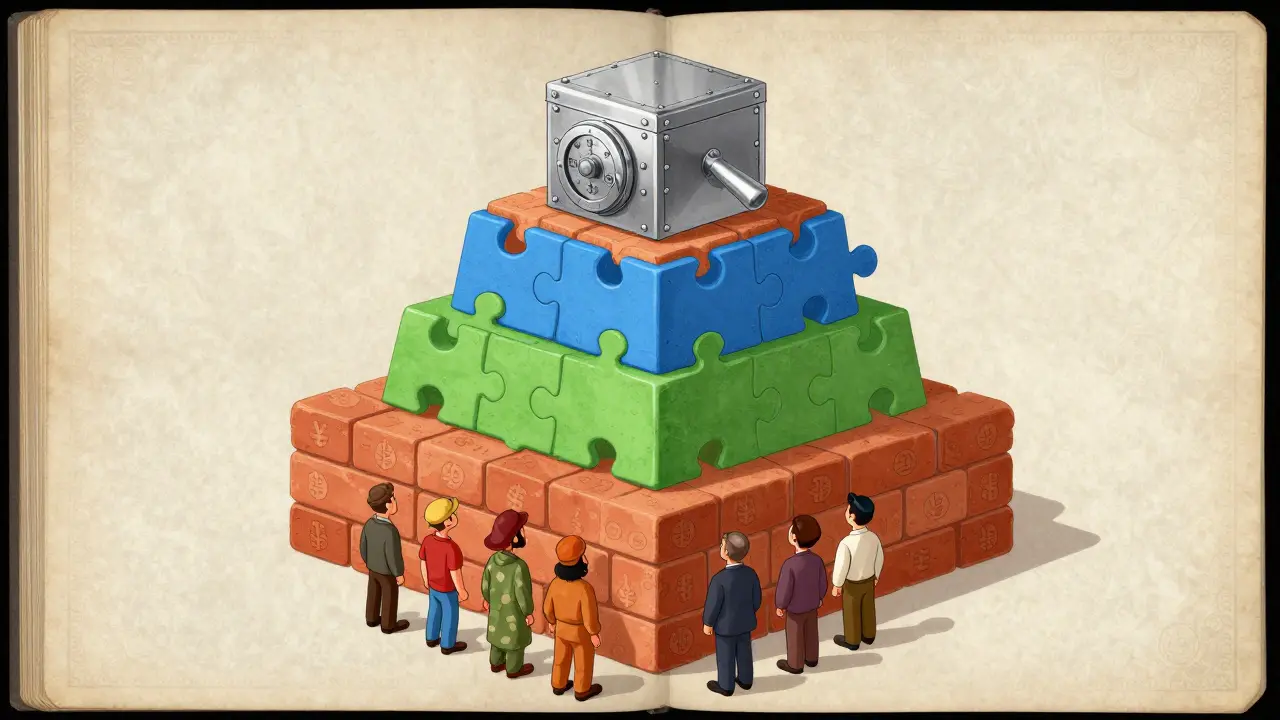
By 2027, experts project a clear three-layer structure for global money:
- CBDCs will handle sovereign monetary policy and domestic retail payments, ensuring financial inclusion and stability.
- Regulated Stablecoins will dominate cross-border commerce and remittances, offering speed and low costs.
- Traditional Fiat will persist for legacy systems and offline transactions, slowly phasing out physical cash.
The transition period will last through 2030. We're seeing early signs of convergence with projects like the BIS Innovation Hub's "unified ledger" concept, where tokenized reserves, commercial bank money, and assets operate on integrated infrastructure. Nigeria's e-Naira upgrade in April 2025 added offline functionality and loyalty programs, boosting active users by 37%. MoneyGram expanded to EURC and GBPt, processing $4.2 billion quarterly in stablecoin remittances.
However, risks remain. The Bank of England warns that a rapid shift to stablecoins could trigger bank runs during stress, with potential deposit outflows of 15-25%. The coexistence model requires robust safeguards. It's not a replacement war; it's an integration challenge. Success depends on seamless interoperability, clear regulations, and user-friendly experiences that don't burden merchants or consumers with hidden costs.
Will CBDCs replace physical cash?
Not immediately. While CBDCs offer digital convenience, physical cash remains vital for privacy, offline access, and emergency resilience. Most central banks plan to keep cash in circulation alongside CBDCs for the foreseeable future, though usage may decline gradually.
Are stablecoins safe to use?
Safety depends on regulation and reserve quality. Under frameworks like the EU's MiCA and upcoming Basel rules, major stablecoins must hold 100% high-quality liquid assets. However, users should verify issuer audits and avoid unregulated tokens, as past crashes show the risks of poor reserve management.
How do CBDCs protect privacy?
Privacy models vary by country. Some CBDCs, like the proposed digital euro, aim for tiered privacy where small transactions are anonymous but larger ones are traceable for anti-money laundering. Others, like China's digital yuan, offer less privacy. Users should check their central bank's specific design principles.
Can I use stablecoins for everyday purchases?
Increasingly, yes. Many online retailers and payment processors accept USDC and USDT. However, widespread merchant adoption for physical stores is still growing due to integration costs and regulatory uncertainty. Remittances and B2B payments are currently the strongest use cases.
What happens if a stablecoin loses its peg?
If a stablecoin loses its peg, its value drops below the reference currency (e.g., $1 USD). This can cause losses for holders and disrupt payments. Regulators now require transparent reserves and frequent attestations to prevent this, but market volatility or issuer insolvency can still trigger de-pegging events.