
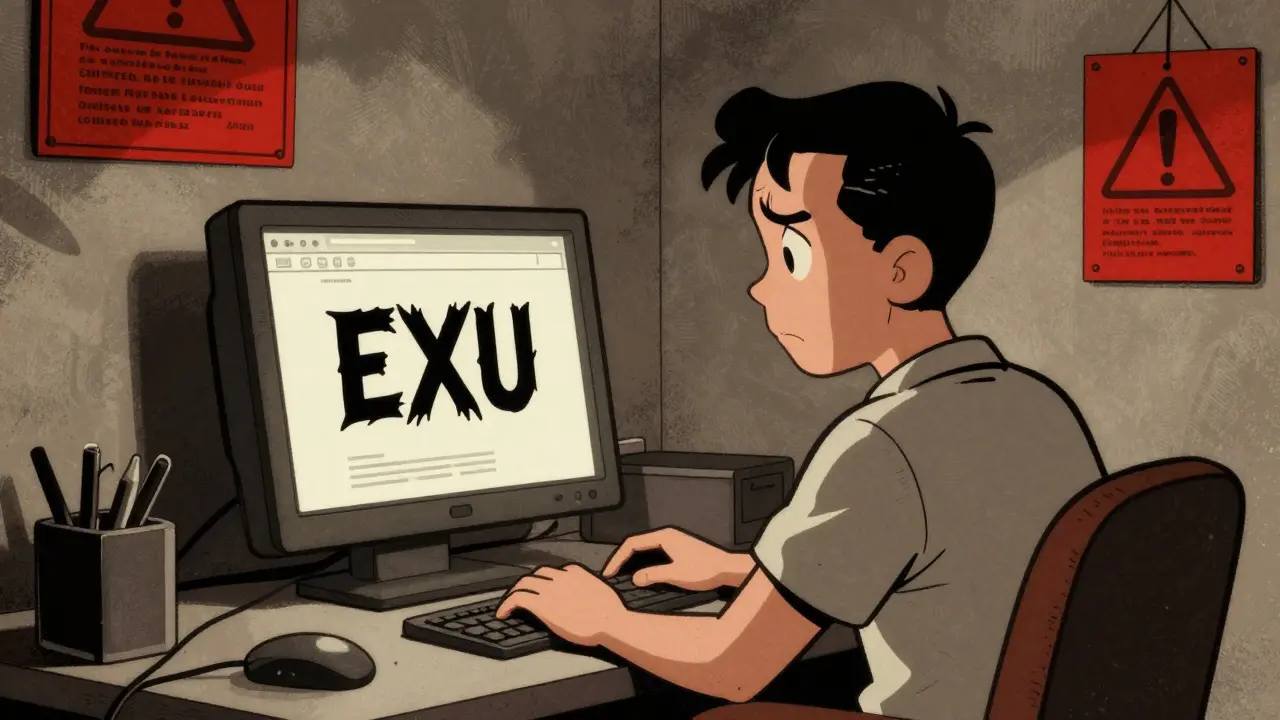
You typed EXU crypto exchange into your search bar. Maybe you saw an ad on social media promising huge returns, or perhaps a friend mentioned it in passing. But here is the hard truth: there is no reputable, established platform known as "EXU" in the global cryptocurrency market.
This isn't just a case of a small startup flying under the radar. In the world of digital assets, obscurity is often a red flag. When a name doesn't appear on major tracking sites like CoinMarketCap or CoinGecko, and when independent reviews are non-existent, you need to pause. This guide explains why you likely cannot find this exchange, what risks you face if you proceed, and which proven platforms actually deliver on their promises.
The Reality Check: Does EXU Exist?
If you are looking for a specific broker named EXU, you might be dealing with one of two scenarios. First, it could be a brand-new, unregulated entity that has not yet built any track record. Second, and more commonly, it might be a misspelling or a confusion with a similarly named, legitimate service.
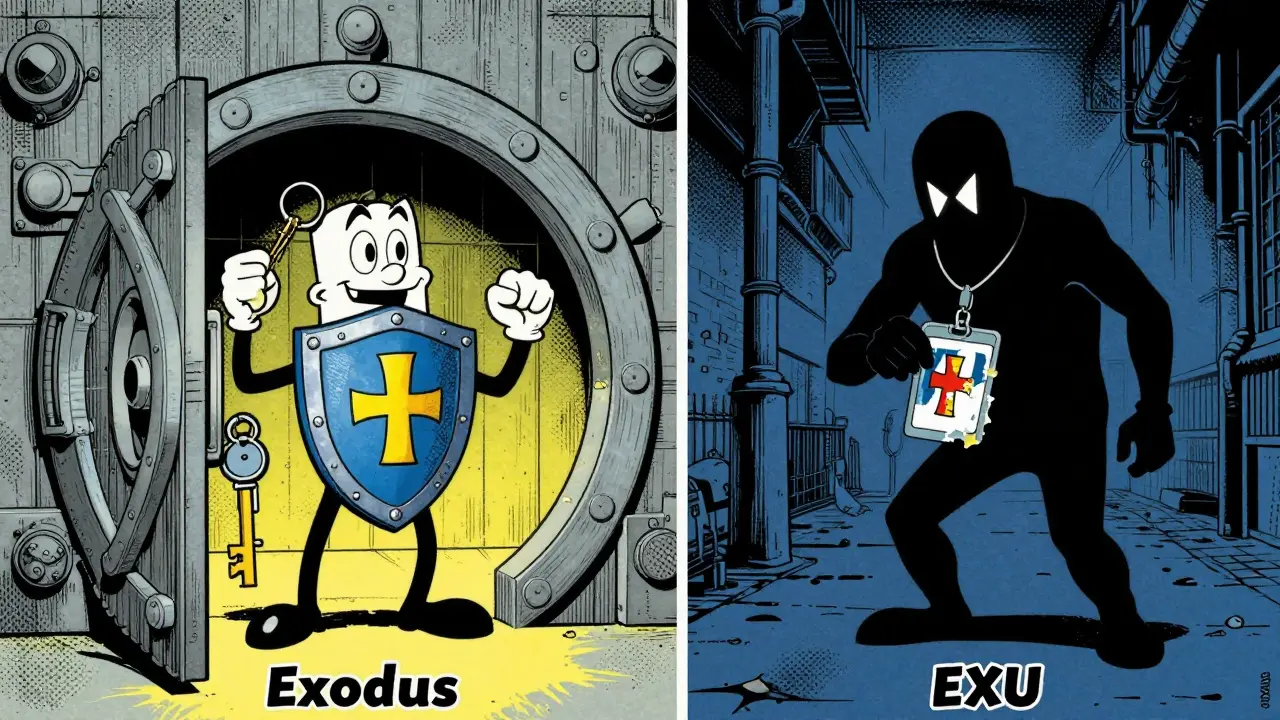
Many users searching for obscure exchange names are actually trying to find Exodus Wallet, which is a popular self-custodial cryptocurrency wallet and software exchange launched in 2015. The similarity between "EXU" and "Exodus" is striking. If you meant Exodus, you are looking at a verified tool used by millions. If you truly mean EXU, you are entering uncharted territory where consumer protections do not exist.
Let’s look at the data. Legitimate exchanges publish transparency reports, list their regulatory licenses, and have verifiable user bases. As of mid-2026, no entity named EXU appears in these records. Searching for "EXU crypto exchange" yields almost zero credible results from financial news outlets or security researchers. This silence is loud. It suggests either a project that failed before launch or, worse, a potential phishing site designed to steal deposits.
Why Obscure Exchanges Are Dangerous
Crypto scams evolve quickly. One common tactic involves creating a website that looks professional, offering high leverage or unique tokens, and then disappearing once deposits flow in. Without regulation, there is no insurance fund to reimburse you if things go wrong.
Consider the signs of a risky platform:
- No Regulatory License: Legitimate services register with bodies like the SEC (USA), FCA (UK), or ASIC (Australia). EXU shows no such registration.
- Anonymous Team: Trustworthy companies have public founders with LinkedIn profiles and industry histories. Anonymous teams hide behind generic avatars.
- Unverifiable Reviews: If all positive reviews are from forums with low traffic or seem copy-pasted, they are likely fake. Real feedback comes from diverse sources like Trustpilot, Reddit, and specialized crypto communities.
- Pressure Tactics: Offers expiring in "24 hours" or bonuses requiring large minimum deposits are classic traps.
In contrast, established platforms undergo regular security audits. They use cold storage for the majority of user funds and employ multi-signature technology to prevent unauthorized withdrawals. If EXU does not publish audit reports from firms like CertiK or Hacken, assume your funds are stored in a hot wallet vulnerable to hacks.
The Likely Confusion: Exodus Wallet Explained
It is highly probable you are interested in Exodus Wallet. Let’s clarify what this is, because it serves a different purpose than a traditional exchange like Binance or Coinbase.
Exodus is not a centralized exchange where you trade against other users on an order book. Instead, it is a self-custodial wallet. This means you hold your own private keys. Your coins live on your device, not on a company server. This offers superior security because no hacker can drain your account unless they physically access your device and know your password.
However, Exodus does offer an integrated swap feature. When you want to change Bitcoin for Ethereum, Exodus connects to third-party liquidity providers (like MoonPay or Changelly) to execute the trade. This is convenient but comes with costs.
| Feature | Exodus Wallet | Binance / Coinbase (CEX) |
|---|---|---|
| Custody | Self-custody (You hold keys) | Custodial (Platform holds keys) |
| Primary Use | Storage & Simple Swaps | Active Trading & Market Making |
| Fees | Higher (Spread + Network Fee) | Lower (Maker/Taker fees ~0.1%) |
| Security Model | AES-256 Encryption, Local Storage | Cold Storage Vaults, Insurance Funds |
| Best For | Beginners, Long-term Holders | Traders, High-Volume Users |
Exodus supports over 1 million assets across 100+ blockchains. It is user-friendly, with a clean interface that helps beginners manage portfolios without confusion. However, because it relies on third parties for swaps, fees can average around 1.8%, which is significantly higher than the 0.1% trading fee on Binance. If you are day trading, Exodus will eat into your profits. If you are holding long-term, its security model is excellent.
Top Verified Alternatives for 2026
If you need a place to buy, sell, or trade crypto safely, stick to platforms with proven track records. Here are three reliable options depending on your needs.
1. Binance (Best for Traders)
Binance remains the largest exchange by volume globally. It offers deep liquidity, meaning you can buy or sell large amounts without slippage. Fees are among the lowest in the industry. It supports hundreds of coins and advanced features like futures and staking. Note that availability depends on your region due to regulatory changes in 2025.
2. Coinbase (Best for Beginners)
Coinbase is publicly traded on the NYSE, providing a layer of corporate accountability. Its interface is incredibly simple, making it ideal for first-time buyers. While fees are higher than Binance, the ease of use and strong customer support make it worth the premium for many users. It also offers secure custody solutions for institutional clients.
3. Kraken (Best for Security)
Kraken has never been successfully hacked since its launch in 2011. It is known for rigorous security practices and transparent proof-of-reserves. If safety is your top priority and you don’t mind a slightly less flashy interface, Kraken is a gold standard. It offers good fiat on-ramps and low withdrawal fees.

How to Verify Any Crypto Platform
Before you deposit a single dollar into any platform-whether it’s the mysterious EXU or a new competitor-run this checklist:
- Check Domain Age: Use tools like WHOIS to see how long the website has existed. New domains (less than 6 months) are high-risk.
- Search for Negative News: Don’t just look for reviews. Search "[Name] scam," "[Name] withdraw issues," or "[Name] complaint." Real problems surface on Reddit and Twitter.
- Verify Licensing: Visit the regulator’s official website (e.g., FinCEN, FCA) and search the company name. Do not trust badges displayed on the site itself; they can be faked.
- Test Customer Support: Ask a question via chat or email. If they take days to reply or give generic answers, imagine how they will handle a withdrawal dispute.
- Start Small: Never move your entire portfolio to a new platform. Deposit $10, try to withdraw it, and ensure the process works smoothly before adding more.
Final Thoughts on Safety First
The crypto space is filled with innovation, but also deception. A name like "EXU" raises immediate concerns because it lacks the digital footprint of legitimacy. By choosing established platforms like Exodus (for storage) or Binance/Coinbase (for trading), you protect yourself from unnecessary risk. Remember, in crypto, if something sounds too good to be true or too obscure to verify, it probably is. Your capital is your responsibility. Guard it wisely.
Is EXU crypto exchange a scam?
There is no verifiable evidence of a legitimate, regulated exchange named "EXU." The lack of online presence, regulatory licenses, and user reviews strongly suggests it is either a non-existent entity, a typo for "Exodus," or a potential scam site. Proceed with extreme caution and avoid depositing funds.
What is the difference between Exodus and an exchange?
Exodus is a self-custodial wallet, meaning you control your private keys and store assets on your device. Traditional exchanges (CEXs) hold your funds for you. Exodus allows swapping via third parties but is primarily for storage and management, whereas exchanges are built for active trading with lower fees and higher liquidity.
Are there any hidden fees with Exodus Wallet?
Exodus charges a spread on swaps, which averages around 1.8%. This includes the network fee and a margin for the liquidity provider. While higher than trading fees on exchanges like Binance (0.1%), the fees are transparently shown before you confirm the transaction. There are no monthly maintenance fees for the standard version.
Can I recover my funds if I lose my Exodus recovery phrase?
No. Because Exodus is non-custodial, the company does not store your private keys or recovery phrase. If you lose your 12-word seed phrase and your device becomes inaccessible, your funds are permanently lost. Always write down your phrase on paper and store it in a secure, offline location.
Which is safer: Binance or Exodus?
For long-term storage, Exodus is generally considered safer because you hold the keys, eliminating the risk of an exchange hack affecting your personal balance. For active trading, Binance offers robust security measures and insurance funds, but you rely on their system integrity. Best practice is to trade on Binance and withdraw profits to Exodus or a hardware wallet.
Terry Hyland
June 15, 2026 AT 04:30you people are blind to the truth. this whole crypto thing is a pyramid scheme designed to steal from the poor and give to the rich elites who control the banks. i have said it before and i will say it again, if you trust these digital coins over real gold or cash you are part of the problem. the government knows what they are doing when they regulate it because they want to track every single penny you spend. stop buying into the hype and wake up.
Monica Pathammavong
June 16, 2026 AT 04:55i mean like obviously exodus is better but u guys dont get it right? its not just about safety its about the psychological aspect of holding keys urself. most people here are just lazy and want someone else to hold their hand which is why they lose money on scams like EXU. also ur spelling in the article was kinda off but whatever.
Tim Lefebvre
June 17, 2026 AT 12:00hey everyone just wanted to add that i use kraken for my long term holds too and its been solid. never had an issue with withdrawals even during high volatility periods. definitely stick to the big names like binance or coinbase if ur new. dont fall for those shady sites promising 10x returns overnight thats always a scam bro.
Benjamin Eisen
June 18, 2026 AT 16:35this is such a helpful breakdown thanks for writing this. i was actually confused between exodus and some other wallet recently. knowing that exodus uses third party providers for swaps makes sense why the fees are higher. i think i will try coinbase first since im a beginner and need the support.
Kenneth Riley
June 19, 2026 AT 21:29oh please spare me the lecture on security. you think you are so smart using a hardware wallet but let me tell you something. i lost half my portfolio on a centralized exchange hack five years ago and it ruined my life. now i only trust cold storage and i laugh at people who leave funds on exchanges. you are all walking dead ends waiting to be hacked by some kid in a basement.
ravi mahla
June 20, 2026 AT 09:29lol nice post but seriously if you cant handle losing your seed phrase then maybe crypto isnt for you. its like driving a car without a seatbelt sure its faster but when you crash you die. keep your keys safe folks!
Mark Brunschwiler
June 21, 2026 AT 02:20i feel like we are missing the point here. it is not just about the technology or the money. it is about the human condition and our desire for control. when we hold our own keys we are holding onto our freedom but also our burden. it is heavy. very heavy. and yet we choose to carry it because we fear the chains of the system more than the weight of responsibility.
Sonya O'Brien
June 22, 2026 AT 19:16i completely agree with the sentiment expressed in the previous comments regarding the importance of due diligence. while it may seem tedious to check regulatory licenses and domain ages, the potential consequences of neglecting these steps can be devastating to one's financial health. furthermore, the distinction between self-custodial wallets and centralized exchanges is crucial for understanding risk profiles, as each offers different levels of convenience versus security, which ultimately depends on the individual user's technical proficiency and risk tolerance.
Charles Pawlikowski
June 24, 2026 AT 02:37typical american greed trying to get rich quick with magic internet money. back in my day we worked for our money and saved it in a bank where it was insured by the government. now you kids want to gamble on coins that have no value. shame on you all for supporting this degenerate behavior. :/
Andrea Burd
June 25, 2026 AT 19:11boring article. i already knew exodus was safer than random sketchy sites. why do we need a whole essay about it? just tell us where to buy bitcoin and move on. waste of time reading this fluff.
Akeem Whittaker
June 26, 2026 AT 12:37let me break this down for those who are still confused. if you are trading daily use binance. if you are holding for years use exodus or a hardware wallet. simple as that. dont overcomplicate it. follow the checklist provided in the post and you will be fine. stay safe out there.
Manish Prajapat
June 26, 2026 AT 20:34the philosophy behind self custody is interesting. it reflects a shift from institutional trust to personal sovereignty. however one must consider that with great power comes great responsibility. many users are not prepared for the cognitive load of managing private keys securely. perhaps hybrid models will emerge in the future to bridge this gap.
John Doe
June 28, 2026 AT 05:06i understand the fear of scams it is real and terrifying. i remember when mt gox collapsed it felt like the end of the world for many of us. but giving up on crypto because of bad actors is like refusing to drive cars because of accidents. we just need to learn how to drive safely. use strong passwords enable 2fa and verify everything.
Skm Shubham
June 29, 2026 AT 20:26most of you here are sheep following the herd. you read one article and think you are experts. true knowledge comes from experience and pain. i have seen hundreds of projects fail. the ones that survive are the ones with strong fundamentals and transparent teams. EXU has neither. avoid it like the plague.
Rob Aronson
June 30, 2026 AT 09:32from a technical standpoint the comparison table is accurate. the spread on exodus swaps is indeed higher due to the aggregation model used by third-party liquidity providers. for high frequency traders this slippage is unacceptable. however for hodi holders the security benefit of non-custodial storage outweighs the minor inconvenience of higher swap fees. 🛡️💰
Kwon Bill
July 2, 2026 AT 05:59in asia we see many similar scams popping up weekly. the pattern is always the same fake website promises high yield anonymous team disappears with funds. it is important to educate local communities about these risks. global cooperation among regulators is needed to shut these operations down quickly.
Suman Patil
July 3, 2026 AT 12:28great insights everyone! lets keep the discussion positive and helpful. remember that learning takes time and making mistakes is part of the journey. if anyone has questions about setting up exodus or verifying domains feel free to ask. we are all here to support each other in navigating this complex space. 🚀
Kumaran sowkarpet
July 5, 2026 AT 06:20namaste friends :) i totally agree with the points made about security. in india we are seeing many new entrants in crypto space so awareness is key. always double check the url before entering your details. small step big impact. stay blessed and trade safe! 🙏
Annemarie Fitzgerald
July 5, 2026 AT 16:26i find it fascinating how society oscillates between extreme caution and reckless abandon when it comes to finance. the fact that a platform named EXU could even exist in search results speaks volumes about the lack of gatekeeping in the digital age. it is a microcosm of broader societal issues regarding trust and verification.
Filbert Reeves
July 7, 2026 AT 15:53you think exodus is safe? think again. they are just another data harvesting machine collecting your ip addresses and transaction history to sell to advertisers. nothing is truly private in this surveillance state. the only way to be safe is to go offline completely and burn all your devices. but sure keep telling yourself its secure.
Nick Rice
July 9, 2026 AT 13:43look i am not here to argue with conspiracy theorists. just stick to the facts. exodus is audited and widely used. binance is regulated in many jurisdictions. kraken has a perfect security record. use common sense. if you want to live in a bunker that is your choice but dont drag everyone else down with your paranoia.
Amit Thakur
July 9, 2026 AT 18:30brother listen to me carefully. if you are serious about trading you need to understand market depth and liquidity. binance provides that. exodus does not. do not mix up a wallet with an exchange. it is basic terminology. learn the jargon before you invest your hard earned money. respect the game.
Eric Scheinberg
July 11, 2026 AT 14:06it is imperative to note that regulatory compliance varies significantly across jurisdictions. users in certain regions may find access to specific platforms restricted. therefore conducting thorough research into local laws is essential prior to engaging with any cryptocurrency service provider.
pankaj chawla
July 12, 2026 AT 03:12i agree with the list of alternatives. i have been using kraken for years and it works well for me. the interface is not the prettiest but it gets the job done securely. good advice overall.
Jessica Lane
July 13, 2026 AT 04:45this is an incredibly detailed and informative review. i appreciate the clear distinction made between self-custodial wallets and centralized exchanges. it is often overlooked by beginners. thank you for highlighting the importance of checking domain age and regulatory status. these are critical steps that can prevent significant financial loss.