
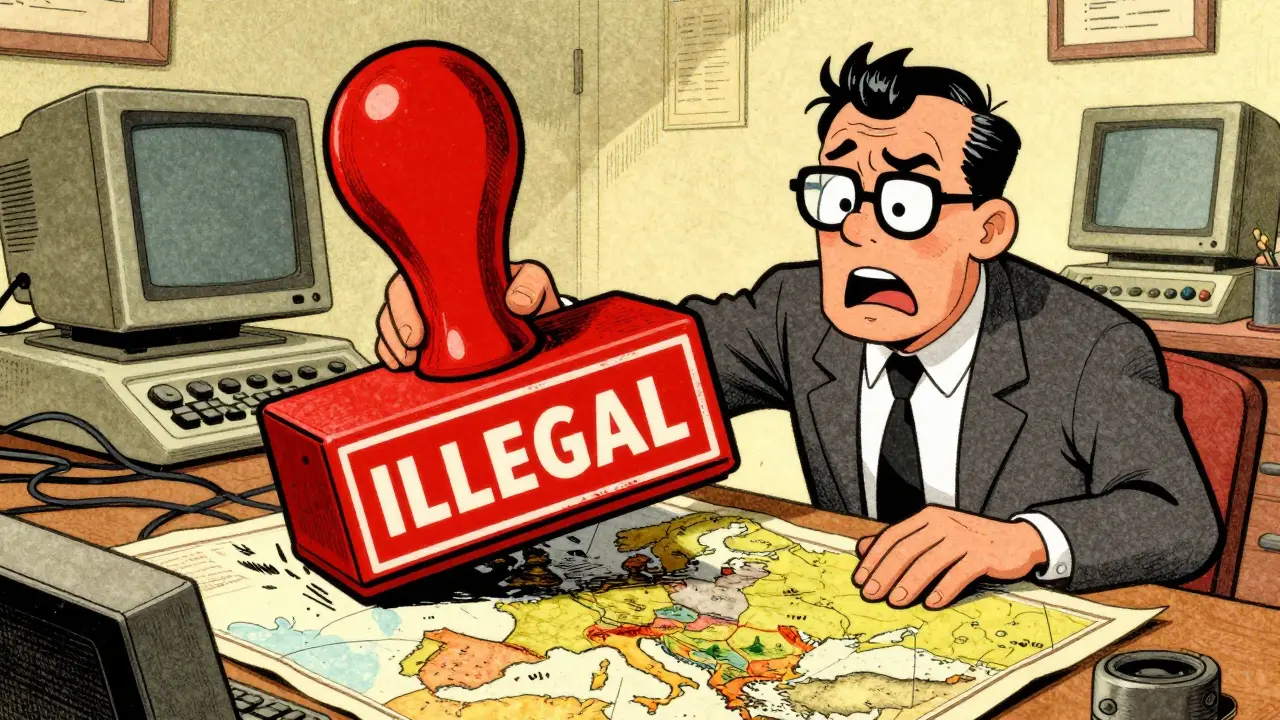
Imagine running a crypto exchange and waking up to find your entire operation is illegal in 27 countries because you missed a technical update on how you handle wallet data. That isn't a nightmare scenario-it's the current reality for firms failing to keep up with the European Union's aggressive new regulatory stance. The EU has stopped playing around with "guidelines" and has moved into a hard-coded legal era where EU cryptocurrency compliance is no longer optional; it's a prerequisite for survival.
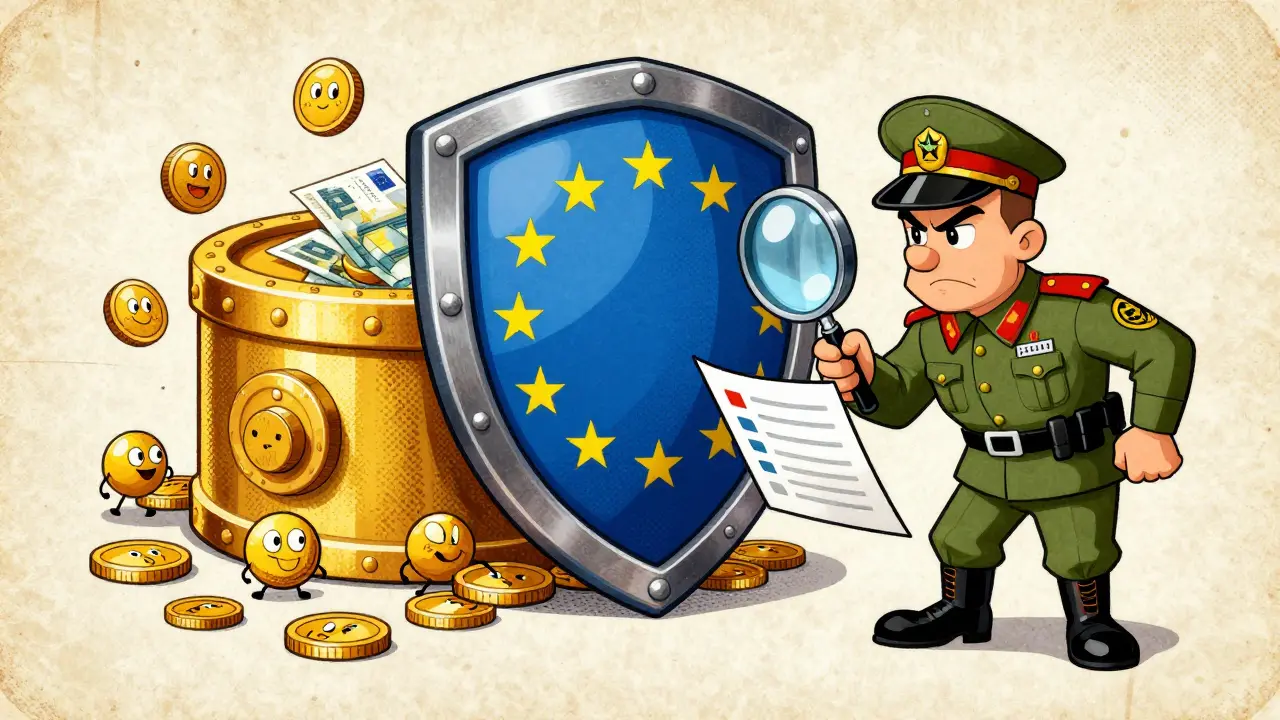
For years, the crypto world operated in a gray area. But as of late 2024 and early 2025, the EU has deployed a massive regulatory shield designed to protect its monetary sovereignty and shut out financial crime. If you're a service provider or an investor, you're now dealing with a system that treats digital assets more like traditional bank accounts than anonymous internet tokens. The goal is simple: total transparency and an iron grip on sanctions enforcement.
The Core Pillars of EU Crypto Regulation
To understand how sanctions are actually enforced, you first need to know the rules of the game. The EU isn't using one single law, but a cluster of regulations that overlap to close every possible loophole.
The heavy hitter is MiCA is the Markets in Crypto-Assets Regulation, a comprehensive framework that establishes harmonized rules for crypto-asset issuers and service providers across the EU. It became fully operational on December 30, 2024. MiCA doesn't just suggest how to behave; it mandates authorization. If you are a Crypto Asset Service Provider (CASP), you need a license. Without one, you're essentially an outlaw in the eyes of the European Securities and Markets Authority (ESMA).
But MiCA doesn't work alone. It's supported by several other critical layers:
- Transfer of Funds Regulation (TFR): This is the "Travel Rule" on steroids. It requires that personal data of both the sender and receiver follows the crypto transfer, regardless of the amount. There was no grace period for this-it hit hard on December 30, 2024.
- DORA: The Digital Operational Resilience Act, active since January 17, 2025. It focuses on the plumbing-making sure your IT systems can survive a cyberattack or a massive outage.
- CARF: The Crypto-Asset Reporting Framework. This is the taxman's tool, designed to ensure that user tax data is reported to authorities by 2026.
How Sanctions are Actually Enforced in Crypto
The EU doesn't just want to know who you are; they want to know where every single satoshi is going. Sanctions enforcement in the crypto space has shifted from "best effort" to a strict technical requirement. CASPs are now required to implement Know Your Transaction (KYT) tools and advanced wallet tracing. This means if a wallet has been linked to a sanctioned entity, the system should flag it before the transaction even clears.
For stablecoins, the rules are even tighter. Because stablecoins can move huge amounts of value quickly, the EU has imposed daily transaction caps of €200 million for widely used tokens. They also require a 1:1 liquid reserve. If a stablecoin issuer fails these requirements or ignores sanctions lists, they face immediate authorization withdrawal, effectively killing their ability to serve EU users.
Moreover, firms must now file Suspicious Transaction Reports (STRs) and train their staff to spot "red flags" that suggest sanctions evasion. It's no longer enough to have a KYC form on your website; you need active, real-time monitoring of the blockchain.
| Regulation | Primary Focus | Key Requirement | Enforcement Trigger |
|---|---|---|---|
| MiCA | Market Integrity | Mandatory Licensing | Operating without authorization |
| TFR | AML/Sanctions | Sender/Receiver Data | Anonymous transfers |
| DORA | IT Resilience | Cybersecurity Tests | Systemic IT failure |
| CARF | Tax Compliance | User Data Reporting | Failure to report tax info |
The "Passporting" System and the Risk of Blacklisting
One of the most powerful tools the EU has created is the passporting system. In the past, if you had a license in Malta, you might have tried to scrape by in Germany. Now, under MiCA, once a CASP is authorized by a National Competent Authority in one member state, they can "passport" those services across the entire union.
While this sounds like a benefit for businesses, it's a double-edged sword. Because the enforcement is coordinated through ESMA, a sanctions violation in one country can lead to a coordinated shutdown across all 27 member states. You aren't just fighting one regulator; you're fighting a bloc. Non-compliance can lead to heavy fines, total shutdown orders, and being blacklisted from the European financial system entirely.
EU vs. US: Two Very Different Philosophies
If you've been following the US markets, you'll notice a massive divergence. The US approach, highlighted by the GENIUS Act of 2025, is far more about "onshoring" and innovation. The US wants to be the hub for crypto development and is more flexible with how companies achieve compliance.
The EU takes the opposite route. Their priority is "strategic autonomy." They don't want their financial stability dependent on volatile US-based crypto markets. This is why the European Central Bank is pushing so hard for a digital euro (CBDC) over private cryptocurrencies. The EU framework is prescriptive: follow these exact steps or get out of the market. There is very little room for "innovation" when it comes to sanctions; you either block the sanctioned wallet or you face the music.
Practical Challenges for Businesses
Implementing these rules isn't as simple as flipping a switch. Many companies are struggling with the TFR requirements because it requires a seamless data exchange between different platforms. If you send crypto from Exchange A to Exchange B, both platforms must be able to verify the identity of the parties involved in real-time. This requires expensive infrastructure upgrades and new inter-platform protocols.
There's also the issue of "grandfathering." While some existing providers were given up to 18 months to get their licenses, this isn't a universal rule. Some EU countries are being much stricter, offering shorter transition windows. This creates a fragmented landscape where a company might be legal in Spain but suddenly non-compliant in France.

What's Next for 2026 and Beyond?
We are currently moving into the final phase of this rollout. By the end of 2026, the CARF implementation will be the primary focus, bringing a level of tax transparency to crypto that we've only ever seen in traditional banking. We can also expect more technical standards from the European Commission to clarify how MiCA interacts with older Anti-Money Laundering (AML) laws.
The EU is essentially building a blueprint for the rest of the world. Other jurisdictions are watching closely to see if this rigid, high-compliance model stifles innovation or if it actually creates a safer, more institutionalized environment that attracts the "big money" from pension funds and insurance companies.
Does MiCA apply to DeFi projects?
Generally, MiCA focuses on centralized issuers and service providers (CASPs). Truly decentralized finance (DeFi) protocols that have no central controlling entity may fall outside its direct scope. However, the EU is actively monitoring this, and if a "decentralized" project actually has a central team managing it, regulators will likely treat it as a CASP and demand full compliance.
What happens if a crypto exchange ignores EU sanctions?
The consequences are severe. Under the coordinated framework of ESMA and national authorities, an exchange can face massive financial penalties, the immediate revocation of its operating license (passporting rights), and a total ban from providing services within the EU. In extreme cases of sanctions evasion, criminal charges against company executives may follow.
What is the "Travel Rule" in the context of the TFR?
The Travel Rule requires that information about the sender and the recipient of a crypto transfer "travels" with the transaction. This means CASPs must collect and exchange verified identity data for every transfer, making it nearly impossible to move assets anonymously between regulated exchanges.
How do stablecoin requirements differ from other tokens?
Stablecoins face much stricter rules because of their potential impact on financial stability. They must maintain a 1:1 liquid reserve of the asset they are pegged to, face strict daily transaction caps (e.g., €200 million/day for some), and require specific authorization before they can be marketed to EU consumers.
Is there a grace period for TFR compliance?
No. Unlike some parts of MiCA, the Transfer of Funds Regulation (TFR) became enforceable on December 30, 2024, with no transitional grace period. Companies were expected to be fully compliant by that date.
Next Steps for Compliance
If you're operating a business in this space, your first move should be a gap analysis. Compare your current KYC/AML flow against the TFR requirements-specifically, can you actually transmit recipient data to another exchange? If not, your infrastructure is a liability.
Next, look at your residency and licensing. If you're relying on a "grandfathering" period, check the specific laws of the EU member state where you're based. Don't assume the 18-month window applies to everyone; you might be in a jurisdiction that requires full MiCA authorization much sooner.
Finally, invest in KYT (Know Your Transaction) tools. Manual screening is impossible at scale. You need automated blockchain analytics that can flag sanctioned wallets in real-time to avoid becoming a target for ESMA enforcement.
Deepak Prusty
April 9, 2026 AT 07:03The TFR is basically the end of privacy for EU users. Most people don't realize that the Travel Rule isn't just about the exchange, but about the metadata that now clings to every transaction like a digital leash. It's quite obvious that the EU is trying to replicate the SWIFT system but on a ledger.
Emma Pease-Byron
April 10, 2026 AT 05:16How quaint that some still believe
Alexandra Lance
April 11, 2026 AT 19:49Omg total surveillance state vibes! 🙄 They just want to track every single penny so they can freeze your funds whenever they feel like it. It's all part of the great reset anyway 👁️✨
Matthew Wright
April 13, 2026 AT 17:23Actually, the gap analysis mentioned is super crucial... a lot of small ops are just ignoring it and hoping for the best... which is a disaster waiting to happen...
sekhar reddy
April 15, 2026 AT 08:09OMG the drama of these regualtions is too much!! Imagine the chaos when the first big exchange gets banned just for a small glitch in their KYT tool!! Absolute madness!!
Hugo Lopez
April 16, 2026 AT 06:58I can see both sides here. While privacy is important, keeping the bad actors out helps the whole ecosystem grow in the long run. 😊 Let's hope for a fair implementation!
Taylor Meadows
April 17, 2026 AT 18:59I've seen so many people failing at this. You think you're a genius because you read a whitepaper, but you can't even handle a basic audit. It's honestly pathetic how some of these founders think they can outsmart the ESMA. I've spent years watching these cycles and it always ends with the regulators winning because they have the actual power. Most of you are just playing house while the adults are drafting legislation that will erase your business model overnight. It's an emotional drain just watching the denial phases of these 'entrepreneurs'. You're not innovating, you're just avoiding the law until the bill comes due.
akash temgire
April 17, 2026 AT 23:21The distinction between CASPs and DeFi is insufficiently defined. This ambiguity invites regulatory overreach.
Arwyn Keast
April 18, 2026 AT 05:56Typical EU bureaucracy. They've created a fragmented mess where the 'passporting' is just a way to ensure everyone is equally miserable. The lack of a proper common law approach to digital assets is a joke. We're seeing the death of financial sovereignty in the name of 'harmony' which is just code for centralization. Absolute shambles.
Diana Martín Prieto
April 19, 2026 AT 07:49If you're a smaller provider, I'd really suggest looking into third-party compliance software rather than building your own. It's much cheaper and ensures you're updated with the latest TFR requirements without having to hire a full legal team. Just a tip for those struggling with the transition!
Patty Levino
April 20, 2026 AT 09:29That's a great suggestion. It really helps to have a supportive community sharing these tools so no one gets left behind by the new rules.
Manisha Sharma
April 22, 2026 AT 07:48EU just copying US but with more papers... so typical of them to pretend they are leadring when they just want to control everything with thier silly rules. Absolute joke of a system lol
Trish Swanson
April 23, 2026 AT 08:23DORA seems like the most annoying part!!! Testing IT resilience is one thing, but the paperwork for it is a nightmare!!!
Suzanne Robitaille
April 25, 2026 AT 04:34There is something profoundly tragic about the transition from the wild west of crypto to this rigid structure. We are witnessing the death of an ideal, replaced by the cold efficiency of a database. It's a metamorphosis that feels more like a surrender than a maturation of the technology. I wonder if we will look back at this era and miss the chaos, or if we'll be grateful for the stability of a world where every satoshi is known and accounted for by a governing body in Brussels.
Evan Borisoff
April 26, 2026 AT 03:58The US GENIUS Act is the only way forward because it actually respects the capital formation process and the liquidity requirements of a high-frequency trading environment. The EU's approach is practically Luddite, trying to force a 21st-century asset class into a 20th-century regulatory box. They're essentially implementing a digital curtain that will drive all the real alpha and institutional liquidity toward the US markets where the regulatory capture is at least efficient enough to allow for actual growth. Their daily transaction caps on stablecoins are a joke and will lead to massive slippage and inefficiency across the board.
Erica Mahmood
April 26, 2026 AT 10:21the 1:1 reserve requirement for stablecoins is the only thing that actually matters here. without it we just have another terra luna situation waiting to happen. the rest is just administrative noise
Krystal Moore
April 27, 2026 AT 17:52It's just so unfair that the honest businesses have to jump through these hoops while the real criminals just move to non-compliant jurisdictions. It's practically rewarding the bad guys!
Sharhonda Walker
April 29, 2026 AT 02:41I think the grandfathring period is the most confussing part. Every country seems to do it diferent and its making headachs for everyone involved
gladys christine
April 29, 2026 AT 10:07Just keep pushing forward everyone!!! We can navigate this together and build something beautiful and compliant!!!
Carol Prates
April 30, 2026 AT 09:40Imagine the absolute meltdown when a major exchange forgets to report one user's tax data and the EU just deletes their whole passporting right in one go. The sheer drama of it all is actually kind of exciting to think about. One mistake and boom, your business is gone from 27 countries. That's a level of stress I wouldn't wish on my worst enemy, but it's honestly a great cautionary tale about why you don't mess with the European Central Bank. They really don't play games when it comes to their monetary sovereignty.