

When you hold Bitcoin or Ethereum, you might think no one is watching. But in some countries, just owning crypto could land you in legal trouble. While places like Portugal and Singapore let you trade freely, others treat crypto users like criminals. So where are you most at risk? The answer isn't about how much you own-it's about where you live.
China: The Harsh Reality of a Total Ban
China doesn’t just discourage crypto-it erases it. Since 2017, the government has banned all crypto exchanges, mining, and trading within its borders. But it doesn’t stop at regulation. Chinese authorities actively investigate, fine, and imprison people caught using crypto. Mining farms are shut down. Peer-to-peer traders are tracked. Even holding crypto in a wallet can trigger scrutiny. In 2024, over 1,200 individuals were prosecuted under financial crime laws for crypto-related activities. There’s no gray area. If you’re in China and you’re using Bitcoin, you’re breaking the law-and the system is designed to catch you.
Algeria and Bolivia: Complete Prohibition, Zero Tolerance
Not many countries go as far as Algeria and Bolivia. Both have outright bans on owning, trading, or even discussing cryptocurrency. Algeria’s 2018 decree calls crypto transactions illegal under national financial law, with penalties including jail time and asset seizure. Bolivia’s Central Bank declared cryptocurrencies illegal in 2014, citing risks to financial stability. In both countries, police have raided homes and businesses suspected of crypto use. There’s no tax system to navigate-no legal way to report it. If you’re caught, prosecution is automatic. These are among the few places in the world where just having a wallet can lead to criminal charges.
Bangladesh: Crypto as a Financial Crime
In Bangladesh, cryptocurrency isn’t just unregulated-it’s classified as a form of money laundering. The central bank explicitly warns that using crypto violates anti-terrorism and anti-money laundering laws. In 2023, Bangladesh’s Financial Intelligence Unit flagged over 800 suspicious crypto transactions, leading to 42 arrests. Most were small-time traders using peer-to-peer apps to buy Bitcoin. No trial is needed for detention. Authorities can freeze bank accounts linked to crypto activity without a court order. The message is clear: crypto equals crime here.
India: Tax as Enforcement
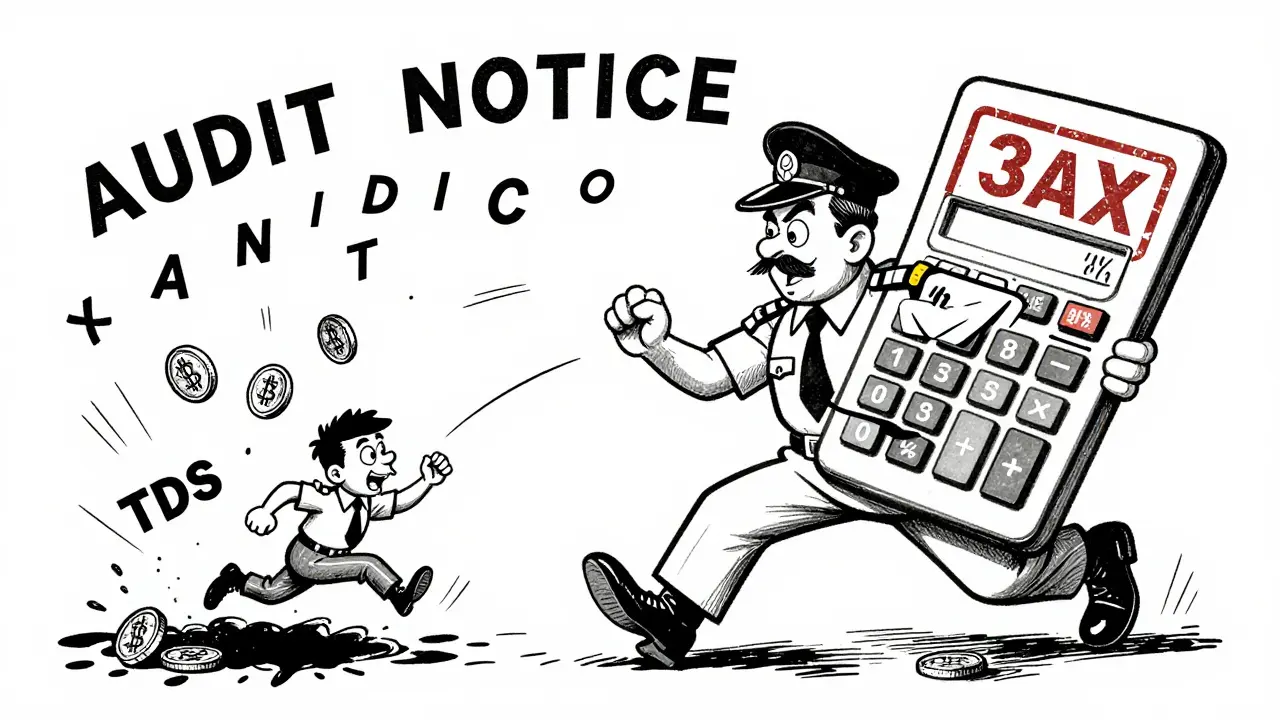
India doesn’t ban crypto, but it makes it expensive to use. Since 2022, all crypto gains are taxed at a flat 30%, with no deductions allowed. Every trade triggers a 1% tax deducted at source (TDS). That means if you sell $1,000 worth of Ethereum, $10 disappears before you even see the cash. The government doesn’t prosecute users for owning crypto-but the tax system acts like a trap. If you don’t report your trades, you risk audits, penalties, and even fraud charges. In 2024, over 120,000 crypto users received notices from tax authorities demanding proof of transactions. Many couldn’t provide records and faced fines of up to ₹500,000 ($6,000). It’s not jail, but it’s close.
United States: Targeting Criminals, Not Users
The U.S. prosecutes crypto, but not like China. It goes after big players. In September 2024, the Treasury’s OFAC sanctioned Cryptex, a Russia-linked exchange that laundered over $5.8 billion for ransomware gangs and darknet markets. The State Department offered a $10 million reward for its operator’s capture. That’s enforcement-but it’s not about your personal wallet. Average users aren’t being hunted. The Trump administration’s hands-off approach means fewer regulations, but also fewer raids on individuals. The real risk? If you’re linked to a sanctioned entity or send funds to a known criminal address, you could be investigated. For most, the U.S. is low-risk-if you’re not involved in crime.
Europe: The New Enforcement Machine
Europe’s approach changed in July 2025 with the launch of the Anti-Money Laundering Authority (AMLA). This new agency, staffed by over 300 agents by 2028, now monitors every crypto transaction across EU member states. Exchanges must report suspicious activity, and wallets linked to sanctioned addresses are frozen. The Dutch police, working with Chainalysis and Tether, seized €7 million in crypto in 2024 as part of Operation Endgame, targeting a payment processor that funneled $97 million to Cryptex. But here’s the key: AMLA doesn’t go after small traders. It targets platforms, exchanges, and intermediaries. If you’re just buying Bitcoin on a licensed EU exchange, you’re protected. But if you use an unregistered service, you’re on the radar.
Singapore and South Korea: Regulation Over Prosecution
Singapore and South Korea take a different path. Singapore’s Monetary Authority (MAS) doesn’t ban crypto-it regulates it. Stablecoin issuers must hold 100% reserves with licensed banks. Exchanges need licenses. Users aren’t prosecuted-they’re protected. South Korea’s 2024 Virtual Asset User Protection Act forces exchanges to keep client funds separate, carry insurance, and report suspicious activity. In both countries, the goal is compliance, not punishment. If you use a licensed platform, you’re safe. If you use an offshore one? You’re on your own. But even then, prosecution is rare. These are places where crypto is treated like a financial product, not a crime.

Portugal: The Crypto Safe Haven
As of 2025, Portugal remains one of the few countries where crypto gains are completely tax-free. No capital gains tax. No reporting requirements. No penalties for holding. The government doesn’t encourage crypto-it ignores it. There are no known cases of individuals being prosecuted for personal crypto use. Even if you trade daily, you won’t get a call from tax officials. That’s why thousands of crypto users from Germany, France, and the UK have moved here. Portugal doesn’t have the strongest enforcement-it has none. For users, that’s the best kind of safety.
What About the Rest?
Most countries fall somewhere in between. Brazil passed a crypto law in 2023 but is still drafting rules. Ecuador discourages crypto but doesn’t punish users. The U.S. and EU focus on institutions. The real danger zone is where the state says: “You cannot do this.” That’s China, Algeria, Bolivia, and Bangladesh. Everywhere else, the risk drops sharply. Even India, with its heavy taxes, doesn’t jail people for owning crypto.
Who’s Really at Risk?
You’re not at risk because you’re a crypto user. You’re at risk because of where you are. If you live in China, Algeria, Bolivia, or Bangladesh-stop now. If you’re in India, prepare for taxes. If you’re in the U.S., Europe, Singapore, or South Korea, you’re likely fine as long as you use regulated services. And if you’re in Portugal? You’re in the safest place on Earth for crypto users.
The global divide is clear: authoritarian regimes criminalize possession. Democratic ones regulate behavior. The difference isn’t about technology-it’s about power. And if you’re holding crypto, you need to know which side of that line you’re on.
Which countries jail people for owning cryptocurrency?
China, Algeria, Bolivia, and Bangladesh are the only countries with confirmed cases of individuals being prosecuted and jailed for owning or using cryptocurrency. In China, mining or trading can lead to prison. In Algeria and Bolivia, simply holding crypto is illegal. Bangladesh treats crypto use as money laundering, with arrests and asset seizures. No other major country prosecutes ordinary users this way.
Is it illegal to use crypto in the United States?
No, it’s not illegal to use crypto in the U.S. You can buy, sell, and hold Bitcoin legally. The government doesn’t target individual users. Enforcement focuses on major criminals-exchanges that launder money for hackers or ransomware gangs. The IRS requires you to report crypto gains as income, but you won’t be arrested for owning it. The risk comes only if you’re linked to sanctioned entities or darknet markets.
Why does India tax crypto so heavily?
India doesn’t ban crypto, but it uses taxes as a control tool. A 30% tax on gains and 1% TDS on every trade makes crypto trading unprofitable for most. The goal isn’t to stop crypto-it’s to discourage mass adoption and bring users into the formal financial system. If you don’t report, you risk audits and fraud charges. It’s enforcement through economics, not jail.
Can I avoid prosecution by using offshore exchanges?
In countries like the U.S. or EU, using an offshore exchange doesn’t protect you. AMLA and the IRS can track transactions on-chain. If you send funds to a sanctioned wallet or a known criminal address, you’ll be flagged-even if the exchange is outside your country. In China or Algeria, offshore exchanges won’t help at all. The law applies to you, not the platform. Your location matters more than your wallet.
Are there any countries where crypto is completely legal and untaxed?
Yes. Portugal is the most well-known example-crypto gains are tax-free, and there are no reporting rules. El Salvador also legalized Bitcoin as legal tender in 2021, though its enforcement is inconsistent. Singapore doesn’t tax capital gains on crypto, and South Korea only taxes income from mining or staking. For most users, Portugal remains the safest and simplest place to hold crypto without legal or tax risk.
Ace Crystal
February 14, 2026 AT 08:20kelvin joseph-kanyin
February 14, 2026 AT 11:29John Doyle
February 15, 2026 AT 13:38Crystal McCoun
February 15, 2026 AT 21:21Robbi Hess
February 16, 2026 AT 09:54Keturah Hudson
February 18, 2026 AT 00:38SAKTHIVEL A
February 18, 2026 AT 16:10krista muzer
February 19, 2026 AT 01:58Santosh kumar
February 19, 2026 AT 22:59Claire Sannen
February 21, 2026 AT 20:52Christopher Wardle
February 22, 2026 AT 05:28Joe Osowski
February 23, 2026 AT 22:59Grace Mugambi
February 25, 2026 AT 01:54Benjamin Andrew
February 26, 2026 AT 04:26Donna Patters
February 26, 2026 AT 17:09Michelle Cochran
February 28, 2026 AT 04:30Peggi shabaaz
February 28, 2026 AT 23:50Desiree Foo
March 1, 2026 AT 05:49Kaz Selbie
March 3, 2026 AT 04:40Tammy Chew
March 3, 2026 AT 20:41Lindsey Elliott
March 3, 2026 AT 23:38blake blackner
March 5, 2026 AT 19:32Andrea Atzori
March 5, 2026 AT 23:52Jeremy Lim
March 7, 2026 AT 19:27