
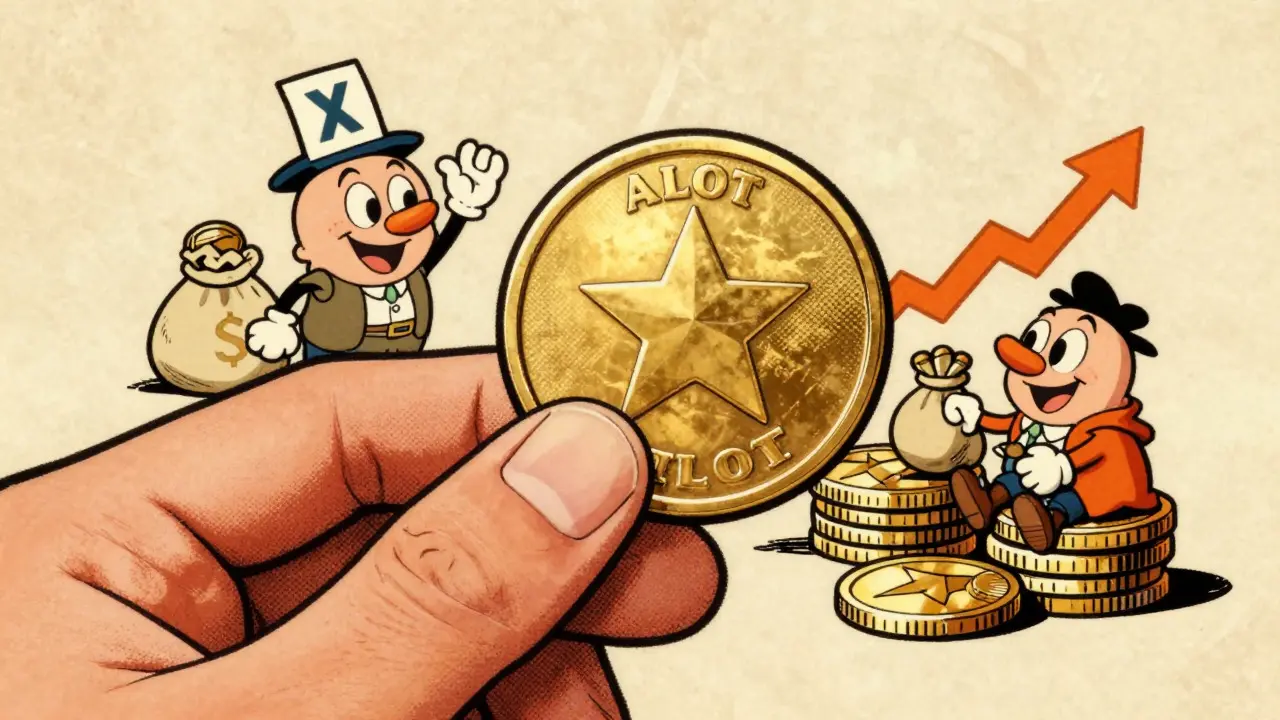
Most decentralized exchanges rely on automated market makers (AMMs), where you swap tokens against a liquidity pool. It’s simple, but it lacks the precision of traditional trading. Dexalot is a non-custodial, on-chain central limit order book (CLOB) decentralized exchange built on the Avalanche blockchain. Launched in 2022, it aims to bring the familiar interface of centralized exchanges-like placing specific limit orders at exact prices-to the DeFi space without requiring you to trust a third party with your funds. The native asset powering this ecosystem is the ALOT token, which serves as both a governance tool and a utility currency for fees and staking. If you are looking into mid-cap DeFi projects or exploring how order-book technology works on Layer-1 chains, understanding ALOT’s role is essential. This guide breaks down what Dexalot actually does, how the ALOT token functions, and where it stands in the current market landscape as of August 2026.
What Makes Dexalot Different from Standard DEXs?
To understand why ALOT exists, you first need to grasp the problem Dexalot solves. The vast majority of DEXs, including giants like Uniswap, use an AMM model. In an AMM, price discovery happens through mathematical formulas based on pool liquidity. While efficient for simple swaps, AMMs can suffer from slippage on large trades and don't allow users to set precise entry or exit points easily.
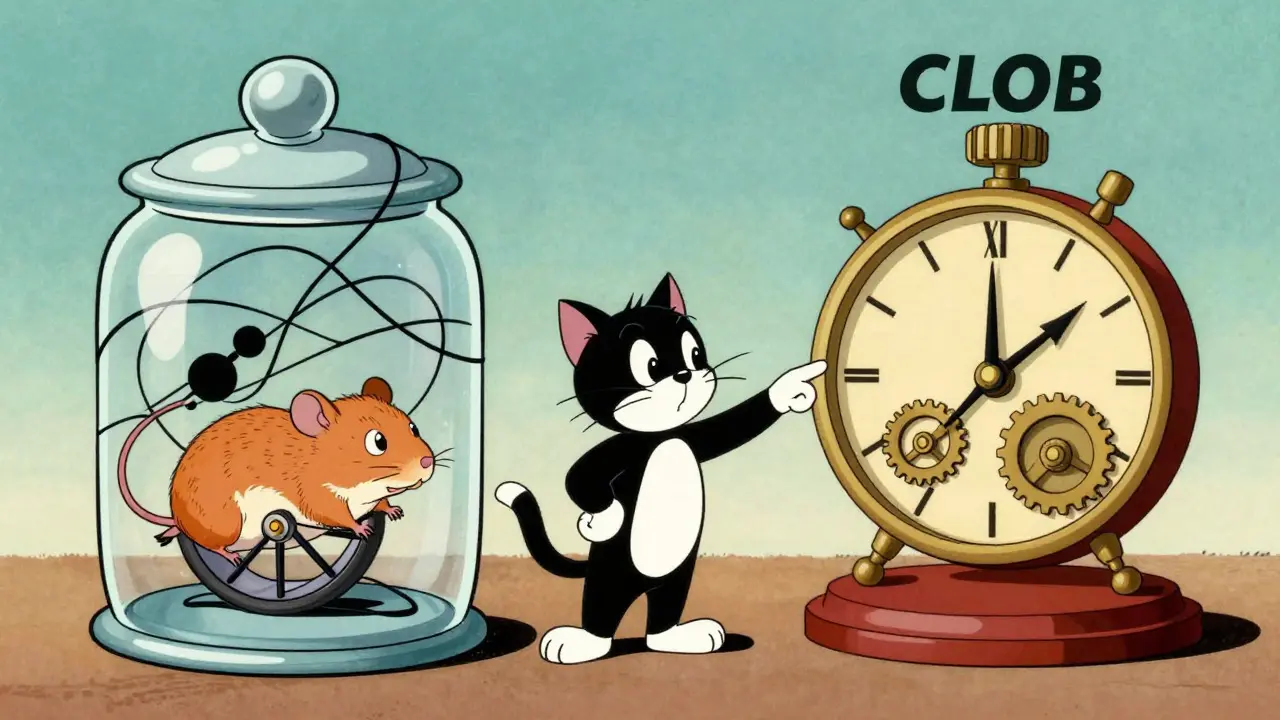
Central Limit Order Book (CLOB) technology, by contrast, matches buy and sell orders directly. Think of it like a stock exchange: if someone wants to buy 100 ETH at $3,000 and another wants to sell 100 ETH at $3,000, they match instantly. Dexalot implements this entirely on-chain using smart contracts on the Avalanche network. This means:
This design targets traders who find AMMs too imprecise but want to avoid the counterparty risk of centralized exchanges (CEXs). It bridges the gap between retail-friendly simplicity and professional-grade execution.
ALOT Token Utility: More Than Just Speculation
The ALOT token isn't just a symbol; it has concrete functions within the Dexalot protocol. Here’s how it works in practice:
- Governance: Holders can vote on protocol upgrades, fee structures, and new asset listings. This gives the community direct control over the platform's direction.
- Transaction Fees: Using ALOT to pay trading fees often comes with discounts compared to paying in stablecoins or other assets. This creates a demand driver for the token among active traders.
- Staking Rewards: Users can stake ALOT to earn incentives. These rewards typically come from protocol revenue or operational allocations, providing a yield mechanism for long-term holders.
Tokenomics and Supply Mechanics
Understanding the supply structure helps assess potential inflation risks. ALOT has a fixed maximum supply of 100,000,000 tokens. There is no minting beyond this cap, which provides a hard ceiling on dilution. As of mid-2026, data from various trackers shows slight variations in circulating supply due to different calculation methods, but the consensus figures are consistent:
- Total Supply: 100,000,000 ALOT
- Circulating Supply: Approximately 50-57 million ALOT (varies by source and date)
- Locked/Vesting: Roughly 43-50% of the supply remains locked or subject to vesting schedules.
Market Performance and Liquidity Context
Like most mid-to-small-cap DeFi tokens, ALOT experiences volatility. Price data across major aggregators like CoinGecko, CoinMarketCap, and Coinbase shows a range depending on the snapshot time and exchange used. In recent months, prices have fluctuated significantly, reflecting broader crypto market trends and project-specific news. Liquidity is a critical factor for any trading pair. On-chain data indicates that the primary trading pairs, such as ALOT/WAVAX and ALOT/USDC, maintain pool liquidity in the hundreds of thousands of dollars. While this is lower than top-tier DEXs with billions in volume, it is sufficient for retail and semi-professional traders to enter and exit positions without extreme slippage. The presence of ALOT on several centralized exchanges also adds depth, allowing users to move assets between CeFi and DeFi environments seamlessly.
Avalanche Ecosystem Support and Strategic Positioning
Dexalot benefits from strong institutional backing within the Avalanche ecosystem. The Avalanche Foundation has committed substantial resources to support Dexalot’s growth. Notably, the Foundation granted up to $3,000,000 worth of AVAX through the Multiverse program to incentivize usage on Dexalot’s dedicated Subnet. Additionally, separate grants have been allocated to boost developer activity and user acquisition. This support signals that Avalanche views order-book-based DEXs as a strategic priority. By offering high-speed, low-cost transactions, Avalanche provides the technical foundation necessary for a responsive CLOB experience. For ALOT holders, this means the underlying infrastructure is actively being developed and funded, reducing some of the technological risks associated with newer blockchain projects.
Comparative Analysis: Dexalot vs. AMM DEXs
To help you decide if Dexalot fits your trading style, here’s a direct comparison with standard AMM-based DEXs:
| Feature | Dexalot (CLOB) | Typical AMM DEX |
|---|---|---|
| Order Type | Limit Orders, Market Orders | Instant Swaps only |
| Price Discovery | Order Book Matching | Liquidity Pool Formula |
| Slippage Control | High (User sets max price) | Low (Dependent on pool depth) |
| User Interface | Similar to Centralized Exchanges | Simplified Swap Interface |
| Best For | Active Traders, Precision Entries | Casual Swappers, Yield Farmers |
Risks and Considerations for Investors
No investment is without risk, and ALOT is no exception. Here are key factors to monitor:
- Adoption Rate: The success of ALOT depends on whether traders prefer the CLOB model over simpler AMMs. Growth in daily active users and trading volume is the primary metric to watch.
- Liquidity Depth: While improving, liquidity is still modest compared to industry leaders. Large trades might still impact the price if executed quickly.
- Smart Contract Risk: As with all DeFi protocols, bugs or exploits in the underlying smart contracts could pose risks. Regular audits and bug bounty programs mitigate this, but it never disappears entirely.
- Vesting Unlock Pressure: As locked tokens vest over time, there is potential selling pressure from early investors or team members cashing out. Monitoring unlock schedules is prudent.
Frequently Asked Questions
Where can I buy Dexalot (ALOT)?
ALOT is available on several centralized exchanges and directly on decentralized platforms. You can purchase it on major CEXs that list Avalanche-based assets or swap for it directly on the Dexalot platform using AVAX or USDC. Always check the latest listing status on your preferred exchange before trading.
Is Dexalot safe to use?
Dexalot is non-custodial, meaning you retain control of your funds via your own wallet. Safety depends on the security of the smart contracts and your personal wallet management. Like all DeFi protocols, it carries smart contract risk, so reviewing audit reports and starting with small amounts is recommended for new users.
What is the main advantage of Dexalot over Uniswap?
The main advantage is the ability to place limit orders. Uniswap uses an AMM model where you execute instant swaps at the current market price. Dexalot allows you to set specific prices and quantities, giving you more control over entry and exit points, similar to traditional stock trading.
How many ALOT tokens will ever exist?
There is a hard cap of 100,000,000 ALOT tokens. No new tokens will be created beyond this number. Currently, roughly half of the supply is in circulation, with the remainder subject to vesting schedules for team, treasury, and reward allocations.
Does holding ALOT give me voting rights?
Yes. ALOT is a governance token. Holders can participate in decision-making processes regarding platform development, fee changes, and new feature implementations. Voting power is typically proportional to the number of ALOT tokens held.