
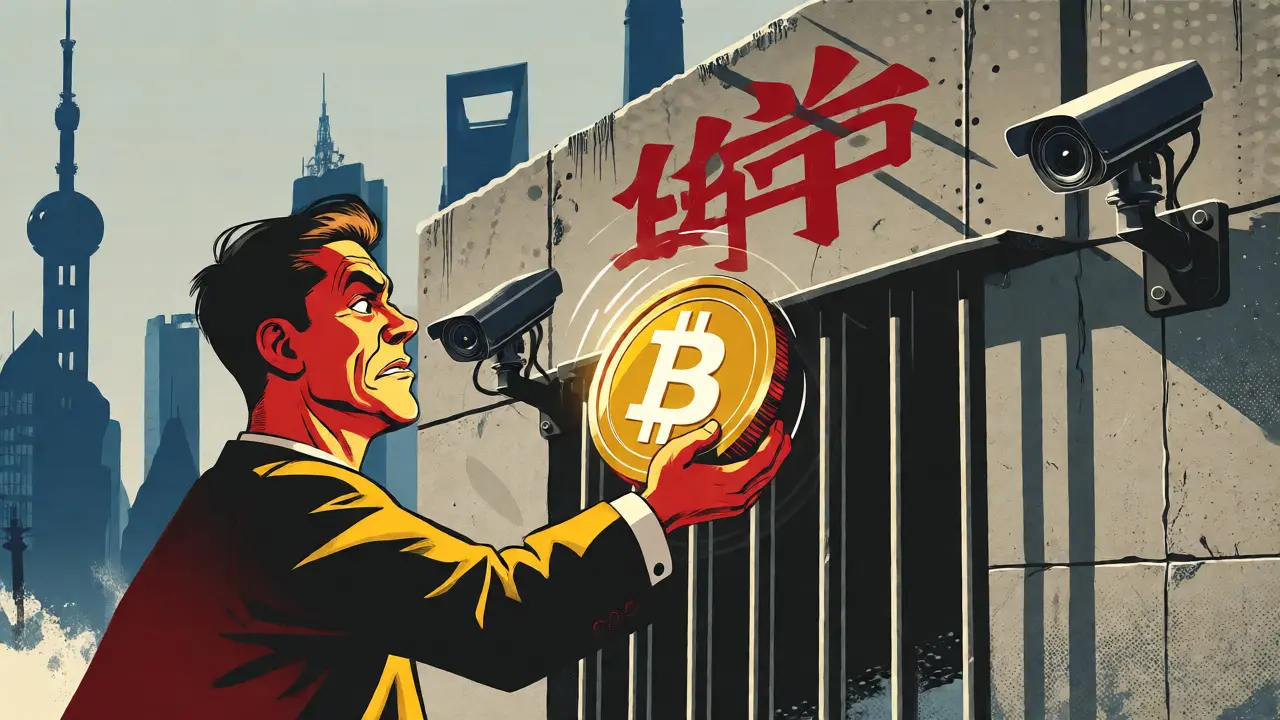
Imagine trying to send a single satoshi out of mainland China today. It’s not just difficult; it’s effectively illegal. If you’re sitting in Shanghai or Beijing holding Bitcoin and wondering how to get those assets to your wallet in Singapore or New York, the answer isn’t found in a simple exchange button click. As of September 2026, the regulatory landscape has hardened into a concrete wall. The People's Bank of China (PBOC) didn’t just tighten the screws-they removed the door handle entirely.
The core issue is simple: cross-border crypto transfers are no longer a matter of logistics but of legal survival for Chinese residents. Since June 1, 2025, comprehensive prohibitions have made all cryptocurrency activities, including ownership and trading, illegal financial activities. This means the traditional methods of moving value across borders-like using an offshore exchange-are now high-risk gambles rather than standard banking procedures. So, can you still move Bitcoin abroad? Technically, yes, if you already hold it outside China. Legally, if you are inside China, you are fighting against a system designed to prevent exactly that.
The Regulatory Wall: Why Moving Bitcoin Out Is Harder Than Ever
To understand why this is so tricky, you need to look at what changed recently. Before 2025, many users relied on a gray area where they could trade on overseas platforms via VPNs. That era ended with the May 30, 2025, decree by the PBOC. This wasn't just another warning letter; it was a total ban. The regulation classifies any crypto-related business activity as illegal financial activity. This includes exchange services, derivatives trading, and even Initial Coin Offerings (ICOs).
For individuals, the risk profile shifted dramatically. Financial institutions are forbidden from providing any services related to cryptocurrencies, from opening accounts to settling payments. Internet companies must block and report crypto-related content. But the most critical change for anyone trying to move money out is the explicit ban on overseas exchanges serving Chinese residents. If you try to log into Binance or Coinbase from a mainland IP address, you aren't just breaking terms of service; you are potentially violating national law.
This creates a paradox for those wanting to move Bitcoin abroad. You cannot legally buy more, you cannot legally sell locally to convert to fiat for transfer, and you cannot easily interact with global liquidity pools. The government views dollar stablecoins and private cryptocurrencies as threats to monetary sovereignty, comparable to previous financial crises. Consequently, the state pushes hard for its own alternative: the digital yuan.
The Digital Yuan vs. Bitcoin: The State-Backed Alternative
While Bitcoin struggles to find legal footing in mainland China, the e-CNY (digital yuan) is thriving. This Central Bank Digital Currency (CBDC) represents China’s preferred approach to digital assets. Unlike Bitcoin, which is decentralized and borderless, the e-CNY is fully controlled by the state. It allows the government to maintain oversight over every transaction while offering the speed and convenience of digital payments.
Why does this matter for cross-border transfers? Because the e-CNY is being piloted with features that mimic some crypto benefits but keep control within the state. For example, tests have included expiration dates for funds, sector-specific spending limits, and geographic restrictions. These "programmable money" features allow regulators to geofence circulation, ensuring that digital renminbi stays within licensed areas like Hong Kong or specific economic zones. For a resident trying to move value abroad, the e-CNY offers a legal path, but it lacks the neutrality and global acceptance of Bitcoin.
Some experts, like Wang Yongli, former vice president of the Bank of China, argue that China needs to launch an offshore renminbi stablecoin to compete with dollar-based stablecoins like USDT or USDC. He warns that failing to match these competitors in payment efficiency could hinder the internationalization of the renminbi. However, as of late 2026, there is no official authorization for such a tool. The focus remains on domestic stability and control, leaving Bitcoin holders in a precarious position.

Legal Pathways: How to Actually Move Value Out
If you are determined to move Bitcoin or its equivalent value abroad, you have limited options. Most involve stepping outside the strict definition of "crypto activity" within mainland jurisdiction or leveraging special administrative regions.
- The Hong Kong Bridge: Hong Kong maintains a separate regulatory framework. While mainland residents face capital controls when accessing HK markets, having a bank account and an exchange account in Hong Kong provides a clearer legal environment. Some users transfer fiat currency to Hong Kong first (within annual foreign exchange quotas) and then purchase crypto there. This separates the legal risks of holding crypto in mainland China from the act of owning it globally.
- Pre-existing Offshore Holdings: If you acquired Bitcoin years ago and stored it in a self-custody wallet (like Ledger or Trezor) before the 2025 ban, you technically still own it. Moving it doesn't require a Chinese intermediary. However, converting it back to fiat to use it abroad requires care. Spending it directly via card providers that accept crypto might work, but linking those cards to mainland bank accounts triggers scrutiny.
- Trade-Based Settlements: Small businesses sometimes use crypto for settlement in informal cross-border trade, particularly with partners in Southeast Asia. This is often done through bilateral agreements rather than public exchanges. While risky, it bypasses the formal financial system that monitors crypto transactions.
Notice what’s missing? There is no simple "send to address" feature linked to a mainland bank account. The moment you touch the traditional banking system, the red flags go up. Banks monitor funds for any links to cryptocurrency trading. If a wire transfer comes from an entity known to be involved in crypto, it may be frozen or rejected.
Risks and Enforcement: What Happens If You Break the Rules?
Don’t underestimate the enforcement capabilities. The Ministry of Public Security is tasked with cracking down on violations, identifying virtual currencies as major money laundering channels. The regulatory framework combines online tracking with offline inspections. Authorities have established coordinated working mechanisms to monitor all crypto-related activities.
The penalties are severe. Asset seizure measures accompany the ownership ban. If authorities determine you are engaging in illegal financial activity, they can confiscate your assets. Criminal liability under anti-money laundering statutes is also a real possibility. This isn't just a slap on the wrist; it’s a potential criminal record.
Technical circumvention, like using a VPN to access an overseas exchange, carries substantial legal risks. Chinese authorities maintain extensive monitoring capabilities. They know who is logging in from where. The regulatory framework specifically targets circumvention attempts through overseas exchange prohibitions and content blocking requirements. Trying to hide behind technology won't protect you from the law.

Comparison: Traditional Transfer vs. Crypto Workarounds
To help you decide your next step, here is a breakdown of the main methods people attempt to use to move value out of China, compared against their current legal status and practicality.
| Method | Legal Status (Mainland) | Risk Level | Liquidity | Best For |
|---|---|---|---|---|
| Bank Wire (Fiat) | Legal (Subject to $50k USD quota) | Low | High | Large, documented transfers |
| Hong Kong Exchange | Gray Area (Depends on residency) | Medium | Medium | Users with HK bank accounts |
| Overseas Exchange (VPN) | Illegal | High | High | Speculative traders willing to risk |
| Self-Custody Wallet | Ownership Ban (Technically Illegal) | High | Low (Hard to cash out) | HODLers with pre-ban coins |
| e-CNY Transfer | Legal (Domestic/Limited Cross-border) | Low | High (Domestic) | Digital asset enthusiasts aligned with state policy |
Future Outlook: Will the Ice Melt?
Is there hope for a softer stance? In July 2025, the Shanghai State-owned Assets Supervision and Administration Commission discussed strategic responses to digital assets. Experts indicated a potential softening of China's strict position, suggesting that targeted regulatory approaches-like allowing trading on strictly licensed exchanges-might emerge. However, these discussions remain preliminary. No concrete policy commitments have been announced as of September 2026.
The government’s priority remains monetary sovereignty. With dollar stablecoins gaining traction globally, China sees a strategic imperative to promote the renminbi. This might lead to a hybrid model where certain crypto activities are permitted under strict KYC (Know Your Customer) controls, similar to how traditional finance operates. But don't expect a return to the free-for-all days of 2017.
For now, if you are in China, the safest play is compliance. If you want Bitcoin exposure, consider holding it offshore through legitimate investment vehicles or waiting for a clear regulatory signal. Trying to force a cross-border crypto transfer through the backdoor is expensive, stressful, and legally dangerous.
Is it illegal to own Bitcoin in China in 2026?
Yes, under the comprehensive ban implemented in June 2025, individual ownership of cryptocurrencies is classified as part of illegal financial activity. While enforcement focuses heavily on trading and business operations, the legal basis for ownership has been removed, creating significant risk for holders.
Can I use a VPN to trade on Binance from China?
You can technically connect, but it is illegal. Overseas exchanges are explicitly banned from serving Chinese residents. Using a VPN does not shield you from legal consequences, as authorities monitor IP patterns and transaction flows. Violations can lead to account freezes and asset seizures.
How do I move Bitcoin to a foreign wallet if I am in China?
If you already hold Bitcoin in a self-custody wallet, you can broadcast a transaction to a foreign address without touching Chinese banks. However, converting that Bitcoin back to fiat currency abroad requires care to avoid triggering AML alerts. The hardest part is getting new fiat into the system to buy more crypto legally.
What is the e-CNY and how is it different from Bitcoin?
The e-CNY is China's Central Bank Digital Currency. Unlike Bitcoin, which is decentralized and deflationary, the e-CNY is centralized, issued by the People's Bank of China, and pegged to the renminbi. It allows for programmable money features like expiration dates and spending limits, giving the state full control over the digital economy.
Are there any legal alternatives to crypto for cross-border payments?
Traditional bank wires remain the primary legal method, subject to the annual $50,000 USD foreign exchange quota per person. Additionally, the e-CNY is being tested for cross-border settlements in pilot programs, though widespread international adoption is still in early stages.