
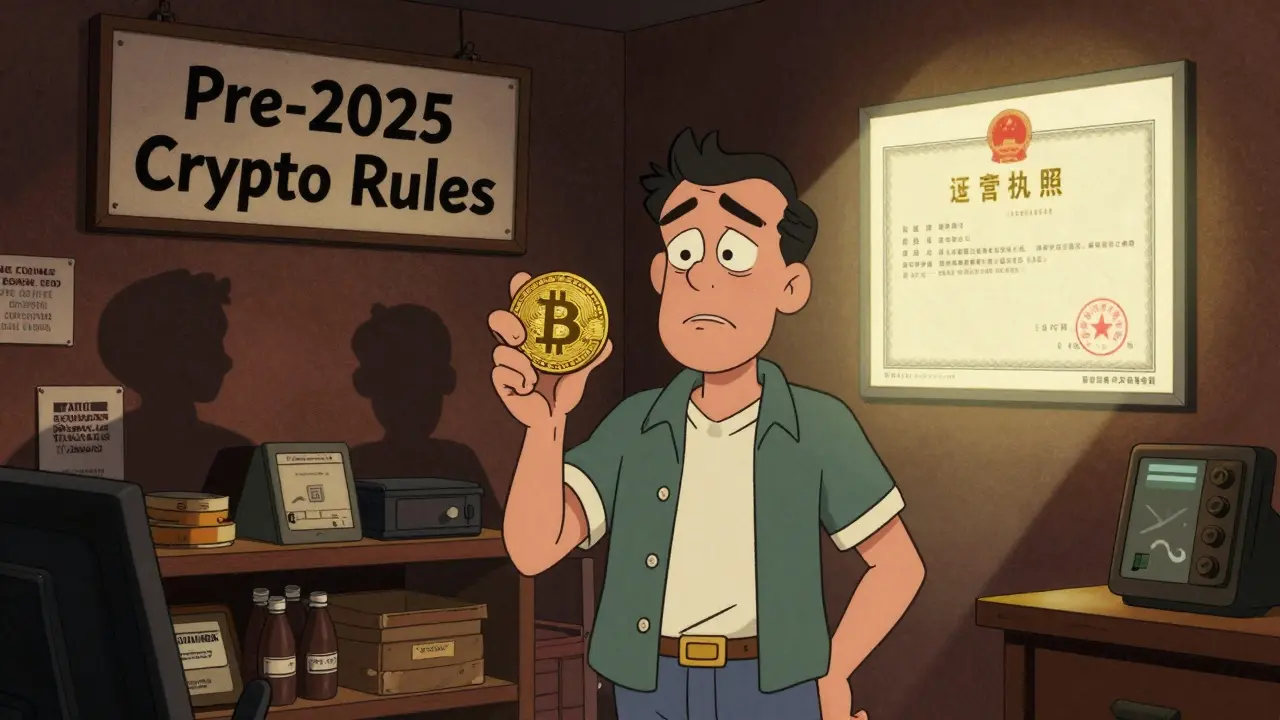
Buying cryptocurrency in Australia used to feel like walking into a dark room with no map. You had no idea who you were dealing with, what protections you had, or what happened if things went wrong. That’s changing fast. As of 2026, Australia has one of the clearest, toughest frameworks in the world for protecting people who invest in crypto - and if you’re holding Bitcoin, Ethereum, or even an NFT, you need to know what’s changed.
What’s New in Crypto Rules?
The big shift came with the Treasury Laws Amendment Bill 2025, which officially brought crypto platforms under Australia’s financial services law. Before this, the rules were a mess. Some crypto companies had to follow rules from ASIC, others only had to register with AUSTRAC for anti-money laundering checks, and a lot didn’t have to do anything at all. Now, if you run a platform where people buy, sell, or store crypto - think Independent Reserve, BTC Markets, or OKX Australia - you need an Australian Financial Services Licence (AFSL). That’s the same license banks and stockbrokers hold.This isn’t just paperwork. It means platforms must now follow strict rules: they have to be transparent about fees, manage conflicts of interest, train their staff properly, and have a real system to handle complaints. If they break these rules, they can be fined up to $16.5 million. That’s not a slap on the wrist - it’s a business-ending penalty.
What’s Covered? What’s Not?
The new rules don’t cover everything. They focus on platforms, not individual token issuers. So if you’re buying Bitcoin or a stablecoin like USDC on a licensed exchange, you’re protected. If you’re trading an NFT on a platform that lets people buy and sell them as investments, that’s covered too.But here’s the catch: NFTs used purely in games - like a character skin or a virtual land in a game you can’t trade outside the game - are excluded. Same goes for businesses using tokens to pay for services or access software. The law isn’t trying to regulate every use of blockchain. It’s focused on financial risk: platforms where people are trading assets hoping for profit.
Small platforms that handle less than $5,000 per customer and under $10 million in annual transactions are exempt. That’s meant to let tiny local operators or community projects keep going without drowning in compliance costs. But if you’re growing, you’ll need to get licensed - and fast.
How Are You Protected?
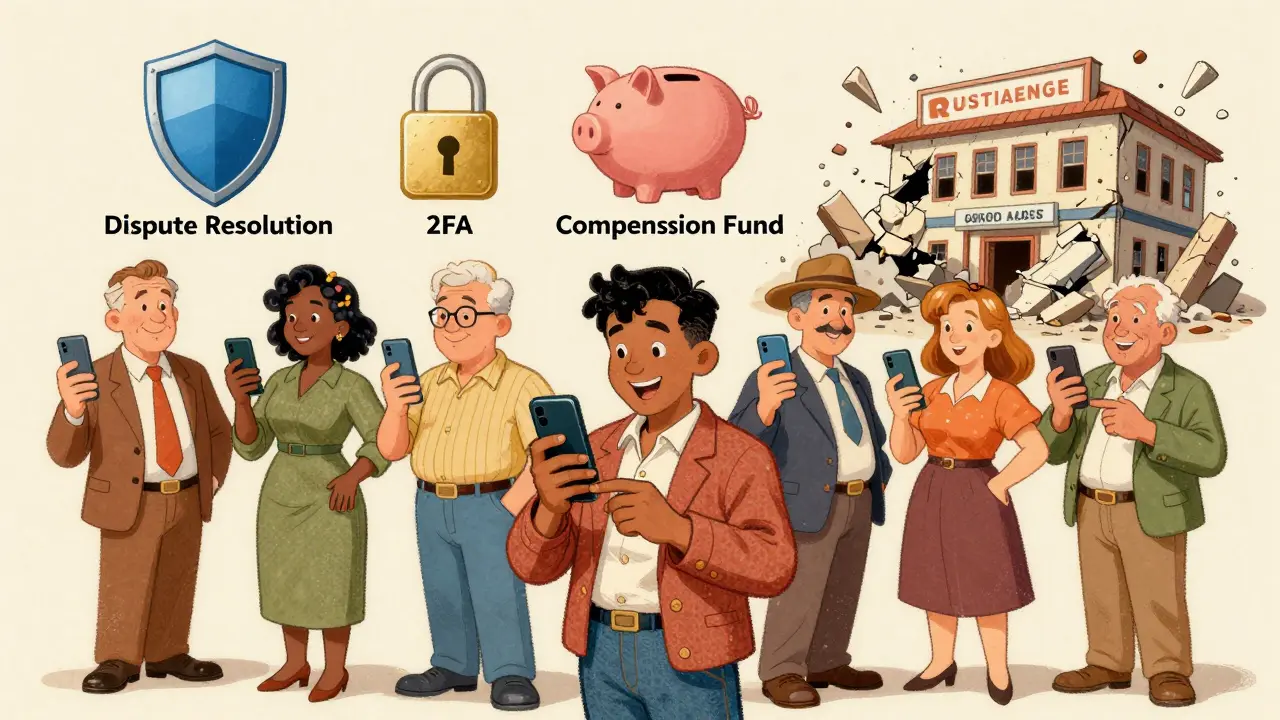
Before 2025, if a crypto exchange collapsed - like FTX did in 2022 - you had almost no recourse. Your coins were gone, and there was no insurance, no compensation scheme, no way to fight back. Now, licensed platforms must have a dispute resolution process and, crucially, a compensation arrangement. That doesn’t mean every dollar is insured like a bank account, but it means there’s a legal obligation for the platform to set aside funds or get insurance to cover losses from fraud or mismanagement.Plus, all platforms must follow the Australian Consumer Law. That means no fake promises. No claiming your crypto will “double in a week.” No hiding fees. No pretending their platform is “government-backed.” ASIC has already taken action against multiple companies for misleading ads - and they’re just getting started.
Even if a crypto asset isn’t classified as a financial product (like Bitcoin), the rules still apply. If a company tells you it’s “safe” or “guaranteed,” and it’s not, that’s illegal under consumer law. You don’t need to be a financial expert to know that - the law protects you just for being a consumer.
What You Need to Do as a Consumer
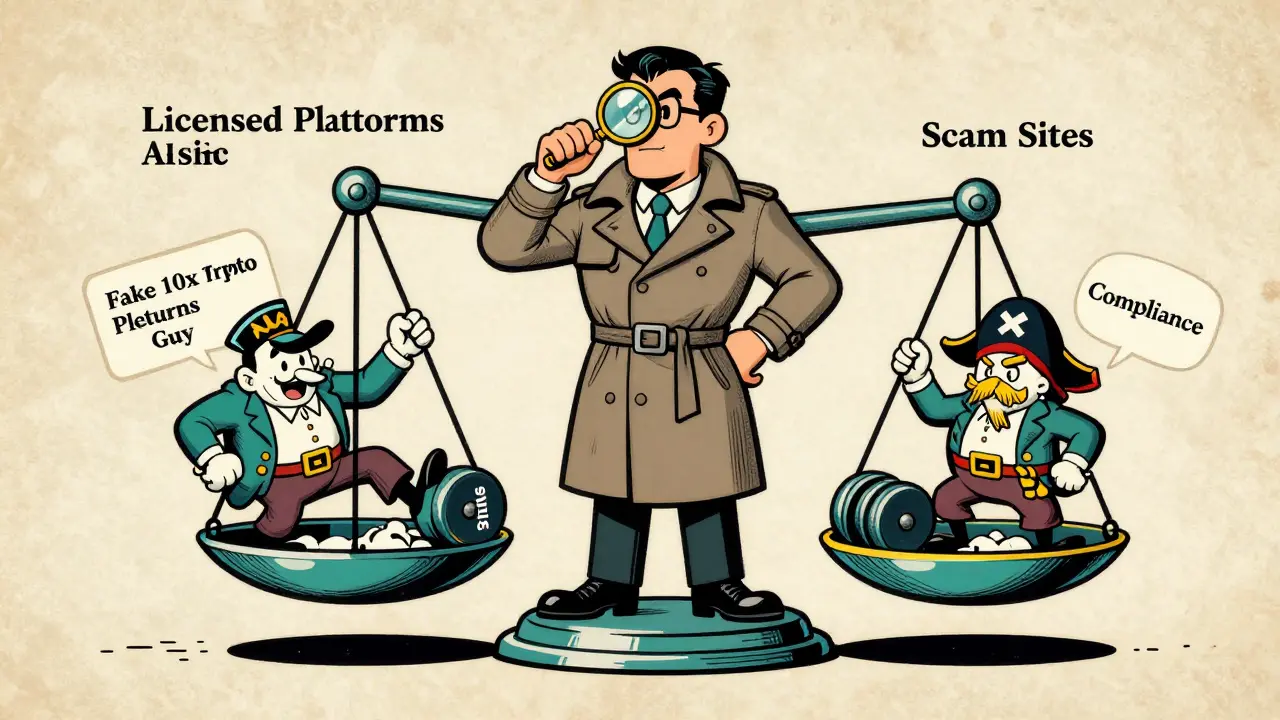
Your protection only works if you know where to look. Before you deposit any money:- Check if the platform is licensed by ASIC. Go to the ASIC Connect register and search for their name. If they’re not there, walk away.
- Look for clear fee schedules. No hidden charges. No surprise withdrawal fees.
- See if they have a public dispute resolution process. If they don’t, that’s a red flag.
- Never click on a link in a DM or a YouTube ad saying “Get 10x returns.” That’s how scams start.
- Use two-factor authentication. Always. Even if the platform says it’s optional.
And if something feels off? Report it. ASIC and AUSTRAC take reports seriously. You don’t need to prove anything - just describe what happened. Your report could stop someone else from losing money.
What Happened Before This?
The FTX collapse in 2022 was the wake-up call. Thousands of Australians lost money because FTX wasn’t regulated. It wasn’t licensed. It wasn’t audited. It was just a website with a slick logo and a promise. After that, the government didn’t just tweak the rules - they rebuilt them from the ground up.Before 2025, the system was split. AUSTRAC handled anti-money laundering checks - so platforms had to know who their customers were (KYC). ASIC only stepped in if the crypto was considered a financial product - like a token that paid dividends or gave ownership rights. But Bitcoin? That was a gray zone. Many platforms operated without any real oversight. Consumers had no idea what they were signing up for.
Now, the rules are unified. All platforms that handle crypto trading or custody - regardless of the asset type - fall under the same legal umbrella. That’s a huge win for transparency.
Industry Reaction
Most serious crypto businesses in Australia welcome the change. Independent Reserve and BTC Markets publicly supported the bill. Kate Cooper from OKX Australia said it’s “the clearest signal yet that crypto is no longer operating on the fringes.” That’s not just PR - it’s business sense. Licensed platforms can attract institutional investors, banks, and even super funds. Unlicensed ones? They’re getting squeezed out.Lawyers like Liam Hennessy from Thomson Geer say the law strikes the right balance. It doesn’t stop innovation - it just makes sure the people running it are responsible. The goal isn’t to kill crypto. It’s to let good players thrive and make sure bad ones can’t hide.
What’s Next?
The law passed in late 2025, but full implementation is still rolling out. By mid-2026, all major platforms should be licensed. Smaller ones have until the end of the year to comply. ASIC is already ramping up inspections. If you see a platform advertising “no KYC” or “instant withdrawals with no limits,” that’s a sign they’re not licensed - and you’re at risk.Future updates may include mandatory insurance for custody services or clearer rules on how stablecoins are backed. But for now, the core protection is in place: if you’re trading crypto in Australia, you’re not alone. The system is watching.
Common Scams to Watch Out For
Even with better rules, scams still happen. Here’s what to look for:- “Guaranteed returns” - if someone promises you’ll make money, they’re lying. No one can guarantee crypto prices.
- Unlicensed platforms with fake ASIC logos - always check the official register.
- Phishing sites that look like Binance or Coinbase - never log in through a link in an email or text.
- influencers pushing obscure tokens - many are paid to promote scams.
- “Free crypto” giveaways - if you have to send crypto first to get it back, it’s a trap.
Remember: if it sounds too good to be true, it is. And now, the law gives you real tools to fight back.
Dave Lite
January 8, 2026 AT 19:47ASIC’s AFSL mandate for crypto platforms is a game-changer. No more shady OTC desks masquerading as exchanges. Now you’ve got fiduciary duty, capital adequacy, and dispute resolution baked in. This isn’t just regulation-it’s institutional-grade infrastructure. If you’re still using unlicensed platforms in 2026, you’re basically gambling with your private keys and your legal recourse. Time to upgrade your due diligence.
Becky Chenier
January 10, 2026 AT 12:29It’s refreshing to see Australia finally treating crypto like a financial product instead of a wild west free-for-all. The clarity around NFTs as investments versus in-game assets is especially thoughtful. Not everything needs to be regulated-but the things that impact people’s savings? Absolutely.
Tracey Grammer-Porter
January 11, 2026 AT 04:39so i just checked my exchange and they’re on the ASIC register phew 😅 but what about the small guys who just let friends trade crypto among themselves? like my buddy runs a little $2k/month side thing for his book club-is he gonna get crushed by compliance? just wondering if this helps or hurts the grassroots vibe
sathish kumar
January 11, 2026 AT 08:58The legislative framework enacted under the Treasury Laws Amendment Bill 2025 constitutes a paradigmatic advancement in digital asset governance. The conflation of custodial platforms with traditional financial intermediaries under the AFSL regime demonstrates a commendable alignment with international best practices, particularly in the context of systemic risk mitigation.
jim carry
January 11, 2026 AT 12:55THIS IS THE MOST IMPORTANT THING THAT HAS HAPPENED SINCE THE INTERNET WAS INVENTED. I’VE BEEN SCAMMED THREE TIMES. I LOST MY ENTIRE LIFE SAVINGS TO A PHISHING SITE THAT LOOKED LIKE BINANCE. NOW I CAN SLEEP AT NIGHT BECAUSE IF THEY SCAM ME AGAIN, I CAN SUE THEM INTO OBLIVION. ASIC IS MY NEW HERO. I’M CRYING. I’M SO PROUD TO BE AN AUSTRALIAN.
Don Grissett
January 11, 2026 AT 18:08yeah right like the gov’t actually gives a damn. they’re just doing this so they can tax us more. you think they care about you? nah. they just want a piece of your bag. and now they’ll charge you GST on every trade, audit your wallet, and track your NFTs like you’re some kinda criminal. this isn’t protection-it’s control.
Katrina Recto
January 13, 2026 AT 04:18Finally. Took long enough. I lost $28k on a platform that vanished overnight. No recourse. No transparency. No accountability. Now if they screw up, they’re legally obligated to compensate. That’s not a perk-it’s justice. Stop calling it crypto. Call it finance. And treat it like it.
Veronica Mead
January 13, 2026 AT 08:02While I acknowledge the structural improvements introduced by the 2025 legislation, I remain deeply concerned about the normalization of speculative asset classes under the guise of consumer protection. The very premise of cryptocurrency as a store of value is inherently unstable. This regulatory framework does not mitigate risk-it merely legitimizes it.
Surendra Chopde
January 13, 2026 AT 13:15Great move by Australia 🇦🇺! But what about cross-border users? I’m from India and I use Independent Reserve. Does this protection extend to non-residents? Or am I still on my own if things go sideways? 🤔
Tre Smith
January 14, 2026 AT 21:00Let’s be real: the $16.5M fine is meaningless if the platform’s assets are already liquidated. You can’t punish a ghost. The real flaw is the lack of mandatory third-party custody insurance. Without it, this is all theater. ASIC is playing nice, but the underlying risk architecture hasn’t changed. This isn’t protection-it’s PR.
Ritu Singh
January 16, 2026 AT 17:32they’re just preparing us for the digital currency takeover. this is how they’ll phase out cash. mark my words-next they’ll mandate that all crypto must be held in government-approved wallets. and then they’ll track every transaction. you think this is about protection? it’s about control. the elite want you dependent on their system. don’t be fooled.
kris serafin
January 18, 2026 AT 06:39Big win for everyday folks 💪. I used to be scared to even buy ETH because I didn’t know if I’d ever see my money again. Now I know if the exchange goes down, there’s a real chance I get something back. That’s huge. Also, two-factor auth? Non-negotiable. I’ve got it on everything-even my Netflix. 😅
Jordan Leon
January 19, 2026 AT 10:44There is an underlying tension here between innovation and institutionalization. The regulation ensures stability, yes-but at what cost to decentralization? If every platform must be licensed, audited, and compliant, does crypto still retain its anarchic soul? Or have we simply replaced one authority with another?
Gideon Kavali
January 21, 2026 AT 02:32AMERICA IS STILL LETTING SCAMMERS RUN WILD. WE DON’T HAVE ANY OF THIS. OUR GOVERNMENT IS ASLEEP. AUSTRALIA DID WHAT THE U.S. WAS TOO WEAK TO DO. THIS IS WHAT LEADERSHIP LOOKS LIKE. I’M SO PROUD OF AUSTRALIA. IF YOU’RE STILL USING AN UNLICENSED EXCHANGE IN 2026, YOU’RE NOT JUST RISKY-YOU’RE ASHAMED.
Allen Dometita
January 21, 2026 AT 07:00Love this! Feels like the crypto world finally grew up 🎉. I used to be scared to even talk about it at family dinners. Now I can say, ‘Yeah, I use Independent Reserve-it’s legit.’ No more whispering. Also, two-factor? Yes. Always. I even made my cat a password. 🐱
Brittany Slick
January 21, 2026 AT 08:50This feels like the moment crypto stopped being a wild dream and became something real. Like a tree that finally grew roots instead of just floating in the wind. I used to feel guilty for investing. Now I feel like I’m part of something that’s actually changing the game. Thank you, Australia. You did it right.
greg greg
January 22, 2026 AT 11:29It’s interesting to note that the regulatory framework’s emphasis on platform-level accountability creates a structural asymmetry between the treatment of custodial services and non-custodial wallets, which remains entirely unregulated, thereby potentially incentivizing users to migrate toward less secure, self-custody models, which in turn introduces new vectors of vulnerability that are not addressed by the current legislation, and this could inadvertently undermine the very consumer protections the bill intends to establish, especially as retail users may misinterpret platform licensing as blanket safety rather than a baseline standard of operational integrity.
Denise Paiva
January 23, 2026 AT 07:57Why does anyone think this will stop scams? The same people who lost money to FTX are now buying ‘decentralized’ tokens with no whitepaper and calling it ‘web3’. This law doesn’t fix ignorance. It just gives regulators more paperwork. People will still fall for Telegram bots promising 1000x returns. Always will.
Sarbjit Nahl
January 23, 2026 AT 23:18The notion that regulation equates to safety is a fallacy. History demonstrates that centralized oversight merely shifts risk from market failure to institutional failure. The FTX collapse was not caused by lack of regulation-it was caused by fraud. No amount of licensing prevents malice. This is governance theater.
Meenakshi Singh
January 25, 2026 AT 19:02So what happens when a platform gets licensed but still drains wallets through ‘technical glitches’? I’ve seen it happen. They say ‘oops’ and disappear. The compensation fund won’t cover that unless it’s proven fraud. And proving fraud takes years. This feels like a bandaid on a bullet wound 💉
Frank Heili
January 27, 2026 AT 11:25Biggest win? The ASIC register. I used to spend hours checking if a platform was legit. Now I just search their name in one place. Took me 2 minutes to verify my exchange. That’s the kind of simple, smart reform people actually need. No fluff. Just a searchable database. That’s power.
Jon Martín
January 27, 2026 AT 13:48Man I’m so glad we’re finally getting real. I’ve been in crypto since 2017. Saw friends lose everything. I used to joke that if you didn’t get scammed once, you weren’t doing it right. Now? I can tell my little sister to buy ETH without sweating. That’s worth more than any fee schedule.
Jennah Grant
January 28, 2026 AT 01:57The exclusion of in-game NFTs is smart. Too many regulators try to control everything and end up stifling innovation. This law focuses on financial risk-not digital ownership. That’s the right balance. It’s not about banning fun. It’s about protecting capital.
Dennis Mbuthia
January 28, 2026 AT 17:08Look. I don’t care what your fancy law says. If you’re not running your own node, you’re not really owning crypto. You’re just renting it from some bank with a blockchain logo. This law doesn’t protect you-it just makes the bank feel better. You think ASIC gives a damn about your Bitcoin? Nah. They care about their tax revenue. Always have.
Staci Armezzani
January 29, 2026 AT 03:22For anyone nervous about getting started: this is your sign. The rules are clear. The platforms are vetted. The recourse is real. I used to tell people to wait. Now I say: go ahead. Just check ASIC. Use 2FA. Don’t click links. You got this. And if you mess up? You’re not alone anymore.
Sherry Giles
January 31, 2026 AT 01:03Canada’s still letting banks control everything. Australia’s doing something real. But don’t be fooled-this is just the first step. Next they’ll require biometric KYC for every wallet. Then they’ll freeze accounts based on AI predictions. This isn’t safety. It’s the beginning of the digital police state. I’m moving my crypto to a hardware wallet and disappearing.
Dave Lite
February 1, 2026 AT 21:47Staci nailed it. The real win isn’t the law-it’s the culture shift. People aren’t whispering about crypto anymore. They’re asking questions. Checking registers. Demanding transparency. That’s the real protection. Regulation just gave them the tools.
kris serafin
February 1, 2026 AT 22:47Frank’s right. I checked ASIC this morning. Found my exchange in 90 seconds. Used to spend hours googling Reddit threads. This is the kind of thing that saves lives. No more guessing. Just search. Done.