
You want to trade on the Binance Smart Chain without handing over your keys. That’s a smart move for many of us who value self-custody. But when you look beyond the big names like PancakeSwap or Uniswap, you run into platforms like CoinSwap.com. It promises something different: a "decentralized cloud" model with unique NFT-based nodes. Sounds fancy, right? The question is whether it actually works for you, or if it’s just another complex experiment struggling to find users.
I’ve spent time digging into how CoinSwap operates on BSC, looking at its tokenomics, its weird node system, and where it stands against the giants. Here is what you need to know before you connect your wallet.
What Exactly Is CoinSwap.com?
At its core, CoinSwap.com is a decentralized exchange protocol built exclusively on the Binance Smart Chain. Unlike standard automated market makers that just sit there waiting for trades, CoinSwap bills itself as the first "DeCloud" trading protocol. This means it tries to blend the ease of use found in centralized exchanges with the security of decentralized ones.
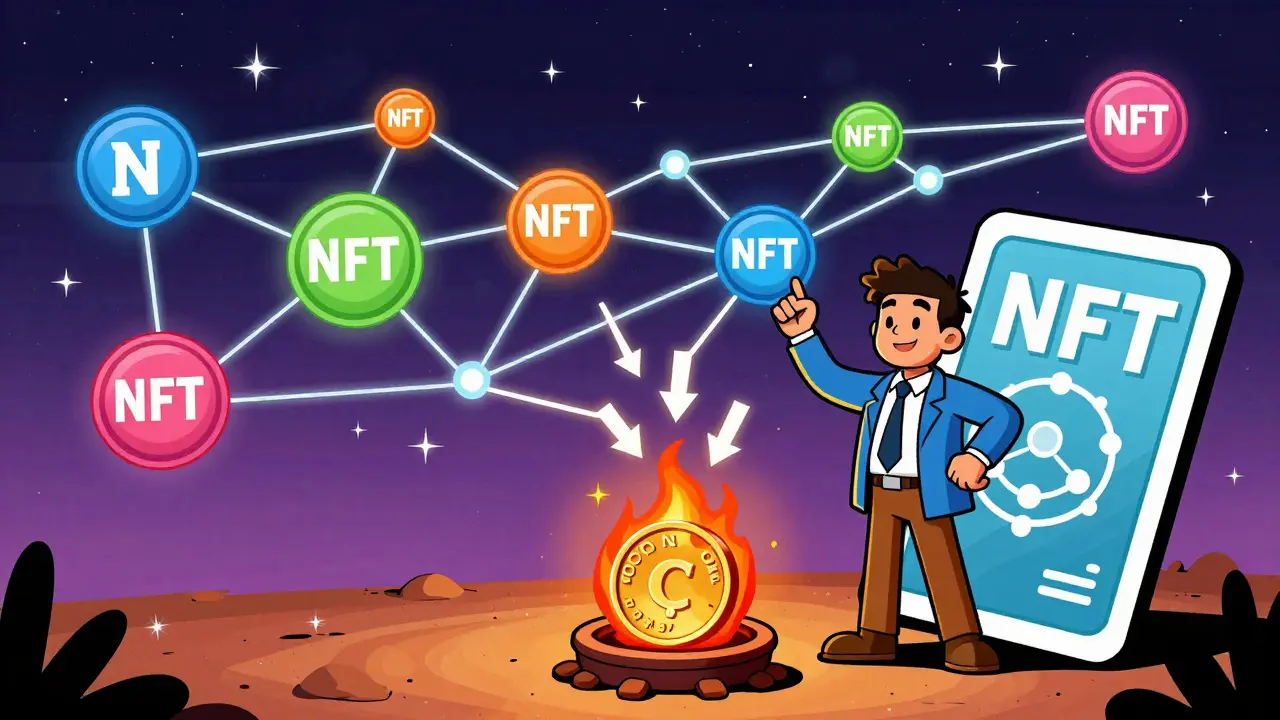
The platform relies on a network of "supernodes." These aren’t just servers; they are distinct NFTs within the ecosystem. To participate deeply in the network, you don’t just provide liquidity; you buy and activate these supernode NFTs using the native COINS token serves as the utility currency for fees, node creation, and rewards.. This structure is supposed to create a more robust infrastructure than simple liquidity pools, but it also adds a layer of complexity that most casual traders won’t understand immediately.
If you are used to swapping tokens on Ethereum or Polygon, note this: CoinSwap does not do cross-chain trading. It lives entirely on BSC. If you hold assets elsewhere, you have to bridge them first. This limits its appeal to people already deep in the BNB Chain ecosystem.
The COINS Token and Deflationary Mechanics
Every DEX has a governance or utility token, but CoinSwap’s approach is aggressive. The COINS token handles three main jobs: paying transaction fees, creating supernodes, and powering a two-tier referral system.
Here is the hook: the tokenomics are deflationary. When you pay transaction fees in COINS, 100% of those fees are burned. This means every trade theoretically reduces the total supply. In a bull market, this can drive up the price of the token due to scarcity. However, this only works if there is significant trading volume. Without high volume, the burn rate slows down, and the deflationary promise becomes moot.
The referral system is also tied to this token. Supernode operators earn rewards from direct referrals and even second-tier referrals. This is rare in the DEX space. Most platforms offer flat fee discounts for holding their token. CoinSwap tries to build a community-driven marketing engine by rewarding users for bringing others into the fold. It’s clever, but it also raises questions about sustainability. Are people joining because they want to trade, or just to farm referral rewards?
Supernodes: The Core Differentiator
This is where CoinSwap gets technical. Instead of a single central contract handling everything, the network uses supernodes. Each supernode is an NFT. You must spend COINS to create one. Once active, these nodes help process transactions and maintain the network’s integrity.
Why does this matter to you? Because it changes the incentive structure. On Uniswap, you are a passive liquidity provider. You deposit funds, wait for fees, and hope the impermanent loss doesn’t eat your profits. On CoinSwap, owning a supernode makes you an active participant in the network’s operation. You earn from the activity happening through your node.
However, this introduces risk. If the network fails or loses relevance, your NFT’s utility drops to zero. There is no guarantee that the demand for supernodes will remain high. It is a speculative asset tied directly to the success of the platform.
| Feature | CoinSwap.com | PancakeSwap | Uniswap (on BSC) |
|---|---|---|---|
| Chain Support | BSC Only | Multichain (BSC, ETH, etc.) | Multichain (ETH, BSC, Polygon, etc.) |
| Core Mechanism | Supernode NFT Network | Liquidity Pools & Yield Farming | Automated Market Maker (AMM) |
| Token Utility | Fees, Node Creation, Referrals | Governance, Staking, Lottery | Governance, Fee Discounts |
| Referral System | Two-Tier On-Chain Rewards | Basic Affiliate Links | None Native |
| User Base Size | Niche / Small | Massive / Mainstream | Large / Global |
Security and Trust: The Elephant in the Room
Let’s talk about safety. In crypto, if it isn’t audited, it isn’t safe. As of late 2025 and moving into 2026, CoinSwap.com lacks widely publicized, independent smart contract audits from top-tier firms like CertiK or OpenZeppelin. Compare this to Uniswap or PancakeSwap, which undergo regular third-party reviews and have battle-tested codebases.
The absence of these audits is a red flag. It doesn’t mean the code is malicious, but it means you have no external verification that it is secure. For a platform asking you to lock up funds in NFTs and liquidity pools, this is a significant gap. Always check the latest status on the project’s official channels, but assume higher risk until proven otherwise.
Additionally, user feedback is scarce. You won’t find thousands of reviews on Trustpilot or heated debates on Reddit about CoinSwap. This silence suggests low adoption. While it might be quieter, it also means fewer eyes on potential bugs. Liquidity depth is another concern. Lower volume often leads to higher slippage. If you try to swap a large amount, you might get a much worse price than expected because there isn’t enough matching liquidity in the pools.
Who Should Actually Use CoinSwap?
CoinSwap is not for everyone. In fact, it probably isn’t for most people. Here is who fits the profile:
- BSC Purists: You only trade on Binance Smart Chain and want to explore alternative protocols.
- Node Investors: You believe in the long-term value of the supernode NFT model and want to speculate on network growth.
- Affiliate Marketers: You have a large audience and want to leverage the two-tier referral system to earn passive income in COINS.
If you are a beginner, stick to PancakeSwap. It is simpler, has deeper liquidity, and is easier to understand. If you need cross-chain swaps, go with Uniswap or a dedicated bridge. CoinSwap is a niche tool for a specific type of user who understands the risks of early-stage DeFi protocols.
Practical Steps to Get Started
If you decide to take the plunge, here is how you set it up. Keep in mind that you are interacting with a non-custodial platform. No customer support will help you if you make a mistake.
- Set Up Your Wallet: Install MetaMask or Trust Wallet. Ensure it is configured for the Binance Smart Chain network. You will need BNB for gas fees.
- Acquire COINS: Since CoinSwap is token-to-token, you likely need to buy COINS on another DEX first, such as PancakeSwap, using BNB.
- Connect to CoinSwap: Visit the official website. Double-check the URL to avoid phishing sites. Connect your wallet.
- Create a Supernode (Optional): If you want to participate in the node network, navigate to the node section and mint an NFT using your COINS.
- Trade or Provide Liquidity: Use the swap interface for small trades. Be aware of slippage settings. If providing liquidity, start with small amounts to test the waters.
Never share your seed phrase. Never approve unlimited allowances unless you trust the contract implicitly. Revoke permissions regularly using tools like Revoke.cash.
The Verdict: Niche Innovation or Dead End?
CoinSwap.com offers an interesting theoretical model. The combination of deflationary burns, NFT-based infrastructure, and multi-tier referrals is ambitious. It attempts to solve the issue of passive liquidity by incentivizing active network participation.
However, execution is everything. The lack of multi-chain support, limited liquidity, and missing security audits keep it on the fringe. It is not yet a primary destination for serious trading volume. For now, treat it as a speculative play rather than a reliable trading venue. Monitor its development roadmap and audit status closely. If it gains traction and secures proper security verifications, it could become a notable player in the BSC ecosystem. Until then, proceed with caution and never invest more than you can afford to lose.
Is CoinSwap.com safe to use?
Safety depends on your risk tolerance. While CoinSwap is not listed in major scam databases, it lacks independent smart contract audits from reputable firms. This increases the risk compared to established DEXs like PancakeSwap or Uniswap. Always verify the contract address yourself and start with small amounts.
What is a supernode on CoinSwap?
A supernode is a unique NFT within the CoinSwap ecosystem. Users purchase these nodes using the COINS token. Supernodes help process transactions and earn rewards based on the activity routed through them. They represent a shift from passive liquidity provision to active network participation.
Does CoinSwap support Ethereum or other chains?
No, CoinSwap.com operates exclusively on the Binance Smart Chain (BSC). It does not currently support Ethereum, Polygon, or other networks. You must bridge your assets to BSC before using the platform.
How does the COINS token work?
The COINS token is used for paying transaction fees, creating supernode NFTs, and earning referral rewards. A key feature is its deflationary model: 100% of fees paid in COINS are burned, reducing the total supply over time.
Can I earn money from referrals on CoinSwap?
Yes, CoinSwap features a two-tier referral system. Supernode operators can earn rewards from both direct referrals and second-tier referrals. This is handled on-chain, making it transparent but dependent on the volume generated by your referred users.
Why is there so little information about CoinSwap?
CoinSwap is a niche platform with lower trading volume and user adoption compared to industry leaders. This results in fewer user reviews, less media coverage, and limited community discussion. It targets a specific segment of advanced BSC users rather than the general public.