
Remember that time in 2021 when every email inbox was flooded with promises of free crypto? If you were active in the space then, you likely saw notifications about the Cipher (CPR) airdrop. It was marketed as a chance to get tokens for free through CoinMarketCap. But if you are checking your wallet today and seeing nothing-or worse, seeing a token labeled "Cipher [Old]"-you are probably confused. Why did it happen? Where is the money? And is it even safe?
The short answer is that the 2021 airdrop was a real event, but it belongs to a project that has largely faded into obscurity. The token you might see now is often considered legacy or "old" because the project migrated networks and struggled to maintain relevance. Let’s break down exactly what happened during that campaign, why the token carries that awkward "[Old]" tag, and what you need to know if you still hold these assets.
What Was the Cipher (CPR) Project?
To understand the airdrop, you first have to understand what Cipher actually was. Launched on April 9, 2018, Cipher (CPR) was a utility token project designed to bring transparency and accountability to business practices using blockchain technology. The team, spread across India, the UK, and New Zealand, pitched CPR not just as a speculative coin, but as a digital share representing partial ownership in their ecosystem. Their goal was to build mobile applications that offered secured data, real-time access, and high scalability for businesses.
Originally, CPR lived on the Ethereum blockchain, which was the standard for most ERC-20 tokens at the time. However, Ethereum transactions became slow and expensive as the network grew crowded. To fix this, Cipher planned a major technical shift. They didn’t just want to stay on Ethereum; they wanted to move to a faster, cheaper network to keep their "batteries-included" business model viable without charging users high fees.
The 2021 Airdrop Campaign via CoinMarketCap
In 2021, the crypto market was heating up again after the bear market of 2018-2019. Projects needed visibility, and users wanted free tokens. Cipher chose CoinMarketCap (CMC) to distribute their tokens. This was a common strategy back then. CMC had launched features that allowed projects to reward users who viewed their pages or engaged with their listings. For Cipher, this wasn't just marketing; it was part of their non-ICO business model. Instead of raising funds by selling tokens to investors upfront, they aimed to distribute them to actual users who interacted with their services.
Here is how the process generally worked for participants:
- Eligibility: Users typically had to create an account on CoinMarketCap and verify their identity.
- Engagement: You had to visit the Cipher listing page on CMC, sometimes daily, to accumulate points or eligibility credits.
- Distribution: Once the campaign ended, eligible wallets received CPR tokens directly from the CMC platform or via a snapshot mechanism.
The idea was simple: increase circulation and community engagement. By giving tokens away, Cipher hoped to build a base of holders who would care about the project's success. It sounded like a win-win. You got free crypto, and they got users. But there was a catch-the timing coincided with a massive network change.
Why Is It Called "Cipher [Old]" Now?
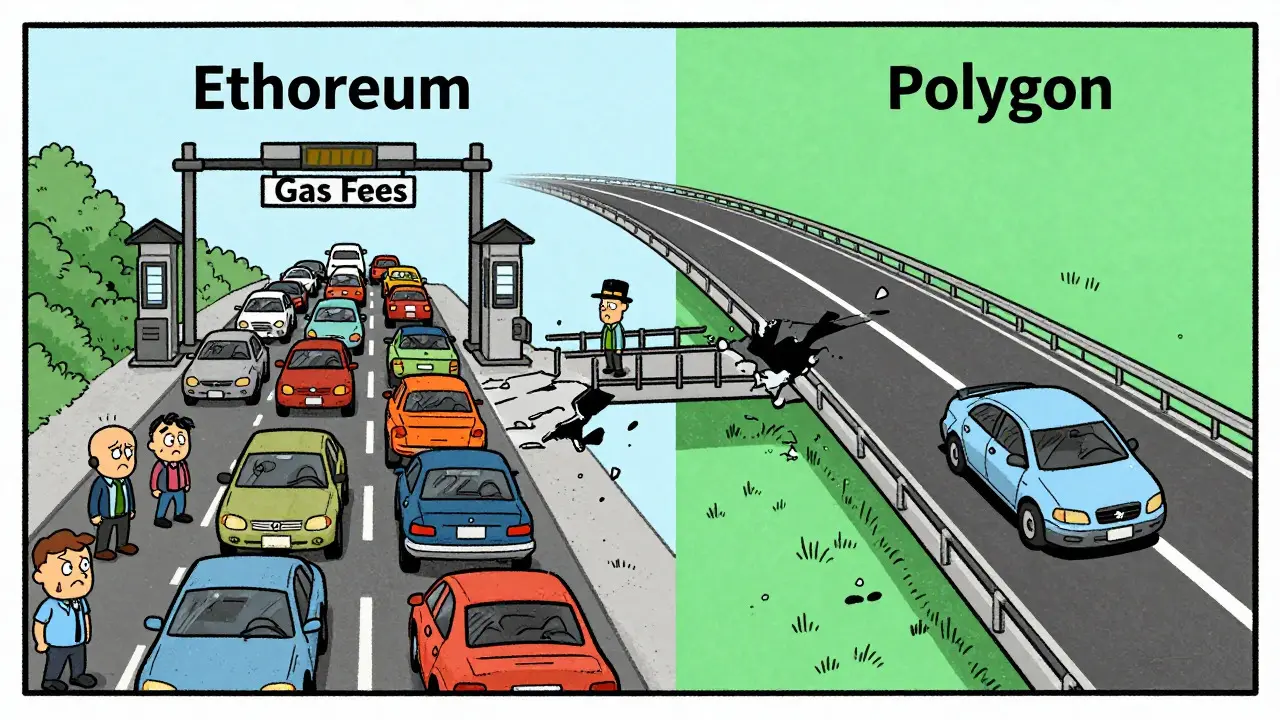
If you search for CPR on major tracking sites today, you will likely see two entries or a warning label. The designation "Cipher [Old]" appears because of a critical migration. Around the same time as the 2021 airdrop, Cipher moved its primary contract from Ethereum to the Polygon PoS network. Polygon, formerly known as Matic, was gaining popularity for offering Ethereum-like compatibility but with much lower transaction costs and faster speeds.
This migration created a split. The original Ethereum-based tokens became the "old" version. The new, active version resides on Polygon with the contract address 0xaa404804ba583c025fa64c9a276a6127ceb355c6. For many users, this transition was confusing. If you held the old Ethereum CPR tokens, you might have needed to bridge them or claim the new Polygon tokens manually. Many people simply forgot, lost track of the announcement, or didn't have the gas fees to make the switch. As a result, the old tokens remained in wallets, trading at negligible values, while the new contract tried to establish itself.
| Feature | Cipher [Old] (Ethereum) | Cipher (Polygon) |
|---|---|---|
| Blockchain Network | Ethereum (ERC-20) | Polygon PoS |
| Transaction Speed | Slow (dependent on ETH congestion) | Fast (seconds) |
| Gas Fees | High ($5 - $50+ per tx) | Low (fractions of a cent) |
| Current Status | Legacy / Low Liquidity | Active Contract |
| Contract Address | Original ETH Address | 0xaa404804ba583c025fa64c9a276a6127ceb355c6 |
Tokenomics and Market Reality
Let’s look at the numbers. Cipher had a total supply of 1.08 billion CPR tokens. At various points, the circulating supply was reported around 186 million. Sounds substantial, right? But supply doesn’t equal value. The market performance of CPR tells a story of volatility and decline. The token hit an all-time high of roughly $0.004065 on February 3, 2024. That might sound like progress, but consider the context. In June 2022, it traded near zero. Today, it hovers in the fractions of a cent, with 24-hour ranges between $0.00004 and $0.00006.
This price action reflects a broader trend. Many projects from the 2018-2021 era conducted aggressive airdrops to build hype but failed to deliver sustained utility. Cipher’s vision of "transparent business practices" never gained widespread adoption. Without strong demand, the token price drifted downward. The airdrop increased the number of holders, but it didn’t necessarily create loyal users who stuck around for the long haul. When the initial excitement faded, so did the trading volume.
Is It Safe to Hold or Trade Now?
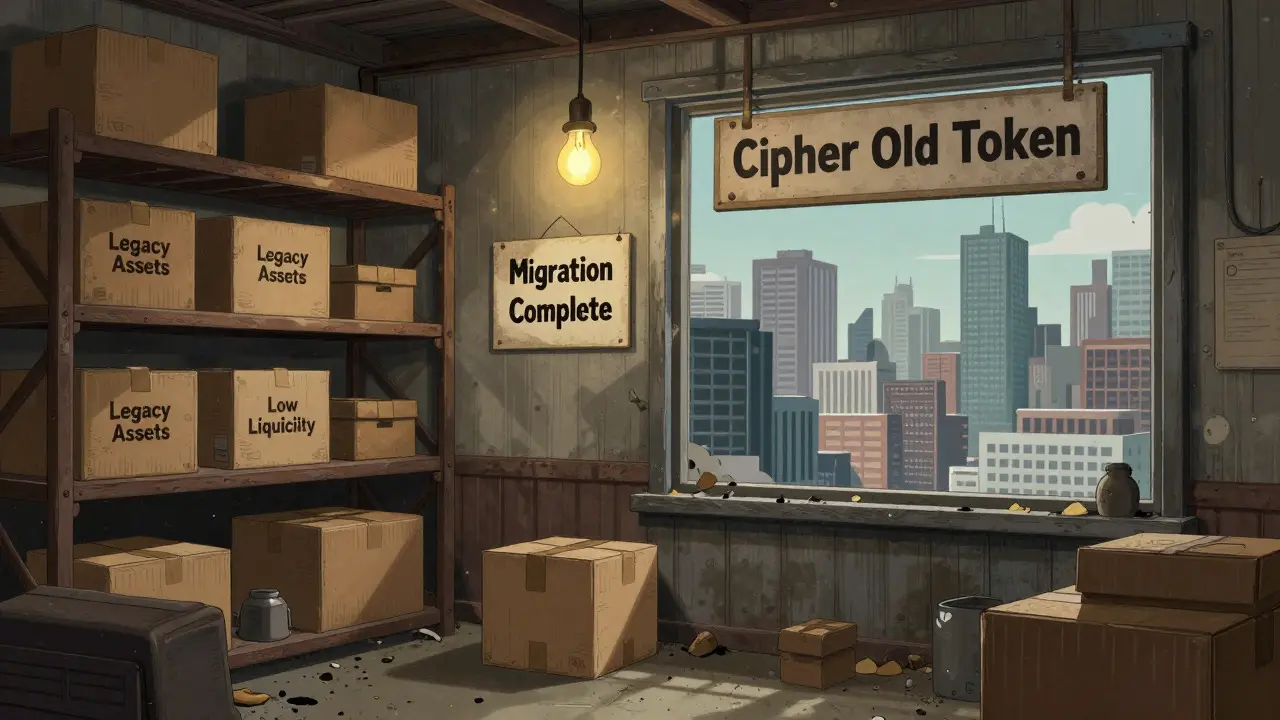
If you received CPR tokens in 2021 and never touched them, you might be wondering if they are worth anything. Technically, yes. But practically? Probably not much. Here is what you need to check before doing anything:
- Identify Your Token: Check your wallet. Are you holding the Ethereum version or the Polygon version? If it’s the Ethereum one, you are looking at the "Old" token. Bridging it to Polygon might cost more in gas fees than the tokens are worth.
- Liquidity Check: Look at the trading pairs. If there are no active buyers, selling large amounts could crash the price further. Low liquidity means you can’t easily convert CPR to stablecoins or fiat.
- Scam Awareness: Be wary of fake support channels. Because the project is older and less active, scammers often target holders of "dead" coins, promising to help you migrate or unlock value for a fee. Always verify addresses on official platforms like CoinMarketCap or CoinGecko.
The migration to Polygon was intended to improve usability, but it also fragmented the community. The "Old" label serves as a warning to traders that this is not the current primary focus of the developers. While the Polygon contract is technically active, the lack of significant news updates or major partnerships suggests limited ongoing development.
Lessons from the Cipher Airdrop
The Cipher 2021 airdrop is a case study in the lifecycle of mid-tier crypto projects. It highlights the importance of network choice. Staying on Ethereum during a period of high congestion hurt user experience, prompting the move to Polygon. It also shows the limits of airdrops as a growth strategy. Giving away tokens creates awareness, but without a compelling product or continuous innovation, that awareness fades quickly.
For investors, the key takeaway is due diligence. Just because a token was distributed through a reputable platform like CoinMarketCap doesn’t guarantee its long-term value. The "Old" designation is a clear signal from data aggregators that this asset has been superseded or neglected. If you are holding these tokens, treat them as a small experiment rather than a core investment. Keep an eye on the Polygon contract for any signs of renewed activity, but don’t expect a sudden moonshot based on a five-year-old airdrop.
How do I claim my Cipher (CPR) tokens from the 2021 airdrop?
If you participated in the 2021 CoinMarketCap airdrop, the tokens should already be in your linked wallet. If you are missing them, check if you are looking at the correct network. The active tokens are now on the Polygon network. You may need to add the Polygon network to your wallet (like MetaMask) and import the token using the contract address 0xaa404804ba583c025fa64c9a276a6127ceb355c6. If you only see the Ethereum version, you might need to bridge it, though the cost may outweigh the benefit.
Why is Cipher labeled as "Old" on CoinMarketCap?
The "Old" label indicates that this is the previous version of the token, originally deployed on the Ethereum blockchain. After migrating to the Polygon network for better performance and lower fees, the original Ethereum contract became legacy. Tracking platforms use this label to distinguish it from the current, active contract on Polygon and to prevent confusion among traders.
Is the Cipher (CPR) project still active in 2026?
While the Polygon contract exists, the project shows limited signs of major development or community growth compared to its peak in 2021. Trading volumes are low, and there have been no significant announcements recently. It is considered a legacy project by many in the crypto community, meaning it is still tradeable but lacks the momentum of newer protocols.
What is the difference between the Ethereum and Polygon versions of CPR?
The main differences are speed and cost. The Ethereum version (Old) suffers from high gas fees and slower transaction times, making it impractical for frequent trading. The Polygon version offers near-instant transactions with minimal fees. The Polygon version is the one currently supported by the project’s roadmap and is listed as the primary asset on most exchanges.
Can I sell my old Cipher tokens for a good price?
Probably not. The value of CPR has declined significantly since its all-time high in early 2024. With a price hovering around $0.00005, you would need millions of tokens to make a meaningful amount. Additionally, low liquidity means selling large amounts could drop the price further. It is best to check the current order book on decentralized exchanges before attempting to sell.