
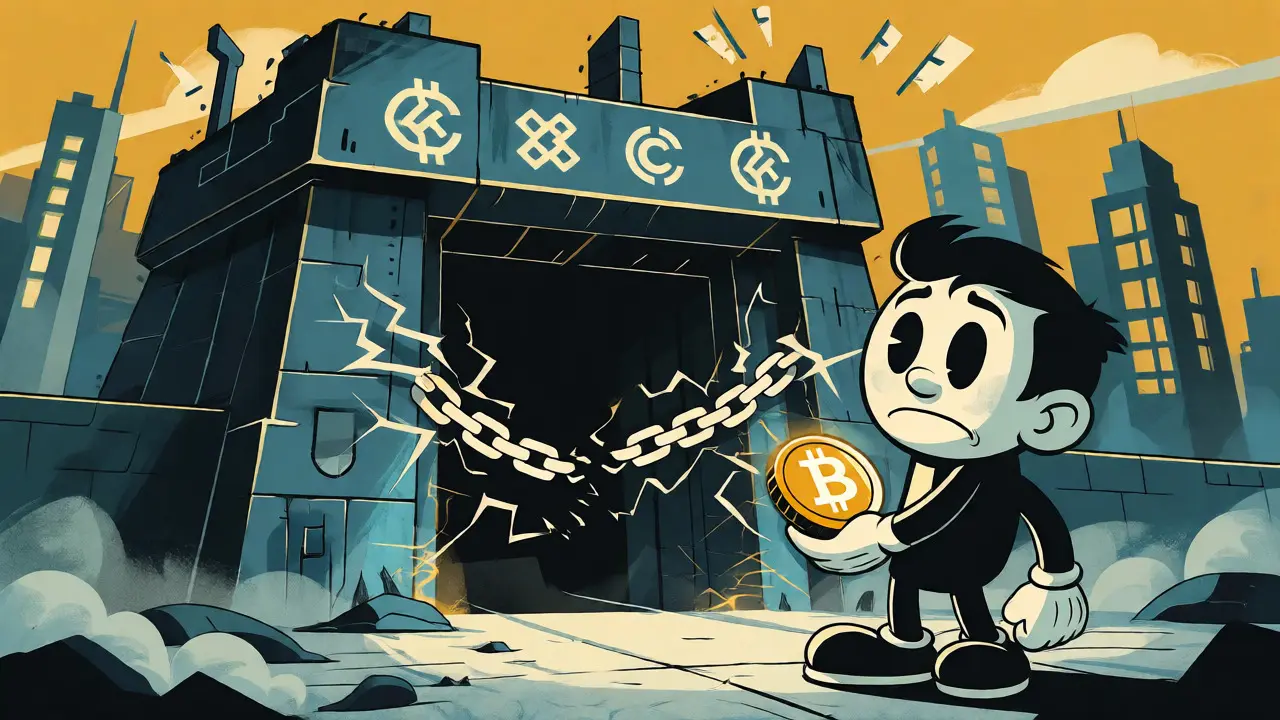
You’re looking at BITEXBOOK, a name that sounds like it belongs on the big leagues of digital asset trading. But here’s the kicker: if you try to visit their site today, you might just hit a wall. Not a metaphorical one, but a literal technical error saying the secure connection failed. That’s not exactly the warm welcome you want when handing over your hard-earned Bitcoin.
Most people searching for this platform are trying to figure out if they can trust it with their money. Can you actually buy and sell there? Is it safe? Or is it another ghost town in the vast desert of abandoned crypto projects? Let’s cut through the noise and look at what we actually know about BITEXBOOK, why it raises red flags, and whether you should bother creating an account.
What Exactly Is BITEXBOOK?
BITEXBOOK positions itself as a cryptocurrency exchange platform offering multiple markets and advanced trading tools. On paper, it claims to provide high liquidity and secure services for buying, selling, and exchanging digital assets. It appears in various directories as a legitimate entity, listing features like spot trading and perhaps some derivative options.
But here’s where things get fuzzy. Unlike giants such as Binance or Coinbase, which publish detailed whitepapers, team bios, and regulatory licenses, BITEXBOOK is remarkably quiet about its origins. Who founded it? When did it launch? Where is it registered? These basic facts are missing from most authoritative sources. The platform seems to exist in a shadowy corner of the market, listed among hundreds of exchanges but rarely discussed by major industry analysts like CoinDesk or Cointelegraph.
The lack of transparency is a huge warning sign. In crypto, opacity usually means something is being hidden. If a company can’t tell you who runs it, why should you trust them with your private keys or deposit funds?
The Technical Red Flags: SSL Errors and Accessibility
Imagine walking into a bank, and the front door won’t open because the lock is broken. That’s essentially what happened to many users trying to access BITEXBOOK recently. Reports from late 2023 highlighted a critical issue: "Cloudflare is unable to establish an SSL connection to the origin server." Translation? The website’s security certificate was misconfigured.
This isn’t just a minor glitch. SSL/TLS encryption protects your data as it travels between your browser and the exchange’s servers. Without it, your login credentials and transaction details could theoretically be exposed. For a financial service, this is a fundamental failure. If the site is down or throwing errors, how reliable do you think their order execution engine is? If the web interface struggles, what happens during high-volatility moments when every second counts?
| Feature | BITEXBOOK | Binance/Coinbase |
|---|---|---|
| SSL Status (Late 2023) | Failed/Misconfigured | Robust & Audited |
| User Reviews Volume | <10 on Knoji | Millions globally |
| Safety Rating | "Not Safe" (Traders Union) | Highly Regulated |
| Proof of Reserves | None Public | Regular Audits |
Is BITEXBOOK Safe? What Experts Say
If you’re wondering about safety, you’re not alone. And unfortunately, the verdict from independent reviewers isn’t great. Traders Union, a reputable broker analysis firm, evaluated BITEXBOOK using over 100 parameters. Their conclusion? It is not a safe and trusted company.
Why so harsh? They likely looked at factors like:
- Licensing: Does it hold a license from a top-tier regulator like the FCA or ASIC? There’s no evidence of this.
- Financial Health: Are they solvent? With no public financial reports, we don’t know.
- Customer Support: Can you reach a human when things go wrong? Given the low user base, support infrastructure is likely minimal.
Compare this to established players. After the collapse of FTX in 2022, users became hyper-aware of counterparty risk. You need proof that an exchange actually holds your coins. This is called Proof of Reserves. BITEXBOOK hasn’t published any credible audits showing they hold customer assets 1:1. Without this, you’re taking a leap of faith.

User Experience and Community Feedback
What do actual users say? Very little, and that’s telling. On platforms like Knoji, BITEXBOOK has fewer than ten reviews, averaging around 2.7 stars. That’s below average. Reputable exchanges typically maintain ratings above 4.0 across thousands of reviews.
A single Trustpilot review, written in Russian, praises the platform for being "reliable, profitable, and confidential." But let’s be real-one generic positive review against a backdrop of silence and technical errors doesn’t paint a picture of a thriving community. Where are the Reddit threads? Where are the Bitcointalk discussions? The absence of organic buzz suggests either very few users are active, or those who tried it didn’t stick around long enough to talk about it.
Think about it: if you deposit $500 and can’t withdraw because of a mysterious fee or a frozen account, who do you call? With only nine reviews total, you’re unlikely to find a helpful forum thread solving your specific problem. You’re on your own.
Fees, Features, and Trading Options
Since detailed documentation is scarce, evaluating BITEXBOOK’s fee structure is tricky. Most exchanges charge maker/taker fees ranging from 0.1% to 0.6%. Some offer discounts for holding native tokens. Does BITEXBOOK have a native token? Unknown. Do they offer staking? Unknown. Advanced charting tools via TradingView integration? Likely, but unverified.
Here’s the practical reality: even if the fees were competitive, would you trade there? Consider the opportunity cost. If BITEXBOOK goes offline due to another SSL error or worse, disappears overnight, you lose time and potentially capital. Meanwhile, on a major exchange, you have access to deep liquidity, meaning large orders don’t move the price drastically. On a small, obscure exchange, slippage could eat your profits before you even close the trade.
Also, check the supported cryptocurrencies. Many niche exchanges list dozens of altcoins but miss the majors like Ethereum or Solana due to liquidity issues. Conversely, some list risky micro-caps that are easy to manipulate. Without a clear, updated coin list, you’re guessing.
Should You Use BITEXBOOK?
Let’s make this simple. You should consider BITEXBOOK only if:
- You live in a region where major exchanges are banned, and BITEXBOOK is one of the few accessible options.
- You are trading extremely small amounts ($50-$100) and can afford to lose it entirely.
- You’ve verified the site is currently stable and SSL-secured (check the padlock icon in your browser).
For everyone else-especially beginners-stick to known entities. The peace of mind is worth more than saving a fraction of a percent on fees. The crypto market is volatile enough without adding the risk of your exchange having a bad day.
Alternatives to Consider
If you’re looking for safety and reliability, here are three solid alternatives depending on your needs:
- Coinbase: Best for beginners. Highly regulated in the US, easy interface, though fees can be higher. Great for buying BTC and ETH quickly.
- Binance: Best for traders. Huge selection of coins, low fees, advanced tools. Requires KYC verification but offers global reach.
- Kraken: Best for security-focused users. Long history, strong track record, excellent customer support, and transparent reserves.
Each of these has millions of users, regular audits, and responsive support teams. They aren’t perfect, but they’re battle-tested. BITEXBOOK is still figuring out if it wants to be in the fight.
Final Verdict
BITEXBOOK looks less like a serious competitor and more like a placeholder project struggling to gain traction. The combination of technical instability, lack of transparency, poor expert ratings, and minimal user feedback creates a perfect storm of caution. While the idea of a new, innovative exchange is appealing, innovation shouldn’t come at the cost of basic security and trust.
If you value your assets, wait. See if BITEXBOOK fixes its SSL issues, publishes proof of reserves, and builds a genuine community. Until then, keep your coins on a platform that’s been tested by fire-and survived.
Is BITEXBOOK a scam?
It’s not necessarily a confirmed scam, but it lacks the transparency and trust indicators of legitimate exchanges. Independent reviewers like Traders Union have flagged it as "not safe," and the lack of regulatory information raises significant concerns.
Why does BITEXBOOK show an SSL error?
This indicates a misconfiguration in the website’s security certificate. It means the encrypted connection between your browser and the server is broken, which is a critical security flaw for any financial platform handling sensitive data.
Does BITEXBOOK require KYC verification?
Specific policies are unclear due to limited documentation. However, most modern exchanges require Know Your Customer (KYC) checks for withdrawals. Be prepared to upload ID documents, but verify current requirements directly on their site if accessible.
What are the withdrawal limits on BITEXBOOK?
Information on specific withdrawal limits is not widely published. Users often report hidden limits or delays on smaller exchanges. Always test with a small withdrawal amount before moving larger sums.
Is BITEXBOOK better than Binance?
For most users, no. Binance offers vastly superior liquidity, security, regulation, and toolsets. BITEXBOOK might appeal only if you’re seeking a specific obscure coin not listed elsewhere, but the risks outweigh the benefits for general trading.