
Trying to log into Binance is the world's largest cryptocurrency exchange by trading volume only to see a "Service Unavailable" message is a frustrating experience. It happens more often than you might think. With over 190 countries in the world, Binance does not operate freely everywhere. In fact, as of mid-2026, the platform has implemented strict restrictions in more than 70 jurisdictions due to local laws, international sanctions, or regulatory fines.
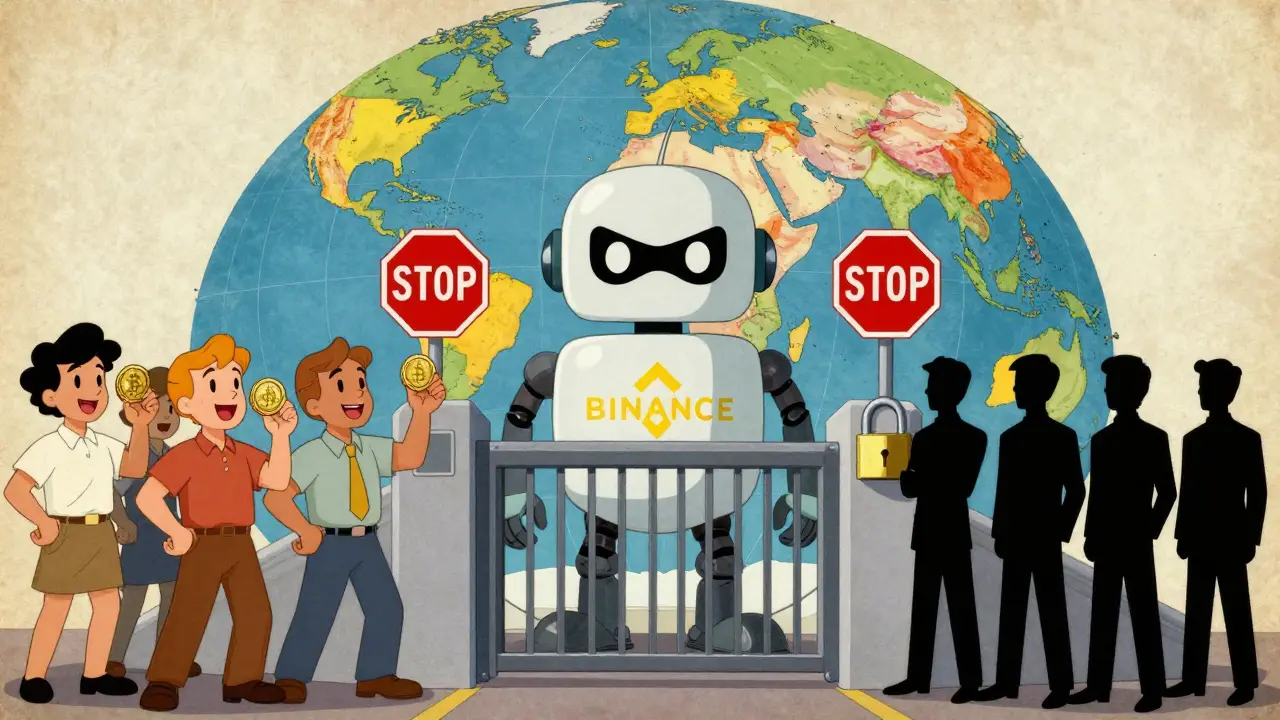
If you are reading this, you probably want to know one simple thing: can I trade on Binance from my country? The answer isn't always a clear yes or no. For some nations, it’s a total ban. For others, you can buy Bitcoin but not trade futures. For a few, there is a separate, limited version of the site. Understanding these differences is crucial because ignoring them can lead to frozen funds or account closures.
The Three Tiers of Binance Restrictions
To make sense of the global landscape, we need to break down the restrictions into three distinct categories. This helps clarify why someone in Canada faces different rules than someone in Cuba, even though both have limitations compared to a user in Japan.
| Category | Description | Examples |
|---|---|---|
| Complete Bans (Sanctions) | Countries under international sanctions where all services are blocked. | Cuba, Iran, Syria, North Korea |
| Total Digital Asset Bans | Countries where crypto itself is illegal, forcing Binance to block access entirely. | Afghanistan, Algeria, Bangladesh, China |
| Partial Restrictions / Exits | Countries where Binance operates with limits, uses a subsidiary, or has exited specific products. | USA, UK, Netherlands, Nigeria |
Category 1: Complete Operational Bans
This list includes six specific regions where Binance has zero operational presence. These restrictions are primarily driven by international sanctions enforced by bodies like the Office of Foreign Assets Control (OFAC). If you reside in any of these areas, accessing Binance is impossible through legitimate means, and attempting to do so via VPN violates their Terms of Service.
- Cuba: Blocked since Binance’s inception in 2017.
- Iran: Added to the restriction list in 2018 following OFAC sanctions.
- Syria: Restricted since 2018.
- North Korea (DPRK): Restricted since 2018.
- Crimea Region: Sanctions enforced by Binance in 2019.
- Non-government-controlled areas of Ukraine: Added to restrictions in 2022.
Category 2: Total Digital Asset Bans
In these twelve countries, the government has declared cryptocurrencies illegal for trading or use as currency. Consequently, Binance blocks IP addresses from these regions to comply with local law. Even if you own crypto, you cannot use Binance to manage it here.
- Afghanistan: Ban enforced by Taliban decree in 2022.
- Algeria: Banned under Finance Law 18-04 since 2018.
- Bangladesh: Restricted under the Digital Security Act 2018.
- Bolivia: Central Bank Circular 001-2014 prohibits crypto.
- China: Comprehensive ban on trading and mining since September 2021. Note that Hong Kong and Taiwan operate under separate frameworks and are not included in this ban.
- Egypt: Central Bank ruling in 2020.
- Iraq: Central Bank warning in 2022.
- Kuwait: Central Bank Circular 7/2022.
- Morocco: Foreign Exchange Regulations from 2017.
- Nepal: Nepal Rastra Bank directive in 2017.
- North Macedonia: Ban implemented in 2023.
- Tunisia: Ban enforced in 2018.
Category 3: Partial Restrictions and Market Exits
This is the most complex group, comprising over 50 countries. Here, Binance may still be accessible, but your experience will be limited. Some features like Futures trading might be disabled, or you might be forced to use a regional entity like Binance.US. In other cases, Binance has completely exited the market due to fines or regulatory pressure.
Key examples include:
- United States: Binance Global exited in September 2019. US residents must use Binance.US is a separate, regulated entity for American users, which has its own state-level restrictions (e.g., New York users are excluded).
- United Kingdom: The Financial Conduct Authority (FCA) revoked permissions in February 2023. While spot trading may remain available for existing users, new registrations and lending products are heavily restricted.
- Netherlands: Binance exited the market in July 2023 after receiving a €3.3 million fine from the Dutch Authority for the Financial Markets (AFM) in August 2022.
- Canada: Operations were scaled back significantly in October 2023. Canadian users lost access to CAD deposits in February 2024, and the Ontario Securities Commission (OSC) fined the company CAD$6 million in March 2024.
- Nigeria: Operations were suspended in February 2024 after the Nigerian SEC declared crypto operations illegal in September 2023. Users can no longer transact in Naira.
- Australia: Futures trading was suspended in July 2024 per Australian Securities and Investments Commission (ASIC) requirements, though spot trading remains available.
Product-Specific Restrictions: It’s Not Just About Countries
Even if you live in a country where Binance is generally allowed, specific products might be off-limits. Regulatory bodies like those enforcing the MiCA is Markets in Crypto-Assets regulation in Europe have created a fragmented landscape.
Binance Futures is unavailable in 44 countries as of late 2025. This includes all 27 EU member states (Germany, France, Italy, etc.), plus Norway, Iceland, Liechtenstein, the UK, Switzerland, Australia, New Zealand, Canada, and the USA. If you try to access derivatives trading from these regions, the option simply won’t appear in your interface.
Web3 Wallet Services face additional hurdles. Access is restricted in 12 additional countries including New Zealand (since September 2024), Malaysia (January 2025), Singapore (August 2024), and Thailand (March 2025). This means you might be able to buy Bitcoin on the exchange but cannot move it to the decentralized Web3 wallet seamlessly.
How Binance Detects Your Location
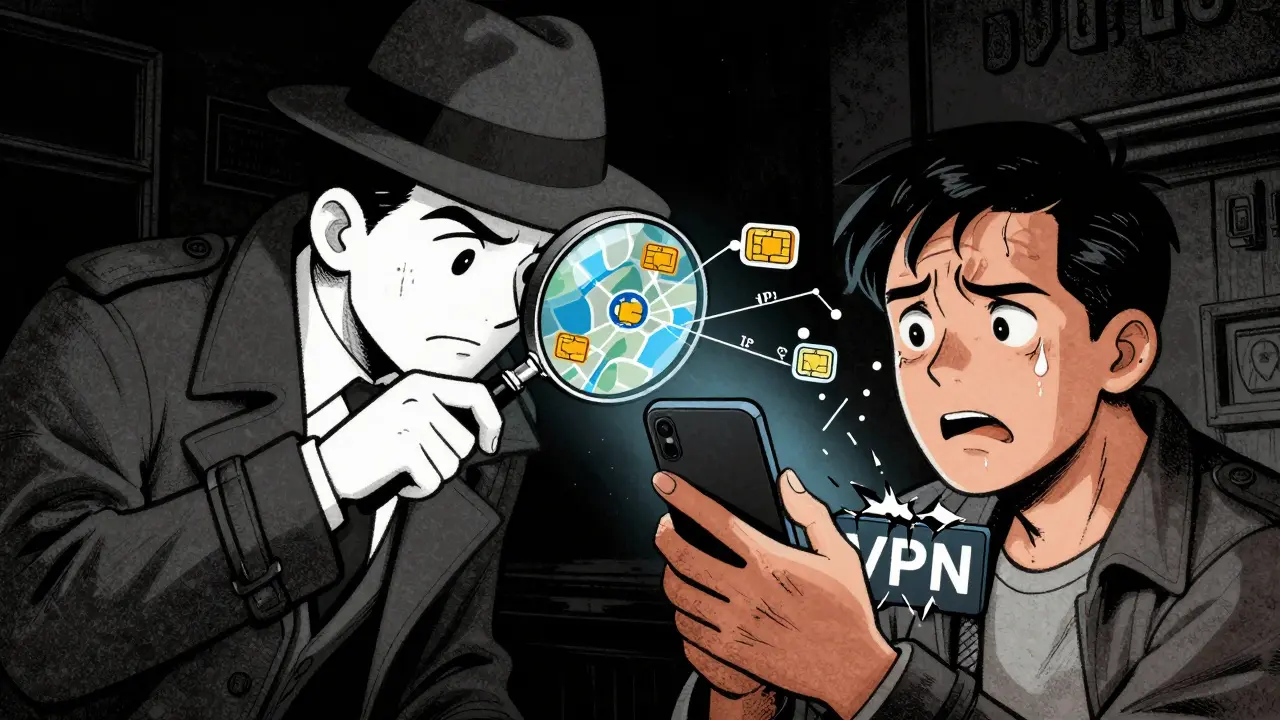
You might wonder if using a Virtual Private Network (VPN) solves the problem. The short answer is: don’t risk it. Binance employs a sophisticated geolocation system (version 3.2.1 as of June 2025) that triangulates your position using GPS data, IP address, and SIM card information.
This technology creates unique challenges for people living near borders. For instance, German users living in Aachen near the Dutch border report a 37% rate of false-positive restrictions when their devices pick up signals from the Netherlands. Similarly, Canadian users in Vancouver sometimes face higher verification failure rates when connected to US-based cellular networks.
If Binance suspects you are masking your location to bypass restrictions, they reserve the right to terminate your account immediately. Section 3.4 of their Terms of Service explicitly states that Binance can close accounts at its sole discretion. Many users in "gray zone" countries like Serbia and Bosnia have reported sudden account freezes without warning, leading to locked funds.
Regional Hubs and Alternatives
While many doors have closed, Binance has strategically opened others in jurisdictions with clearer regulatory frameworks. These hubs serve as safe havens for traders who previously relied on the global platform.
- Hong Kong: Licensed under Type 1 and 7 licenses since June 2023, offering full service compliance.
- UAE: Holds an ADGM license since February 2024, making it a major hub for Middle Eastern traders.
- Bahrain: Licensed by the Central Bank of Bahrain (CBB) since March 2023.
- Switzerland & Singapore: Both hold specific licenses allowing broader services compared to neighboring EU countries.
For users in restricted markets, alternatives have gained traction. In the US, Coinbase has increased its market share by 18% since 2022. In Europe, Kraken has captured 9% more market share. In Latin America, Bitso is becoming the go-to alternative, while CoinDCX dominates in India where tax regulations have complicated Binance’s operations.
What Should You Do?
If you are unsure about your status, check the official Binance Help Center first. However, be aware that documentation quality varies; coverage is 94% complete for unrestricted countries but only 41% for partially restricted ones.
Here is a quick checklist before you deposit funds:
- Verify Your Residency: Ensure your KYC documents match your current physical location.
- Check Product Availability: Don’t assume Futures or Lending are available just because Spot trading is.
- Monitor Local News: Regulations change quickly. A country like Nigeria shifted from partial to full suspension in months.
- Avoid VPNs: Using a VPN to bypass geo-restrictions is a violation of terms and risks permanent account closure.
- Consider Alternatives: If Binance is restricted in your region, look for locally licensed exchanges like Coinbase, Kraken, or regional players.
Can I use a VPN to access Binance in a restricted country?
Technically, you might be able to connect, but it is highly risky. Binance uses advanced detection methods including GPS and SIM card data. If they detect you are bypassing geo-restrictions, they can freeze your account and withhold your funds permanently. Their Terms of Service strictly prohibit this practice.
Why is Binance not available in the United States?
Binance Global exited the US market in September 2019 to comply with strict SEC regulations. Instead, they launched Binance.US, a separate entity. However, Binance.US has fewer coins, lower liquidity, and excludes residents of certain states like New York and Hawaii.
Is Binance legal in China?
No. China imposed a comprehensive ban on cryptocurrency trading and mining in September 2021. Binance blocks IP addresses from mainland China. However, Hong Kong and Taiwan operate under different regulatory frameworks and are not subject to this ban.
What happened to Binance in Nigeria?
In February 2024, Binance suspended operations in Nigeria after the Nigerian Securities and Exchange Commission (SEC) declared crypto activities illegal. Users can no longer deposit or withdraw Naira, and the platform is largely inaccessible to new Nigerian users.
Which countries have the strictest crypto regulations affecting Binance?
The European Union has implemented MiCA regulations, which ban derivative trading (Futures) across all 27 member states. Additionally, countries like the UK, Netherlands, and Canada have seen significant service reductions or complete exits due to fines and licensing revocations.
Can I trade Binance Futures in Europe?
No. Under MiCA regulations, Binance Futures is unavailable in all 27 EU member states, as well as Norway, Iceland, and Liechtenstein. You can only engage in spot trading (buying and holding assets) in these regions.
What are the best alternatives to Binance for restricted users?
For US users, Coinbase and Kraken are top choices. In Europe, Kraken and Bitpanda are popular. In Latin America, Bitso is widely used. In India, CoinDCX and WazirX are strong alternatives. Always ensure the exchange is licensed in your specific jurisdiction.
Kenneth Riley
June 20, 2026 AT 13:24you guys really think this article is helpful? its basically just reading the terms of service back to you with extra steps. i have been trading since 2017 and every time they change something it is because some regulator in a suit decided they want their cut. the whole system is rigged against retail traders anyway so why bother checking if you are allowed or not just lose your money faster that is the real game here
Sonya O'Brien
June 21, 2026 AT 22:59i actually found this breakdown pretty useful especially the part about the different tiers of restrictions because it is so confusing trying to figure out what is legal where and i always worry about my account getting frozen for no reason so knowing that canada has specific issues with cad deposits helps me understand why my transactions have been acting weird lately and maybe i should look into kraken instead since they seem more stable right now
Greg Lewis
June 22, 2026 AT 13:49the idea that geography dictates your financial freedom is absurd but here we are living in a world where ip addresses determine your destiny and i find it fascinating how they use gps and sim cards to track us like animals in a cage while pretending it is all about security when really it is just control over capital flow
Filbert Reeves
June 23, 2026 AT 23:50do not trust any of this because binance is owned by the same people who run the fed and they are testing geo-blocking to see how much compliance we will accept before we revolt but they will never release your funds if you are in a restricted zone because it is all part of the great reset plan to destroy privacy and force everyone onto cbdc systems which are already being rolled out in china and europe under the guise of regulation
Caralee Robertson
June 25, 2026 AT 13:32oh my god i am so glad i read this because i live in ontario and had no idea that cad deposits were gone i thought i could still use my bank card directly but now i get why my last deposit failed and i feel so stupid for not checking earlier but thanks for the info it saved me from trying again and wasting time
Benjamin Eisen
June 27, 2026 AT 10:39hey everyone i know this can be frustrating but it is important to stay informed about these changes because regulations are shifting rapidly and what was true last month might not be true today so please double check your local laws before moving large amounts of crypto because i have seen too many friends lose access to their funds due to simple misunderstandings about regional restrictions
Kelly Tenney
June 29, 2026 AT 07:15this is such a vital piece of information for anyone navigating the crypto space in 2026 because the landscape is constantly evolving and it is easy to fall through the cracks if you are not paying close attention to regulatory updates so please share this with your community groups so that more people can avoid the pitfalls of using restricted services unknowingly
ravi mahla
June 29, 2026 AT 22:28typical western obsession with rules and regulations meanwhile in india we just use peer to peer trades and ignore all these fancy exchange bans because the market finds a way regardless of what the government says so stop worrying about binance and start learning how to trade locally without relying on centralized platforms that will betray you at the first sign of trouble
aaliyah zahid
June 30, 2026 AT 21:20it is hilarious how they ban futures in europe but leave spot trading open as if people do not know they can just swap tokens on dexs to achieve the same leverage effect without triggering any alerts so the regulators are playing catch up with technology that moves faster than their ability to comprehend let alone regulate effectively
Meg Gran
July 1, 2026 AT 20:14why do we keep coming back to binance like a moth to a flame when they clearly do not care about user safety or compliance it is almost philosophical in its irony that we seek decentralization through the most centralized entity possible only to be blocked by arbitrary geographic lines drawn by politicians who do not understand blockchain technology at all
verna kennedy
July 3, 2026 AT 03:03if you cannot be bothered to read the terms of service then you do not deserve to participate in the market because ignorance is not bliss it is negligence and you should expect your accounts to be closed if you violate basic compliance standards so stop complaining about restrictions and start educating yourself on the legal framework of your jurisdiction
Nick Rice
July 5, 2026 AT 02:18look i am going to be direct with you all because i care about your financial well-being and i want you to succeed in this volatile market so please listen carefully and understand that using vps or vpn to bypass geo-restrictions is a terrible idea that will likely result in permanent loss of funds so stick to licensed exchanges in your region even if the fees are higher because peace of mind is worth the extra cost
Abby Sivertsen
July 5, 2026 AT 19:12as someone who has lived in three different countries i can tell you that the experience varies wildly depending on where you are based and it is incredibly frustrating to have your options limited by borders that do not make sense in a digital world but we have to adapt and find alternatives that work for our specific situation rather than fighting a losing battle against global regulators
Erik Kirana
July 7, 2026 AT 12:00🚨 alert 🚨 everyone needs to pay attention to this because the fines are increasing exponentially and binance is cutting losses wherever possible so if you are in a gray area country like serbia or bosnia you better secure your assets immediately before they freeze your account for no reason and leave you screaming into the void with no recourse whatsoever 😡💸
dan kaffeman
July 8, 2026 AT 02:21this is exactly why america needs to shut down all foreign exchanges and force everyone to use domestic platforms because we cannot trust chinese-owned companies to operate within our borders without compromising national security or undermining our economic sovereignty so binance should be banned entirely in the united states not just restricted to a sub-par version of itself
Karthikeyan S
July 9, 2026 AT 06:39i tried to withdraw my naira last week and got rejected instantly which confirmed everything said here about nigeria being suspended so now i am stuck with coins i cannot sell easily and it feels like a trap designed to extract wealth from developing nations while offering no support when things go wrong typical corporate behavior
Dinesh Pattigilli
July 10, 2026 AT 19:30the sheer incompetence of these regulatory bodies is astounding as they ban products that drive innovation while allowing traditional banks to continue failing customers daily so instead of following their rules smart investors are moving to jurisdictions like uae and singapore where business is respected and not stifled by outdated legislation written by people who do not understand technology
Alexander DeVries
July 11, 2026 AT 17:00let us be clear about one thing and that is that compliance is not optional if you want to play in the big leagues so whether you are in the uk dealing with fca revocations or in australia facing asic restrictions you must adapt your strategy accordingly and focus on long-term holding strategies rather than speculative trading that is being targeted by regulators everywhere
Mark Corpuz
July 12, 2026 AT 13:09it is worth noting that the distinction between complete bans and partial restrictions is often blurred in practice because enforcement can be inconsistent and users may find themselves caught in the middle despite believing they are compliant so maintaining accurate kyc documentation and staying updated on local news remains the best defense against unexpected account closures
Caitlin Donahue
July 13, 2026 AT 07:08i just checked my account settings and realized i was still trying to access features that are disabled in my region which explains why i kept getting error messages so thank you for pointing out the product-specific restrictions because i would have never guessed that web3 wallet services were also affected in new zealand