
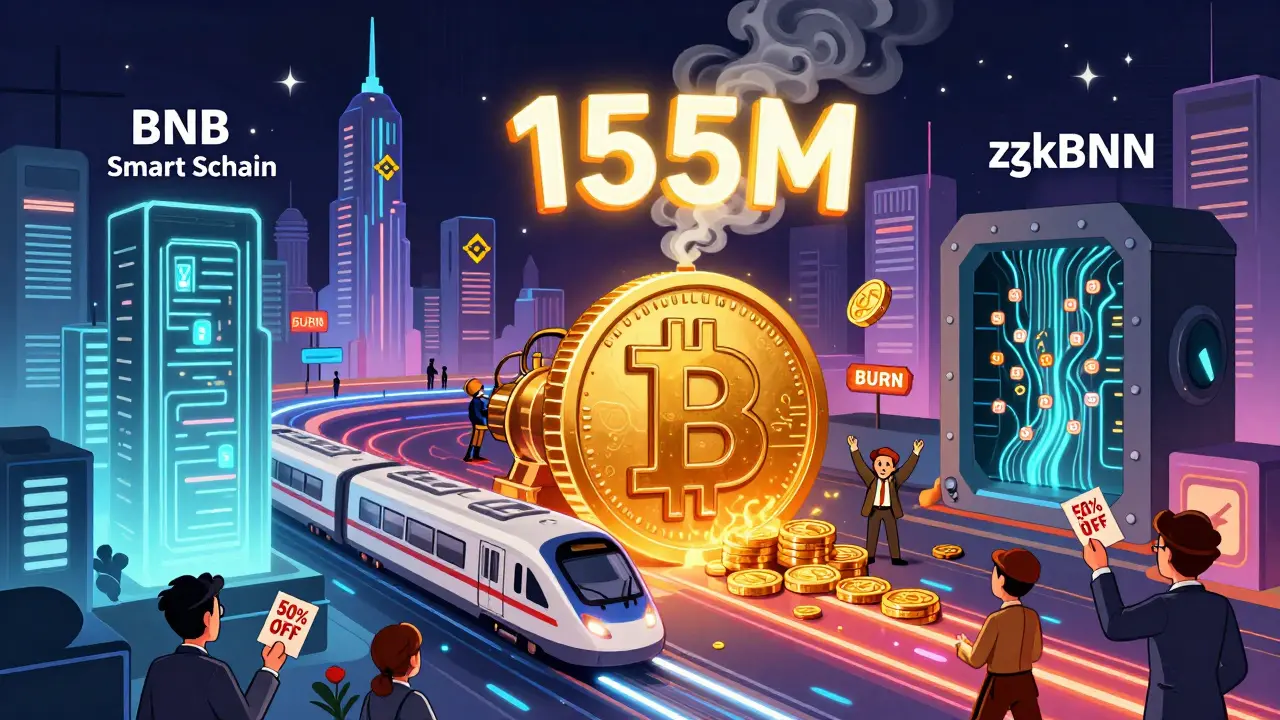
When you trade on Binance, you're not just using an exchange-you're stepping into a whole blockchain ecosystem built around one token: Binance Coin (BNB). It’s not just another cryptocurrency. It’s the engine that powers everything from trading fees to decentralized apps, from storage to gaming. And if you’ve ever saved money on your trading fees, you’ve already used BNB without even realizing it.
What Is Binance Coin (BNB)?
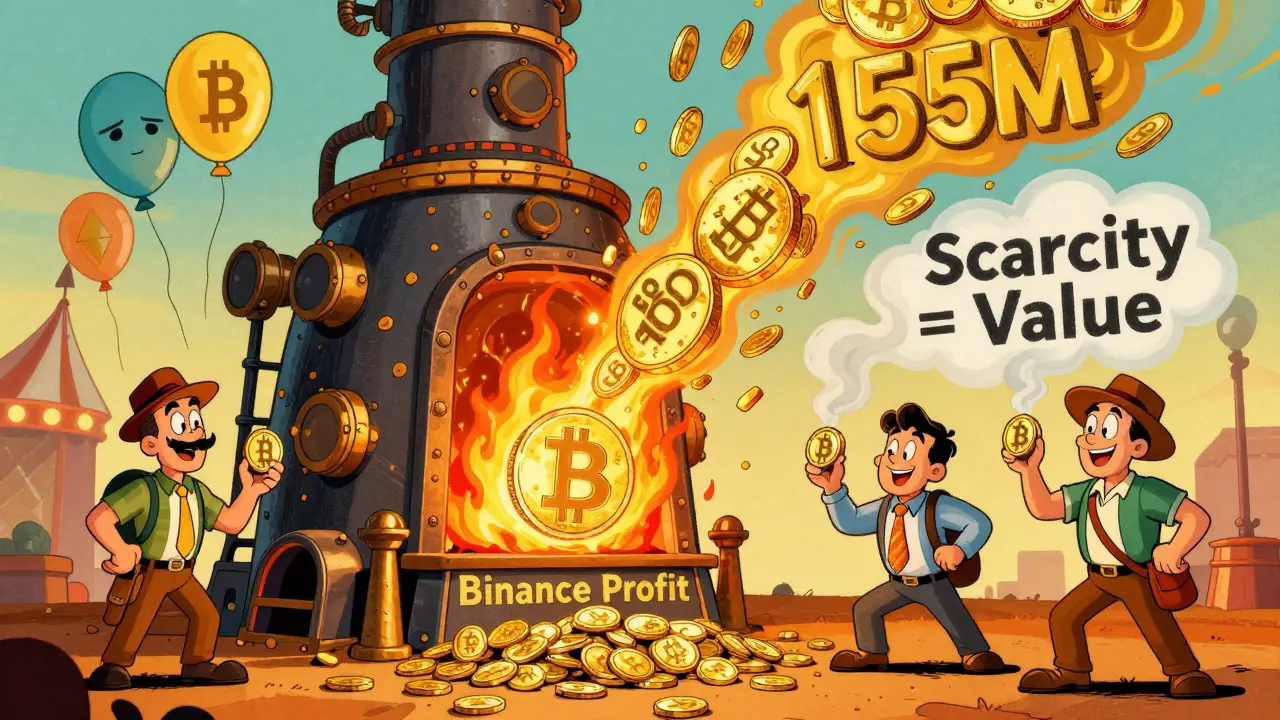
BNB started in August 2017 as part of Binance’s Initial Coin Offering (ICO). Back then, each coin cost about $0.11. Fast forward to 2024, and its price crossed $600. That’s not luck-it’s design. Unlike Bitcoin or Ethereum, BNB wasn’t mined. All 200 million tokens were created at launch, and Binance has been quietly destroying a portion of them every quarter since. This process, called a burn, cuts the total supply over time. As of 2025, over 45 million BNB have been burned, leaving just under 155 million in circulation. That scarcity matters.
BNB isn’t just a currency. It’s the native token of the BNB Chain-a network made up of multiple blockchains working together. Think of it like a city with different districts: one for trading, one for smart contracts, one for storage. Each district uses BNB to keep things running.
The BNB Chain Ecosystem: More Than Just One Blockchain
Many people still think of BNB as just the token for Binance’s exchange. But since 2024, Binance has merged its old chains into a single unified system called the BNB Chain. This new structure has three main parts:
- BNB Smart Chain (formerly Binance Smart Chain): This is where most of the action happens. It runs smart contracts, supports DeFi apps, NFTs, and dApps. It’s fast, cheap, and compatible with Ethereum tools-so developers didn’t have to start from scratch.
- opBNB: A layer-2 scaling solution built on top of the BNB Smart Chain. It handles thousands of transactions per second with near-zero fees. It’s used by apps that need speed-like gaming platforms or social networks where users post content every few seconds.
- zkBNB: Uses zero-knowledge proofs to boost privacy and efficiency. It’s perfect for applications that need fast, secure, and private transactions-think peer-to-peer payments or social media with token rewards.
- BNB Greenfield: This isn’t a blockchain for money. It’s a decentralized storage network. Think of it like a blockchain version of Dropbox, but you own your data. Developers use it to build apps where users control their files, not corporations.
These aren’t separate projects. They’re layers of the same system. You can move BNB between them in seconds. And every transfer, every smart contract, every storage upload? It all costs BNB.
Why Do People Use BNB? The Real-World Utility
BNB doesn’t just sit in wallets. It does real work. Here’s how:
- Fee discounts on Binance: If you pay trading fees with BNB, you get a discount. The first year? 50%. Year two? 25%. Year three? 12.5%. Even after the discount drops, you still get an extra 10% off compared to paying with other coins. For someone trading $100,000 a month, that’s thousands saved per year.
- Access to Binance Launchpad: Want to invest in new crypto projects before they hit public exchanges? You need BNB. Binance picks projects to list based on how much BNB users lock up in their Launchpad pools. No BNB? No early access.
- Payments for goods and services: Over 2,000 merchants worldwide accept BNB directly-from online gaming platforms to travel booking sites. In Southeast Asia, it’s common to pay for mobile data or streaming subscriptions with BNB.
- Futures and derivatives trading: Binance lets you trade BNB futures with up to 125x leverage. You can go long or short, settle in BNB or USDT. Traders use this to hedge against volatility or make directional bets without owning the underlying asset.
- Staking and governance: While the old Beacon Chain was retired in mid-2024, staking BNB still earns rewards. You can stake through validators on the BNB Smart Chain and earn up to 5% APY in BNB. It’s not just passive income-it’s how the network stays secure.
Put simply: if you’re active in crypto, BNB saves you money, opens doors, and gives you more control.
How BNB Keeps Its Value: The Burn Mechanism
Most cryptocurrencies have inflation. BNB has a built-in deflationary engine.
Every quarter, Binance uses 20% of its profits to buy back BNB from the open market and destroy it. This isn’t a marketing gimmick-it’s a legal commitment written into Binance’s corporate charter. Since 2017, over 45 million BNB have been burned. That’s nearly a quarter of the original supply gone. The burn schedule runs until 2030, when the total supply will cap at around 100 million.
That’s rare. Most tokens pump because of hype. BNB pumps because supply shrinks while demand grows. More users, more trades, more dApps-all mean more BNB gets used. And with fewer coins available, each one becomes more valuable.
Who Uses BNB? Real Users, Real Data
BNB isn’t just popular-it’s essential. In 2024, BNB was the most traded cryptocurrency on Binance, beating even Bitcoin and Ethereum. Why?
- Traders: They use BNB to slash fees. A high-frequency trader on Binance can save over $10,000 a year just by paying fees in BNB.
- DeFi users: Over 60% of all DeFi activity on BNB Smart Chain uses BNB as collateral or for gas fees. Projects like PancakeSwap, Venus, and Trader Joe rely on it.
- Developers: Building on BNB Smart Chain is cheaper than Ethereum. Gas fees average $0.02 per transaction. For apps that need thousands of daily interactions, that’s the difference between viable and unaffordable.
- Developers in emerging markets: In Nigeria, Vietnam, and Brazil, BNB is used as a stable store of value. It’s easier to buy than USD, and more reliable than local currencies.
Even outside Binance, BNB is accepted by payment processors like BitPay and CoinGate. You can buy a coffee in Tokyo or a flight in Bangkok with BNB today.
Is BNB Centralized? The Criticism
Let’s be honest: BNB is tied to Binance. And Binance is a company, not a decentralized community. That’s the biggest criticism.
Unlike Bitcoin, where no single entity controls the network, BNB’s future depends on Binance’s decisions. The company decides when to burn tokens, which chains to develop, and which projects get on Launchpad. If Binance ever shuts down, BNB’s value could drop hard.
But here’s the counterpoint: Binance has kept its promises. The burn mechanism has run every quarter since 2017 without fail. The BNB Smart Chain has been live for over five years with zero major outages. And the transition from Beacon Chain to Smart Chain? It happened exactly as planned in June 2024.
For most users, the trade-off is worth it. You get speed, low fees, and real utility in exchange for trusting a company that has proven itself reliable. It’s not perfect-but it’s the most practical crypto ecosystem out there right now.
How to Start Using BNB
Getting started is simple:
- Create a Binance account (if you don’t have one).
- Buy BNB using fiat (AUD, USD, EUR) or trade for it with another crypto.
- Enable BNB fee discounts in your account settings-go to Wallet > Settings > Fee Discount.
- Use BNB to pay for trading fees, withdrawals, or IEO participation.
- For advanced users: Stake BNB on BNB Smart Chain, use opBNB for fast dApp interactions, or explore BNB Greenfield for decentralized storage.
You don’t need to understand blockchain to benefit from BNB. Just owning it and using it for fees gives you an immediate advantage.
The Future of BNB: What’s Next?
BNB’s roadmap doesn’t stop at 2025. Here’s what’s coming:
- Full fusion of all chains: By 2026, the BNB Chain will operate as one seamless network. No more switching between chains-just one token, one interface.
- BNB in everyday payments: Binance is partnering with banks in Southeast Asia to let users convert BNB to local currency at ATMs. Imagine withdrawing cash from a machine using your BNB balance.
- BNB as a global reserve asset: Some governments are exploring using BNB as a digital reserve currency for cross-border payments. It’s still early, but it’s being discussed.
- Layer-3 expansion: New protocols are being built on top of opBNB and zkBNB to support AI-powered apps, decentralized social media, and tokenized real estate.
BNB isn’t just surviving-it’s evolving. And it’s doing it faster than most other tokens.
Final Thoughts: Is BNB Worth It?
If you trade on Binance, BNB is the smartest thing you can hold. It’s not a speculative gamble-it’s a tool. Like a discount card for a store you already shop at. You’re not betting on price. You’re using it to save money, unlock opportunities, and participate in a growing ecosystem.
Even if you’re not a trader, BNB powers the apps you might use. If you’ve ever bought an NFT, joined a DeFi protocol, or stored data on a decentralized platform, you’ve touched BNB without knowing it.
It’s not perfect. It’s not decentralized. But it’s the most useful, most used, and most reliably built crypto asset outside of Bitcoin and Ethereum. And for most people, that’s enough.
Is BNB a good investment?
BNB isn’t a traditional investment like a stock. It’s a utility token. Its value comes from how much it saves you and what access it gives you. If you trade often on Binance, holding BNB makes financial sense because of fee discounts and Launchpad access. If you’re not active on the platform, buying BNB purely for price speculation carries higher risk due to its dependence on Binance’s continued success.
Can I stake BNB?
Yes. You can stake BNB on the BNB Smart Chain through Binance’s staking portal or third-party wallets like Trust Wallet. Staking earns you around 4-5% APY in BNB. Your tokens remain liquid-you can unstake anytime, though there’s a 10-day waiting period before funds are released.
What’s the difference between BNB and BNB Smart Chain?
BNB is the native token. BNB Smart Chain is the blockchain network that uses BNB to pay for transactions and smart contracts. Think of BNB as the fuel and BNB Smart Chain as the car. You need fuel to drive the car, but they’re not the same thing.
Is BNB safe to use?
The BNB Smart Chain has never been hacked. Its consensus mechanism and validator network are secure. But like all crypto, your safety depends on how you store BNB. Use a hardware wallet or a trusted software wallet. Never share your private keys. And avoid third-party sites claiming to offer “free BNB”-those are scams.
Can I use BNB outside of Binance?
Yes. BNB is accepted on over 2,000 merchant platforms worldwide, including travel sites, gaming services, and payment processors. You can also use it in DeFi protocols like PancakeSwap, Venus, and Aave. Many wallets (MetaMask, Trust Wallet) support BNB on the BNB Smart Chain, so you can send and receive it anywhere.
Why does BNB’s price go up when Binance announces new features?
Because every new feature increases demand for BNB. More users on BNB Smart Chain means more gas fees paid in BNB. New DeFi apps mean more staking and liquidity mining. Launchpad launches mean more people buying BNB to participate. BNB’s value is directly tied to how much the ecosystem grows-and Binance is one of the most active developers in crypto.
Will BNB ever be replaced?
It’s unlikely in the near term. Binance is the largest exchange, and BNB is deeply embedded in its operations. Even if a new chain emerges, BNB’s network effect-millions of users, billions in trading volume, and established infrastructure-makes it hard to displace. That said, crypto moves fast. BNB’s success depends on continued innovation, not past performance.
Brian Lemke
February 25, 2026 AT 13:34Also, the fact that it's used for mobile data in Vietnam? That's not crypto fantasy. That's real utility. We need more of this.
kati simpson
February 25, 2026 AT 20:27Michelle Mitchell
February 27, 2026 AT 02:32christopher luke
February 27, 2026 AT 03:57Mary Scott
February 27, 2026 AT 10:36Shannon Holliday
February 27, 2026 AT 21:50Jeremy buttoncollector
March 1, 2026 AT 16:56Ryan Burk
March 2, 2026 AT 13:02Don B.
March 2, 2026 AT 16:27Fiona Monroe
March 4, 2026 AT 01:56Molley Spencer
March 4, 2026 AT 19:39Lucy Simmonds
March 5, 2026 AT 01:28Dana Sikand
March 6, 2026 AT 23:03Cameron Pearce Macfarlane
March 7, 2026 AT 21:02Elizabeth Smith
March 8, 2026 AT 00:03Daisy Boliaan
March 8, 2026 AT 21:17Nicki Casey
March 10, 2026 AT 17:34Jessica Carvajal montiel
March 11, 2026 AT 04:36maya keta
March 12, 2026 AT 09:46Samantha Stultz
March 13, 2026 AT 11:38George Suggs
March 13, 2026 AT 16:26Brian Lemke
March 15, 2026 AT 01:30