
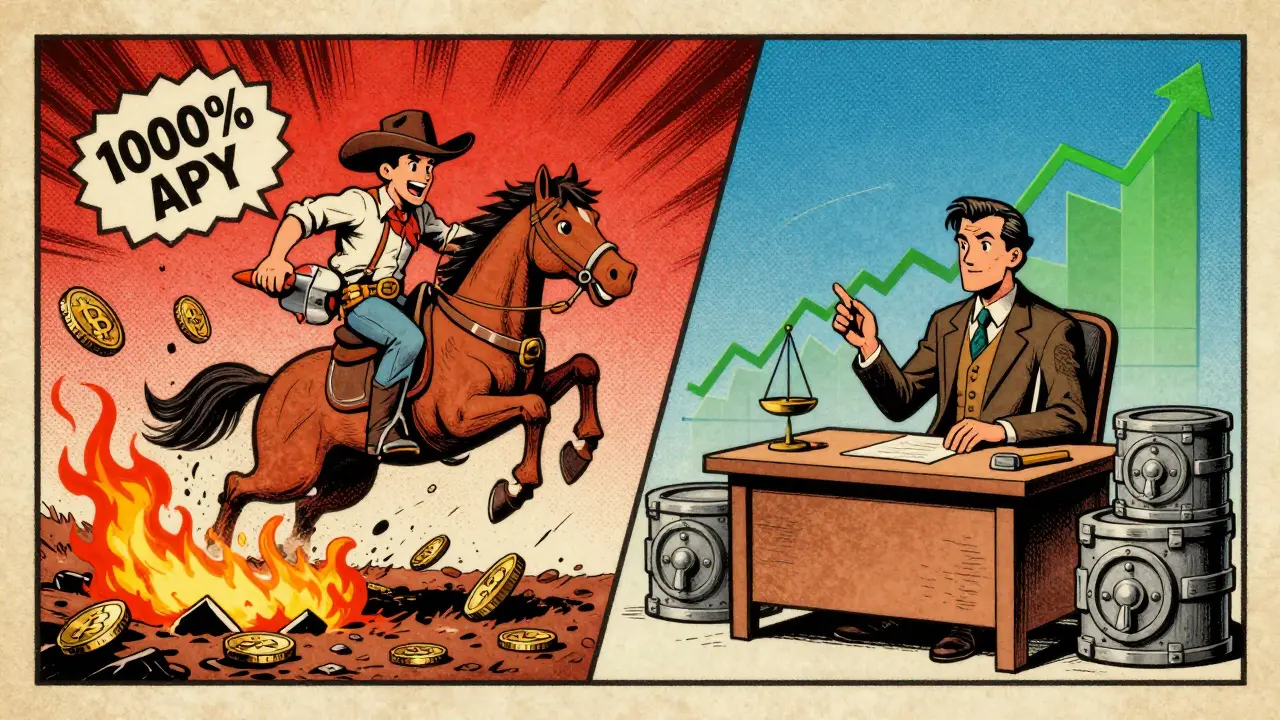
Remember when yield farming promised 1,000% annual returns? Those days are gone. In 2025, chasing those insane numbers is a fast track to losing your entire portfolio. The landscape has shifted from a wild west of speculative token emissions to a mature ecosystem focused on sustainable, risk-adjusted income. If you are still looking for quick riches, you will likely end up with nothing. But if you want steady, passive income ranging from 5% to 30%, there are proven strategies that work right now.
The key difference today is discipline. Successful farmers no longer just throw money into the pool with the highest number next to it. They analyze tokenomics, manage gas fees, and use automation to protect their capital. This guide breaks down exactly how to farm yields safely and effectively in the current market environment.
Understanding the Modern Yield Farming Landscape
Yield farming is the process of deploying cryptocurrency assets across decentralized finance (DeFi) protocols to generate returns through liquidity provision, lending, and staking. While the core concept hasn't changed since its inception during the 2020 DeFi Summer, the tools and platforms have evolved dramatically.
In 2025, the total value locked (TVL) in DeFi yield farming reached $98.7 billion, according to DefiLlama data from March 2025. This represents a healthy 32% growth from the previous year, signaling stability rather than the explosive, unsustainable bubbles of the past. The era of "degenerate yield"-where new tokens printed infinite rewards to attract users-is largely over. Instead, we see institutional participation rising to 28% of total farming capital, bringing stricter standards and more reliable protocols to the table.
Today's yield farming operates across more than 15 blockchain networks. Ethereum remains the giant, but high gas fees have pushed many retail farmers toward Layer 2 solutions like Arbitrum and Optimism, or high-throughput chains like Solana and Sui. Understanding where your capital sits is the first step in any strategy.
Core Strategy 1: Stablecoin Liquidity Pools
If your goal is capital preservation with moderate returns, stablecoin pools are your best friend. These involve providing liquidity for pairs like USDC/USDT or DAI/USDC. Because both assets are pegged to the US dollar, the risk of Impermanent Loss is a temporary reduction in value compared to holding the assets, caused by price divergence between paired tokens is virtually non-existent.
Curve Finance is a decentralized exchange optimized for swapping similar assets, particularly stablecoins. As of Q1 2025, Curve dominates this space with over $18.7 billion in TVL. It offers APYs between 2.5% and 8%. Why so low compared to volatile pairs? Because it’s safe. By locking CRV tokens, you can boost these yields by up to 2.5x, making it a highly efficient strategy for conservative investors.
For those willing to take slightly more risk, pairing a stablecoin with a blue-chip asset like ETH (e.g., USDC/ETH) can offer higher returns, typically 4-9% on platforms like Aave is a leading non-custodial liquidity protocol for earning interest on deposits and borrowing assets. Aave’s flexible interest rates adjust every 15 seconds based on utilization, ensuring you get competitive market rates. However, you must monitor the ETH/USDC pair closely, as significant price swings in Ethereum will trigger impermanent loss.
Core Strategy 2: Automated Yield Aggregation
Manual farming is tedious. You have to harvest rewards, reinvest them, and move funds between protocols to chase better rates. This takes time and incurs multiple gas fees. Enter yield aggregators.
Yearn Finance is a suite of products in Decentralized Finance (DeFi) that provides services for lenders and borrowers, specifically known for its automated vaults. Yearn V3, released in late 2024, shifts assets between protocols in real-time to maximize yield while reducing gas costs by 37%. Users report effective APYs of 12-18% across multiple chains. The trade-off is a 0.5% performance fee and a potential 5% withdrawal fee during high-demand periods.
Another strong contender is Beefy Finance is a multi-chain yield optimizer that automates compounding rewards. Its system reinvests rewards every 15 minutes across 12 supported chains. According to analysis from TAS.co.in in March 2025, this frequent compounding increases effective APY by 8-12% annually compared to manual weekly compounding. For busy professionals who don’t want to stare at charts all day, Beefy and Yearn are essential tools.
| Platform | Best For | Typical APY Range | Risk Level | Key Feature |
|---|---|---|---|---|
| Curve Finance | Stablecoins | 2.5% - 8% | Low | Minimal Impermanent Loss |
| Aave | Lending/Borrowing | 4.2% - 9.7% | Low-Medium | Flexible Interest Rates |
| Yearn Finance | Automation | 12% - 18% | Medium | Auto-Rebalancing Vaults |
| PancakeSwap | High-Risk Farms | 22% - 35% | High | BNB Chain Dominance |
| Lido | Liquid Staking | 3.5% - 12.5%* | Medium | StETH Rewards + Farming |
*Lido APY includes base staking rewards plus additional farming yields when deployed in lending protocols.

Core Strategy 3: Cross-Chain Diversification
Putting all your eggs in one blockchain basket is risky. Network congestion, smart contract bugs, or regulatory changes can impact specific chains. Michael Chen, Chief Strategy Officer at Coinrule, notes that farmers achieving consistent 15%+ returns in 2025 maintain capital across 4-6 different chains.
This rotation strategy boosts returns by 2-3x versus static positioning. Here is how to approach it:
- Ethereum & L2s: Use Arbitrum or Optimism for lower gas fees while maintaining security. Ideal for larger positions ($5,000+) where Ethereum mainnet gas would eat too much profit.
- Solana & Sui: Perfect for smaller deposits ($500+). Transaction costs are near-zero, allowing for frequent rebalancing without worrying about fees consuming your yield.
- BNB Chain: Home to PancakeSwap, which offers high APYs (22-35%) on select pairs. Be cautious here; 63% of high-APY pools are single-sided token farms vulnerable to reward token crashes.
Use tools like DefiLlama is a platform for tracking DeFi metrics, including TVL, yields, and protocol comparisons to monitor APY changes across chains. Set up alerts so you know when a better opportunity arises elsewhere.
Critical Risk Management: Protecting Your Capital
High yields always come with hidden risks. The 2024 Hyperlend exploit cost farmers $47 million, proving that new protocols offering 250%+ APY almost always contain vulnerabilities. To survive in 2025, you must prioritize security over greed.
1. Audit and Bug Bounties
Only farm on platforms with mandatory third-party audits from firms like OpenZeppelin or Quantstamp. In 2025, 92% of top 20 yield platforms implement bug bounty programs offering rewards up to $2 million for critical vulnerabilities. If a protocol doesn’t have an audit or a bounty program, stay away.
2. Reward Token Volatility
This is the biggest killer of profits. Many farms pay rewards in their own native token. If that token’s price crashes, your nominal APY looks great, but your actual USD value plummets. Reddit user u/CryptoFarmer89 reported an 85% loss when farming a token at 210% APY because the reward token dropped from $1.20 to $0.18 in ten days.
Pro Tip: Convert 100% of volatile token rewards to stablecoins within 24 hours. Don’t hold onto farmed tokens hoping they will moon. Sell the volatility, keep the principal.
3. Impermanent Loss Monitoring
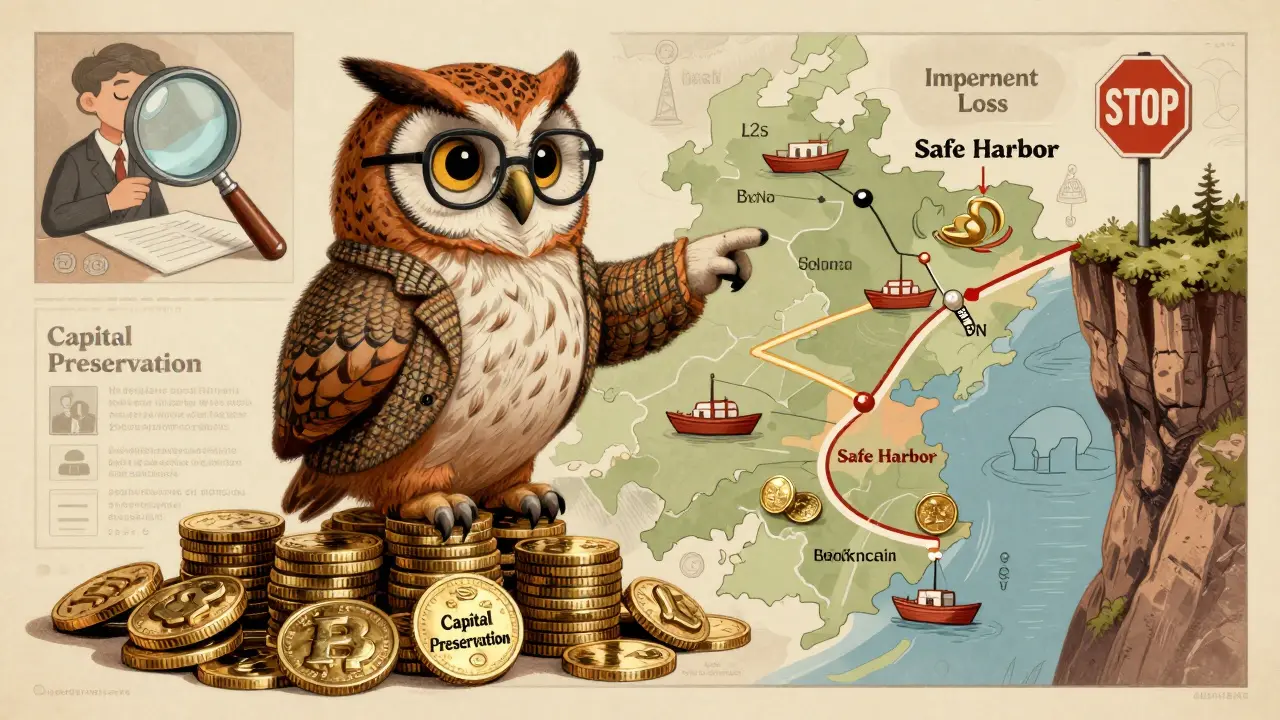
For any volatile pair (like ETH/USDC), calculate potential impermanent loss before entering. Tools like Zapper.fi help track your portfolio health. If the price divergence exceeds your comfort threshold, exit the pool. Yearn Finance’s new "Yield Shields" feature automatically withdraws funds when pool APY drops below preset thresholds or TVL changes exceed 20% in 24 hours-a useful safety net.
Tools Every Farmer Needs in 2025
You cannot farm effectively without the right dashboard. Relying on memory or spreadsheets is outdated. Here is the essential toolkit:
- DefiLlama: For comparing yields across protocols and chains objectively.
- Zapper.fi: For holistic portfolio tracking and visualizing asset distribution.
- Etherscan (or respective block explorers): For verifying transactions and monitoring smart contract interactions.
- YieldBay Dashboards: For advanced users wanting automated rotation suggestions.
According to a survey of 1,247 active yield farmers, 79% of successful participants use at least two monitoring platforms simultaneously. This redundancy ensures you don’t miss critical alerts about APY drops or security incidents.
Regulatory Awareness
The SEC’s February 2025 guidance classified certain yield farming activities as securities offerings when protocols promise "guaranteed returns." This affected 17% of high-APY platforms, forcing them to modify reward structures. Always read the terms of service. Avoid platforms that explicitly guarantee fixed returns, as these are under regulatory scrutiny. Stick to protocols that clearly state yields are variable and dependent on market conditions.
Next Steps for Beginners
If you are new to yield farming, start small. Allocate only what you can afford to lose. Begin with stablecoin pools on established platforms like Curve or Aave. Once you understand the mechanics of depositing, harvesting, and withdrawing, gradually explore automated vaults on Yearn or Beefy. Never rush into high-APY farms on unknown protocols. Patience and due diligence are your most valuable assets in DeFi.
What is the safest yield farming strategy in 2025?
The safest strategy involves providing liquidity to stablecoin pairs (like USDC/USDT) on audited, high-TVL platforms such as Curve Finance or Aave. This minimizes impermanent loss and exposes you primarily to smart contract risk, which is mitigated by choosing platforms with rigorous audits and bug bounties.
How do I avoid impermanent loss?
You cannot completely eliminate impermanent loss in volatile pairs, but you can minimize it by farming stablecoin pairs or correlated assets. Alternatively, use platforms like Yearn Finance that automatically rebalance or withdraw funds when conditions become unfavorable. Always calculate potential IL before entering a pool.
Is yield farming worth it after gas fees?
On Ethereum mainnet, gas fees can consume 10-30% of returns for smaller positions, making it inefficient for deposits under $5,000. However, using Layer 2 solutions like Arbitrum or high-speed chains like Solana reduces transaction costs to near zero, making yield farming profitable even for smaller portfolios.
What should I do with my farming rewards?
To mitigate risk, convert volatile reward tokens to stablecoins immediately upon harvesting. Holding onto farmed tokens exposes you to price crashes, which can wipe out gains. Reinvesting stablecoins into other secure pools allows for compound growth without taking on additional market risk.
Are yield farming platforms regulated?
Most DeFi platforms are not directly regulated, but the SEC has issued guidance targeting protocols that promise guaranteed returns. Institutional players are increasingly using permissioned pools with FDIC-insured backing. Always be aware of the regulatory status of the jurisdictions involved and avoid platforms making unrealistic guarantees.