
Imagine trying to predict the weather by only looking at a thermometer in your backyard. You know it's cold right now, but you have no idea if a storm is coming from three states away. Trading crypto without on-chain analysis tools is exactly like that. You see the price on an exchange, but you can't see the "weather"-the massive movements of whales, the actual usage of a network, or whether investors are quietly exiting their positions.
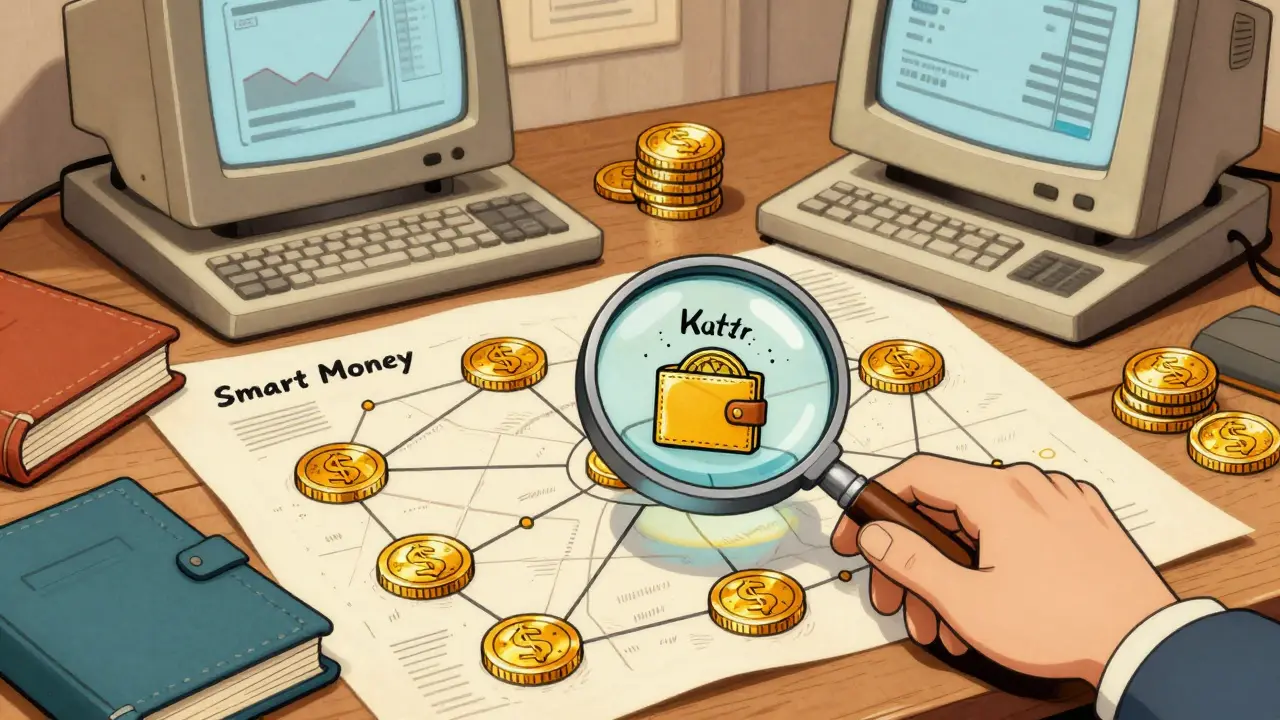
On-chain analysis is the process of digging directly into the blockchain's public ledger. Unlike technical analysis, which looks at price charts, on-chain data tells you what is actually happening inside the network. Whether you're tracking "Smart Money" or looking for the bottom of a bear market, the right platform transforms raw hexadecimal data into a map you can actually use to make money.
The Heavy Hitters: Choosing the Right Platform
Not all analytics tools are built for the same job. Some are designed for government agents hunting hackers, while others are for traders trying to find the next 100x token. To pick the right one, you need to know who they are built for.
Glassnode is a professional-grade platform specializing in macro-level fundamental metrics. It's the gold standard for long-term cycle analysis. If you want to know if Bitcoin is overvalued relative to its historical floor, you look at their MVRV (Market Value to Realized Value) ratio. Glassnode processes over 1.2 billion daily events across 40+ networks, making it a powerhouse for those who care about the "big picture" rather than minute-by-minute trades.
Nansen is a wallet-labeling powerhouse that focuses on identity and "Smart Money" tracking. While Glassnode tells you what is happening, Nansen tells you who is doing it. They track over 180 million labeled addresses. When a top-tier Venture Capital firm starts accumulating a specific altcoin, Nansen users often see it before the news hits Twitter.
Dune Analytics is a community-driven SQL engine that allows users to create and share custom data dashboards. It's essentially the "Wikipedia" of blockchain data. Because it's open-source, you can find dashboards for almost any niche DeFi project. The trade-off? You need to know SQL to build your own, and the learning curve can be steep for non-coders.
| Platform | Primary Strength | Best For | Key Requirement |
|---|---|---|---|
| Glassnode | Macro Fundamentals | Cycle Timing | Financial Literacy |
| Nansen | Wallet Labeling | Following "Smart Money" | High Subscription Budget |
| Dune | Custom SQL Queries | Developer/Deep Dive | SQL Proficiency |
| CryptoQuant | Exchange Flows | Short-term Price Action | Understanding Netflows |
| Arkham | Entity Graphing | Forensics & Intelligence | Investigative Mindset |
Tracking the "Whales": Exchange Flows and Wallet Intelligence
If you want to predict a price crash, stop looking at the RSI and start looking at exchange netflows. CryptoQuant is the specialist here. They monitor over 120 exchanges and 15 mining pools in real-time. The logic is simple: when huge amounts of Bitcoin flow onto an exchange, it usually means whales are preparing to sell. Conversely, when BTC leaves an exchange for a cold wallet, it's a bullish signal of long-term holding.
Then there is Arkham Intelligence. Unlike the others, Arkham uses entity graph technology. It doesn't just list addresses; it connects them. You can visually map out how funds move from a known exchange to a series of private wallets and eventually into a DeFi protocol. This makes it an incredible tool for those who enjoy the "detective" side of crypto.
The Compliance Side: Blockchain Forensics
Not everyone is using these tools to make a profit. For regulators and law enforcement, the goal is accountability. Chainalysis dominates this space with a massive 90% market share among government agencies. Their Reactor tool allows investigators to track billions of dollars in stolen funds across 100+ networks using proprietary clustering algorithms.
However, this level of power comes with a cost. Chainalysis is not for the retail trader. Their pricing is strictly enterprise-level, often requiring contracts starting at $50,000 per year. While they provide essential security for the ecosystem, their approach to wallet labeling is sometimes criticized by privacy advocates for having a higher rate of false positives in entity classification.
The New Frontier: AI and Cross-Chain Analytics
We've moved past the era of simple blockchain explorers. The latest trend is the integration of Artificial Intelligence to filter the noise. Nansen's AI-powered Cross-Chain Tracker, for instance, can now aggregate data across multiple networks in seconds-a task that used to take hours of manual searching. Similarly, Arkham's Oracle AI assistant allows users to ask natural language questions like "Which wallets are accumulating the most SOL?" and get an accurate answer without writing a single line of code.
As we move deeper into 2026, the focus is shifting from descriptive analytics (what happened?) to predictive analytics (what will happen?). Platforms that can correlate on-chain movements with social sentiment and funding rates are seeing the most growth. For example, combining exchange netflow data with funding rates can provide nearly 89% predictive power for short-term price movements.
Pitfalls and Pro Tips for New Analysts
Before you spend hundreds of dollars a month on subscriptions, keep these realities in mind:
- Don't trust a single metric: A spike in active addresses is great, but if it's driven by a single airdrop farm, it's a fake signal. Always cross-reference Glassnode's macro data with Nansen's wallet labels.
- Beware the SQL wall: If you aren't comfortable with data, don't start with Dune. Use the community dashboards first. Trying to learn SQL while also trying to trade a volatile market is a recipe for stress.
- Mind the Lag: While some tools claim "real-time," blockchain data always has a slight delay due to block confirmation times. Never use on-chain tools for high-frequency scalping.
- Check the Labeling: No labeling system is perfect. Even the best tools occasionally misidentify a multisig wallet as a centralized exchange.
Which tool is best for a complete beginner?
If you're just starting, Dune Analytics is the best choice because of its extensive free tier and the ability to use dashboards created by other experts. You don't need to know how to code to browse existing data. If you have a budget and want to follow professional traders, Nansen is the most intuitive for tracking "Smart Money."
Can on-chain analysis actually predict price?
It can't predict the exact price to the cent, but it identifies probabilities. For example, high exchange inflows are a strong indicator of upcoming selling pressure. Metrics like the MVRV-Z score are widely used by pros to identify when a market is historically overextended (top) or undervalued (bottom).
What is "Smart Money" tracking?
Smart Money refers to wallets belonging to institutional investors, venture capital firms, and legendary traders who have a track record of success. Tools like Nansen and Arkham label these wallets so you can see what they are buying and selling in real-time.
Is on-chain analysis different from technical analysis?
Yes. Technical analysis (TA) looks at price action and volume on an exchange chart (the effect). On-chain analysis looks at the movements of the coins themselves on the blockchain (the cause). Using both together provides a much clearer picture than using either alone.
Do these tools work for all cryptocurrencies?
Most major platforms support the biggest chains like Bitcoin and Ethereum. However, support for smaller "Layer 2" or niche chains varies. Dune and Nansen generally have the broadest cross-chain support, whereas Glassnode focuses heavily on the primary macro assets.
Next Steps for Your Analytics Journey
If you're feeling overwhelmed, start small. Pick one tool-like Dune-and spend a week just looking at the "Top Dashboards" for the tokens you already own. Once you understand how to read a chart of active addresses or exchange flows, move toward the more specialized tools like CryptoQuant for short-term signals. If you're managing a professional portfolio, the jump to Glassnode or Nansen's paid tiers is usually justified by the time saved and the quality of the labeling.
vijendra pal
April 4, 2026 AT 16:44Dune is absolutly the best for anyone starting out!! 🚀 just go to the laest dashboards and you'll see the trends way before the mainstream media picks it up 📈💰
david head
April 6, 2026 AT 12:53totally agree with the dune take 💯 love how community driven it is
Alexandra Lance
April 8, 2026 AT 03:12Oh honey, imagining that "Smart Money" is actually smart is the funniest part of this whole thread 🙄💅 maybe if you're not too blind you'll see that these labels are just markers for the same cabal moving funds to manipulate the retail sheep 🐑✨
Sharhonda Walker
April 8, 2026 AT 21:22I've used Glassnode for a few years and the MVRV is def the way to go for macro. Just be carefull with the lag on the free tiers becuse it can lead to some bad entires if you're not watching the hourly trends properly
Taylor Meadows
April 9, 2026 AT 05:15Most of you are just blindly following tools without understanding the underlying psychology. It's honestly pathetic that people think a SQL query is a substitute for actual market intuition. I bet half of you can't even explain what a block is but you're out here pretending to be analysts.
Lauren Gilbert
April 9, 2026 AT 13:46It is interesting to consider how the democratization of this data shifts the power dynamics of the financial world, as we move from a system where only the elite had the maps to a world where everyone can see the flow of capital in real-time, though one must wonder if this transparency creates a feedback loop that actually makes the markets more volatile because everyone is reacting to the same "smart money" signals simultaneously instead of thinking independently about the value of the underlying technology.
Sonya Bowen
April 10, 2026 AT 16:42Focus on the data, not the noise.
Carol Prates
April 12, 2026 AT 11:18Omg can we talk about how expensive Nansen is?? Like, I love the labels but my bank account is literally screaming at me right now 😭 it's so unfair that the best tools are gated behind a paywall for the rich!
Carmelita Gonzales
April 14, 2026 AT 07:28it is quite a journey learning all these platforms step by step
Susan Payne
April 16, 2026 AT 01:55The lack of rigor in the general approach to on-chain analysis is profoundly disappointing. One must apply strict quantitative standards or simply succumb to the whims of market volatility.
Siddharth Bhandari
April 17, 2026 AT 04:04For those struggling with SQL on Dune, I recommend starting with the 'Query Builder' or just cloning existing queries and changing the token address. It's a much smoother way to learn the syntax without feeling overwhelmed by the codebase.
akash temgire
April 18, 2026 AT 07:53The 89% predictive power claim lacks a cited source. Please provide the specific study.
Erica Mahmood
April 18, 2026 AT 13:40just use arkham for the entity graphing it's basically a godsend for tracking airdrop syndicates and seeing the hop-by-hop flow into mixers without needing a phd in data science
Krystal Moore
April 20, 2026 AT 00:18Honestly, the fact that we're celebrating tools that help people 'hunt' wallets is kind of gross. We're just turning the blockchain into a giant surveillance state for the sake of a few percentage points in profit. Have we completely lost our morals in this space?
Bruce Micciulla Agency
April 20, 2026 AT 08:18the whole concept of smart money is a joke because by the time you see the label on nansen the actual alpha is already priced in by the bots that are scraping the mempool and executing trades in milliseconds while you're still loading the dashboard on your slow browser and thinking you've found a gem when in reality you're just the exit liquidity for the very whales you're trying to follow
June Coleman
April 21, 2026 AT 10:50Wow, a guide that tells us not to trust a single metric. Groundbreaking stuff! 🙄 Truly a revolutionary take on how to not lose all your money in a week.
Emily 2231
April 22, 2026 AT 07:14Chainalysis is clearly a front for globalist surveillance. The integration of these tools with government agencies is a direct path to the end of financial privacy. We are being tracked by the same systems we were told would liberate us from the state. Absolutely unacceptable.
Joshua Aldrich
April 23, 2026 AT 16:37I think the most importent thing is just staying calim and not let the data laed you into panic selling. I've seen a lot of people use CryptoQuant and freak out over a small inflow of BTC when it was just a routine wallet rebalance. Just breathe and look at the bigger picture man
alex rodea
April 25, 2026 AT 11:39Keep it simple. Use the free tools first. You got this!