
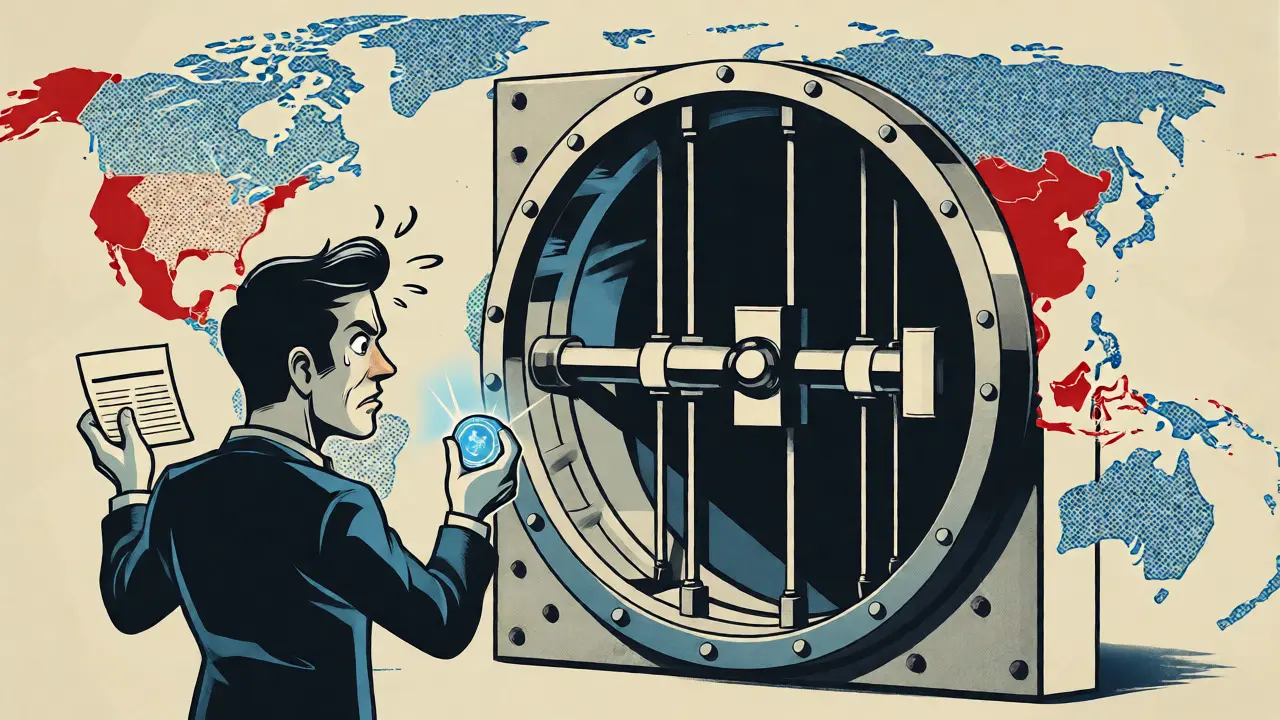
You just made a killing on a trade. You want to cash out, buy a car, or pay rent. But when you try to move that money from your exchange to your local bank, the transaction gets flagged, frozen, or rejected entirely. Sound familiar? It’s not just bad luck; it’s geography. Your ability to actually use your digital assets often depends less on your trading skills and more on where you live.
As of late 2025, nearly half of the world’s countries maintain ambiguous or outright restrictive banking policies toward cryptocurrency. This isn't about whether crypto is legal tender-most places don't require that. It's about whether traditional banks are allowed to touch it. If your bank sees a transfer from Binance or Coinbase and hits the "block" button, your portfolio is just numbers on a screen until you find a workaround. Let's break down who can bank freely, who struggles, and what changed in 2026.
The New Global Banking Standard
Things shifted significantly in January 2026. The Basel Committee on Banking Supervision (BCBS) implemented new prudential rules for crypto exposures. Before this, many banks were hesitant but willing. Now, strict capital requirements make servicing unbacked crypto assets expensive for traditional lenders. According to Dr. Agustin Carstens at the Bank for International Settlements, these rules effectively impose a 1,250% risk-weighting on certain crypto holdings. In plain English? Most conservative banks would rather lose money than hold Bitcoin on their balance sheet without massive reserves.
This has created a two-tier system. On one side, jurisdictions that adopted flexible interpretations of these rules kept their doors open. On the other, strict adherers saw a wave of de-banking. If you’re wondering why your bank suddenly stopped accepting transfers from your favorite exchange, check if they’ve aligned with the strictest BCBS standards. Countries like Singapore took the hard line, while others found loopholes.
Where You Can Bank Freely
If you’re looking for a place where moving money between fiat and crypto feels normal, Europe still leads the pack, but with caveats. Liechtenstein remains the gold standard. Thanks to its Token and Trusted Technology Service Provider Act, banks there have clear guidelines. About 92% of licensed blockchain companies secure banking relationships here, compared to much lower rates elsewhere. The process is transparent, and regulators actually talk to businesses instead of ignoring them.
Germany is another heavyweight. They classify crypto as financial instruments, which sounds restrictive but actually helps. It means major German banks know exactly how to handle custody and transactions. Roughly 68% of big German banks now offer crypto services. Yes, getting an account takes time-one trader reported four months and 17 applications-but once you’re in, you have full Euro integration with no weird limits.
Don’t sleep on Australia. Since I’m writing this from Perth, I see it daily. ASIC registration for Digital Currency Exchanges costs between $5,000 and $10,000, but it works. About 76% of registered exchanges here have solid banking partners. It’s not perfect, but it beats the uncertainty in many other regions. If you’re in APAC, Australia is arguably the most reliable jurisdiction for maintaining a functional bank account alongside your crypto holdings.

The Restrictive Zones
Now for the painful part. If you live in Nigeria, you know the struggle. Despite having millions of crypto users, the Central Bank of Nigeria maintains a firm ban on banks facilitating crypto transactions. A trader named 'NaijaCryptoKing' noted that all 11 Nigerian banks closed his accounts after detecting Binance transfers. He’s forced into P2P markets with 15-20% premiums. That’s not a market inefficiency; that’s a tax on existing.
Egypt and Algeria follow similar patterns, with over 90% of traders reporting severe banking issues. The issue isn’t always a total ban on ownership; it’s that banks refuse to service the accounts. You might own Bitcoin legally, but if you can’t sell it for local currency through a bank channel, you’re stuck in a liquidity trap.
Then there’s the United States. There’s no federal ban, right? Well, technically yes, but practically? It’s messy. State-by-state regulations and FDIC guidance requiring high capital reserves for crypto deposits have made US banks extremely cautious. Getting a business account can take six to eight months. While individuals can often use apps like PayPal or Cash App, serious traders and businesses face a gauntlet of compliance checks that shut out smaller players.
The Offshore Illusion
Many traders think moving their company to an offshore hub solves everything. Not necessarily. Take Seychelles. It’s popular for exchanges because regulation is light. But banking? Only 42% of crypto businesses there secure traditional banking relationships. You might get a license easily, but finding a bank that will actually let you wire money out without freezing your funds is a different beast. FTX’s collapse highlighted this fragility-banking channels there were unstable, with 78% terminating unexpectedly during volatile periods.
Bermuda does better, thanks to its Digital Asset Business Act. With 89% banking access success, it’s a solid option for institutional players. But for the average trader, the cost of entry ($15,000-$25,000 in fees) makes it impractical unless you’re running a fund.
How to Secure Your Account
So, how do you avoid being de-banked? First, stop treating your crypto activity like a hobby if you’re doing it seriously. Banks hate ambiguity. If your business description says "consulting" but 80% of your inflows come from Kraken, you’ll get flagged. Be specific. Use terms like "digital asset trading" or "blockchain technology services."
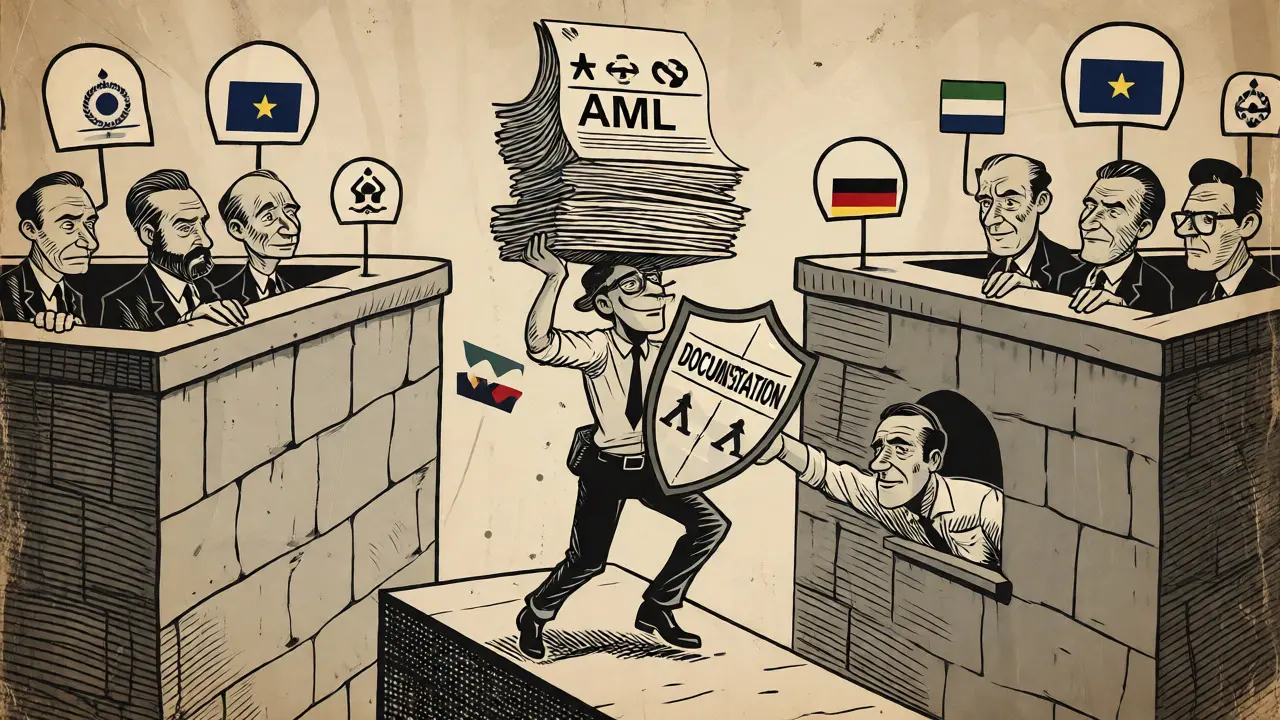
Second, documentation is king. Nearly half of all rejections happen because of insufficient Anti-Money Laundering (AML) paperwork. Don’t wait for the bank to ask. Have your source of funds proof ready, along with a clear audit trail of your trades. Using specialized legal firms helps-yes, it costs $15,000-$30,000 upfront, but it saves you from losing a year’s worth of profits to frozen accounts.
Third, diversify your banking partners. Don’t put all your eggs in one neobank basket. Revolut and Nexo are great for quick moves, but they aren’t full-service banks. Keep a relationship with a traditional institution, even if it’s clunky. When regulatory storms hit, traditional banks with government backing tend to survive longer than fintechs relying on third-party banking rails.
| Country/Region | Banking Success Rate | Regulatory Stance | Key Challenge |
|---|---|---|---|
| Liechtenstein | 92% | Clear & Proactive | High setup costs for entities |
| Germany | 68% | Strict but Clear | Lengthy onboarding (4+ months) |
| Australia | 76% | Balanced | Sandbox limitations for startups |
| USA | ~50% (Varies) | Federal Ambiguity | State-level inconsistencies |
| Nigeria | <5% | Prohibitive | Total bank ban on crypto flows |
| Seychelles | 42% | Lax Regulation | Unstable banking partnerships |
What’s Next for 2027?
The gap is widening. We’re heading toward a polarized world. By 2027, experts predict only 35% of countries will be truly "crypto-ready," offering seamless integration. The rest will either restrict access heavily or create fragmented regional ecosystems. If you’re planning to scale your trading operation, consider where you bank, not just where you trade. The location of your bank account determines your liquidity, and liquidity is life in crypto markets.
Why do banks reject crypto transfers?
Banks reject transfers primarily due to Anti-Money Laundering (AML) concerns and the new Basel III risk-weighting rules. Unbacked crypto assets carry high perceived risk, forcing banks to hold significant capital reserves against them, making the transactions less profitable for the bank.
Is it illegal to have a crypto account in Nigeria?
It is not illegal to own cryptocurrency in Nigeria, but it is illegal for commercial banks to facilitate crypto transactions. This means you cannot easily deposit or withdraw fiat currency directly linked to crypto trades through standard banking channels.
Which country is easiest for opening a crypto-friendly bank account?
Liechtenstein currently offers the highest success rate (92%) for securing banking relationships due to its clear Blockchain Act. For individual traders without complex corporate structures, Germany and Australia also provide relatively stable environments despite longer onboarding times.
Do neobanks count as real banking access?
Neobanks like Revolut or Nexo offer convenience but often rely on partner banks for actual fiat processing. They are useful for day-to-day operations but may lack the stability and insurance protections of traditional chartered banks, especially during regulatory crackdowns.
How long does it take to get a crypto business bank account?
Timelines vary wildly. In Liechtenstein, it can take 2-4 weeks. In the United States, it can take 6-8 months due to state-level checks and federal compliance reviews. Germany typically requires around 4 months.