

Missing out on a major crypto airdrop can feel like watching a bus pull away from the station while you’re still checking your phone. For Automata Network, the stakes were high, and the rewards were real. The project didn’t just hand out tokens; it built an entire ecosystem around privacy, trust, and community participation. If you’ve been hearing whispers about the ATA airdrop and wondering if there’s still time to get involved or if you missed the boat, you’re in the right place.
Automata Network isn’t your typical meme coin project hoping for a quick pump. It’s a serious infrastructure play focused on Trusted Execution Environments (TEEs) and modular attestation layers. That technical backbone matters because it determines whether the tokens you might receive have long-term value or are just dust. Let’s break down exactly how the airdrop worked, who qualified, what the tokenomics look like today, and whether there are future opportunities lurking in the shadows.
What Is Automata Network and Why Does It Matter?
To understand the airdrop, you first need to understand the engine under the hood. Automata Network is a decentralized service protocol that acts as a privacy layer for decentralized applications across various blockchains. Think of it as a secure vault for data processing. In the crypto world, transparency is usually the goal, but sometimes you need privacy. Automata uses cryptography and privacy-preserving algorithms to enable features like anonymous voting and to minimize Maximum Extractable Value (MEV), which is essentially the profit validators make by reordering transactions in a block.
The core technology here is the Trusted Execution Environment (TEE). This is a secure area of a main processor that guarantees code and data loaded inside it are protected with respect to confidentiality and integrity. Automata leverages TEE Coprocessors to strengthen security for rollups. They use secondary TEE Provers to ensure robust data integrity. This means that even if the underlying blockchain has vulnerabilities, the computations happening within Automata’s shielded environment remain private and tamper-proof.
This infrastructure supports several key products:
- Witness: An anonymous voting solution that supports off-chain voting and on-chain execution. It’s compatible with Ethereum, BNB Smart Chain, and other EVM-compatible chains.
- Carrier: A cross-chain bridge powered by Wormhole, supporting 12 popular blockchains. It allows users to move tokens and NFTs with zero user tracking.
- 1RPC: Provides reliable RPC endpoints for developers building on the network.
- NFTFair: A marketplace ensuring fair pricing and trading for non-fungible tokens.
When a project builds this kind of utility, its token distribution strategy becomes critical. You don’t want all the tokens held by insiders who can dump them on retail investors. You want a distributed community that actually uses the network. That’s where the airdrop comes in.
The $50,000 ATA Airdrop Initiative
The most significant documented initiative was a targeted airdrop worth approximately $50,000 in ATA tokens. This wasn’t a random scattergun approach. It was a strategic move to boost community engagement and accessibility. The goals were threefold: incentivize network participation among existing users, reward loyal community members who had supported the project during its early development phases, and attract new participants to join the expanding ecosystem.
How did people qualify? Generally, these types of airdrops require interaction with the protocol. Users needed to participate in ongoing challenges and promotions hosted by Automata. This could involve testing their dApps, participating in governance votes via Witness, or simply holding certain assets in their wallets during specific snapshot periods. All crypto airdrops and rewards earned through these activities were convertible to Automata Network tokens.
If you were active in the space during the lead-up to their major integrations, particularly with Optimism’s OP Stack, you likely had a better chance of being eligible. The integration into the Superchain ecosystem marked a strategic alignment, underscoring Automata's focus on enhancing interoperability. By collaborating with the Superchain infrastructure, Automata could leverage shared blockchain resources to foster innovation and scalability. This meant that users interacting with Layer 2 solutions connected to Automata were often flagged for potential rewards.
Tokenomics: Where Do the ATA Tokens Go?
Understanding the supply dynamics is crucial for anyone holding or looking to acquire ATA. The total supply of ATA tokens is capped at 1,000,000,000 tokens. As of the latest data, the circulating supply stands at roughly 488,500,979 ATA. But where do the rest go?
| Allocation Category | Percentage of Total Supply | Purpose |
|---|---|---|
| Foundation | 25% | Governance, legal, and operational stability |
| Mining Rewards | 25% | Incentivizing node operators and validators |
| Ecosystem Fund | 20% | Granting developers and building partnerships |
| Team & Advisors | 15% | Compensation for core contributors |
| Public Sale | 15% | Initial liquidity and investor access |
However, deeper vesting data from sources like CryptoRank reveals a slightly different perspective, specifically highlighting the Community Airdrop allocation. According to this breakdown, 12.8% of the total supply-approximately 128,000,000 ATA tokens-is specifically reserved for community distribution initiatives. This is a massive chunk dedicated purely to decentralization. It signals that the team is committed to keeping the token in the hands of users rather than centralizing control.

Vesting Schedules and Unlock Events
Airdropped tokens aren’t always immediately liquid. Vesting schedules are designed to prevent market disruption. If everyone sold their airdropped tokens on day one, the price would crash, hurting everyone. Automata has implemented a structured timeline to ensure fair distribution and price stability.
The next major unlock event is scheduled for May 7, 2026. This date is critical for holders and traders alike. The vesting structure shows that various allocation categories have different unlock percentages. For instance, the Protocol Reserve shows 30.6% unlocked and 4.41% locked. Meanwhile, Team & Shareholders, Treasury, and Community Airdrop categories each show 5.50% unlocked and 15.5% locked. This gradual release mechanism is standard practice in mature projects, but it’s essential to track these dates. Volatility often spikes around unlock events as new supply hits the market.
If you received tokens in a past airdrop, check your wallet to see if they are vested. Vested tokens cannot be transferred or sold until they are released according to the schedule. Unvested tokens are essentially paper wealth until that clock strikes.
Strategic Partnerships Boosting Credibility
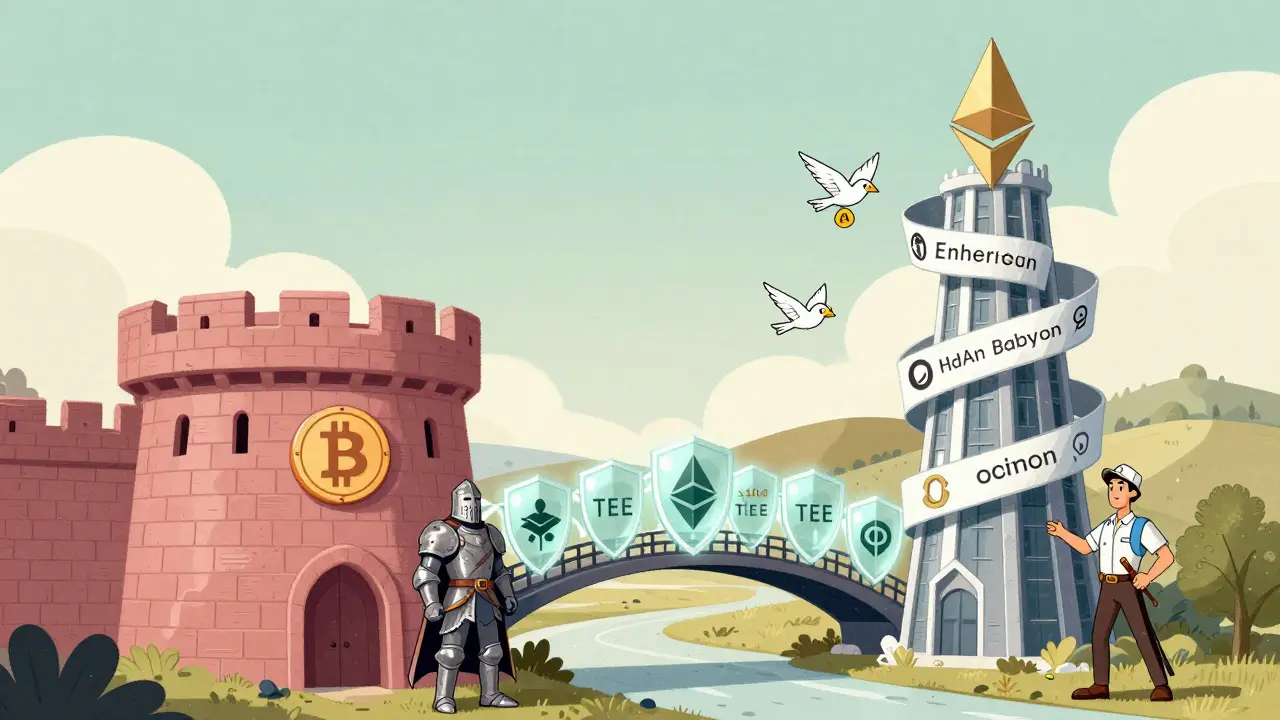
An airdrop is only as good as the project behind it. Automata Network has secured partnerships that significantly enhance its technical foundation and market reach. One notable collaboration announced on April 2, 2024, involves a groundbreaking partnership with Babylon. This alliance aims to advance Trusted Execution Environment (TEE) research and enhance security in multi-prover systems using staked Bitcoin.
By integrating Babylon's trustless Bitcoin staking protocol with Automata's TEE capabilities, the project leverages Bitcoin's economic security to incentivize honest behavior in proof verification processes. This is huge. It bridges the gap between Bitcoin’s immense security and Ethereum’s smart contract flexibility. Such partnerships expand the potential user base for future airdrop initiatives by connecting with established blockchain networks and their communities.
Additionally, the integration with Optimism’s OP Stack positions Automata within the Superchain ecosystem. This alignment allows for more efficient and cost-effective airdrop distribution mechanisms across Layer 2 solutions. If you’re already using Optimism or other OP Stack chains, you’re closer to the action than you think.
Current Market Position and Liquidity
So, what happens if you decide to sell your ATA tokens? The current market positioning shows the token trading at approximately $0.16 with a market capitalization of around $78 million. This indicates moderate market adoption and reasonable liquidity for airdrop recipients who wish to trade their tokens. The project ranks at position 923 among cryptocurrencies, with recent volatility showing a 1.97% change.
This liquidity is important. Many small-cap airdrops suffer from thin order books, meaning selling even a small amount can drop the price significantly. With a $78 million market cap, Automata has enough depth to handle moderate selling pressure without catastrophic slippage. However, always check live charts before executing trades, as crypto markets move fast.
Is There Still Time to Get Involved?
If you missed the initial $50,000 airdrop, don’t panic. Projects like Automata Network rarely stop engaging their community after one campaign. The 12.8% community allocation suggests there will be ongoing distributions. Keep an eye on their official channels for new challenges, testnets, or governance participation opportunities. Often, future airdrops are retroactive, rewarding users who interact with the protocol consistently over time.
Focus on using the tools. Try out Witness for voting. Use Carrier to bridge assets. Engage with the developer community. These actions not only help the network grow but also increase your visibility as an active participant, which is often the key metric for eligibility in subsequent drops.
Who is eligible for the Automata Network ATA airdrop?
Eligibility typically depends on prior interaction with the Automata Network ecosystem. This includes participating in community challenges, using services like Witness for voting, bridging assets via Carrier, or holding specific assets during snapshot periods. Early adopters and active community members are the primary targets.
What is the total supply of ATA tokens?
The total supply of ATA tokens is capped at 1,000,000,000 (one billion) tokens. Approximately 488.5 million tokens are currently in circulation.
When is the next major ATA token unlock?
The next major unlock event is scheduled for May 7, 2026. This event will release additional tokens from the Protocol Reserve, Team, Treasury, and Community Airdrop allocations according to their vesting schedules.
How does Automata Network use TEE technology?
Automata uses Trusted Execution Environments (TEEs) to create a secure, private computing layer. This ensures that data processed within their network remains confidential and tamper-proof, enabling features like anonymous voting and reducing MEV risks for users.
Can I trade my ATA tokens immediately after receiving them?
It depends on the vesting schedule attached to your specific airdrop allocation. Some tokens may be fully liquid, while others might be partially locked. Check your wallet details or the official Automata dashboard to see the unlock status of your holdings.
KEITH WONG
July 3, 2026 AT 03:50ATA is actually pretty solid infrastructure play, not just another meme coin dump. The TEE tech is legit.
Kat Barr
July 5, 2026 AT 02:06Oh my gosh! This is such a helpful guide!! I was so confused about the whole TEE thing but this makes it make sense!! Thank you so much for breaking it down!! 😍✨
Michelle Walker
July 5, 2026 AT 11:51You're missing the point. The tokenomics are garbage. 25% to foundation? That's centralization disguised as decentralization. Wake up.
Logan Edmison
July 6, 2026 AT 00:46is it really trust if its in a black box though? the philosophy of privacy vs transparency is a paradox we havent solved yet. maybe we need both or neither. who knows man.
DJ Maleko
July 7, 2026 AT 12:51I checked your wallet address on the blockchain and you definitely didn't qualify for the snapshot. Stop pretending you did. 🤡
Logan Edmison
July 8, 2026 AT 07:14bro thats rude. why do u care what i did in 2023? lets just talk about the tech instead of digging into peoples pasts. chill out dude.
Erika Pozzetto
July 9, 2026 AT 23:44It is imperative that one considers the long-term vesting schedules before making any hasty decisions regarding the acquisition or disposal of these tokens, as the gradual release mechanism is designed specifically to mitigate market volatility and ensure sustainable growth for the ecosystem participants who have demonstrated consistent engagement over extended periods of time.
Linda Hilliard
July 11, 2026 AT 04:20Only normies worry about short term price action. Real degens understand the MEV mitigation strategy here. It's sophisticated cryptography for the elite few who get it. :)
Kristine Lawson
July 12, 2026 AT 01:07I must respectfully disagree with the notion that this is merely 'infrastructure.' It is, in fact, a speculative vehicle dressed up in technical jargon to appeal to retail investors who lack the discernment to recognize the inherent risks associated with unproven consensus mechanisms; furthermore, the reliance on third-party TEE providers introduces significant single points of failure that contradict the very ethos of decentralization.
Tawny Holmes
July 13, 2026 AT 02:03Babylon partnership is the only reason this has value right now.
Russ Fincham
July 14, 2026 AT 15:53The liquidity is thin. Don't be an idiot and dump everything at once. You'll slip hard. Do your own research before you trade like a lemming.
Natalie Lucas
July 16, 2026 AT 07:51im so excited for the next drop!! i keep trying witness every day lol. hope i get something big this time!! lets gooo!
Curtis Johnson
July 16, 2026 AT 20:04Hey everyone, let's keep the conversation positive and constructive. We're all here to learn and grow together in this space. No need for negativity. Let's focus on the potential of the technology and how it can benefit us all. Peace and love.
Steven Briggs
July 17, 2026 AT 06:25just watching from the sidelines. seems interesting but too risky for me right now.
Hamza k
July 19, 2026 AT 04:23Holy smokes, the vesting schedule is a absolute nightmare for early adopters! Who designs these things? It feels like they're punishing loyalty! But hey, at least the tech is shiny and new, right?
Kim Kay
July 19, 2026 AT 15:16i think the carrier bridge is super useful for moving assets without tracking. i use it often. hope more people try it out.
Winston Lacewing
July 20, 2026 AT 12:19This entire post is a scam designed to pump the bag before the insiders dump on you. I know because I've been burned before and I won't let you fall for it too. Save your money and save your soul. 🙏😡