

Imagine trying to buy groceries with digital assets in Buenos Aires. You have the coins, you have the app, but your bank account refuses to connect. This is the reality for millions of Argentines navigating the Argentina banking restrictions on crypto transactions, which are a regulatory framework that prohibits traditional banks from facilitating cryptocurrency operations while mandating the use of licensed Virtual Asset Service Providers (VASPs). It sounds like a contradiction. On one hand, the government lifted currency controls and embraced crypto adoption. On the other, they slammed the door shut on the very institutions most people trust with their money.
This split isn't accidental. It’s a calculated move by the Banco Central de la República Argentina (BCRA), which is the central bank of Argentina responsible for monetary policy and financial stability to protect foreign exchange reserves. At the same time, the National Securities Commission (CNV), which is the regulatory body overseeing securities markets and virtual asset service providers in Argentina is building a new, parallel infrastructure. If you are holding crypto in Argentina, or planning to do business there, understanding this separation is no longer optional-it’s survival.
The Core Conflict: Banks vs. Crypto
To understand why your bank won’t touch your Bitcoin, you have to look at the numbers. About 30% of Argentinians own digital assets. Stablecoins, particularly USDT and USDC, dominate daily transactions because they offer a hedge against local inflation. For years, these transactions flowed through informal channels or grey-market exchanges. The BCRA saw this as a threat to the peso and the country’s limited dollar reserves.
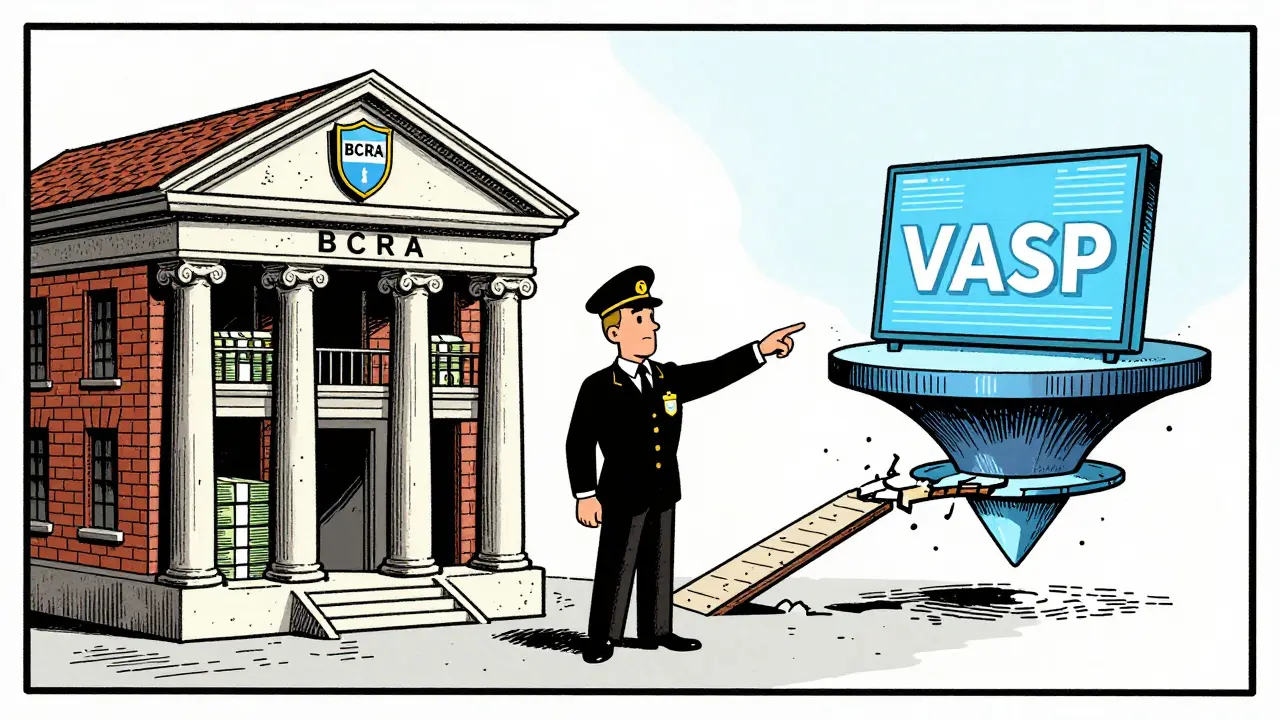
In 2025, the central bank made its stance clear: traditional financial institutions are banned from providing crypto services. This means no custody, no trading, and no direct exchange via standard banking apps. The logic is simple. By forcing crypto into a separate silo, the BCRA aims to prevent capital flight through unregulated digital pipes. They want innovation, but they don’t want it bleeding into the traditional banking system. This creates a bifurcated economy where fiat stays in banks, and crypto lives exclusively in specialized platforms.
The Legal Backbone: Law 27,739 and CNV Resolution 1058/2025
You can’t enforce a ban without a replacement system. That’s where Law 27,739, which is Argentina's comprehensive crypto regulatory framework enacted in March 2024 comes in. Passed in March 2024, this law gave the CNV the power to oversee Virtual Asset Service Providers (VASPs), which are licensed entities authorized to facilitate cryptocurrency transactions, custody, and exchange in Argentina. Think of VASPs as the new intermediaries. If banks are out, VASPs are in.
The details got sharper with CNV Resolution 1058/2025, which is the specific regulation issued on March 14, 2025, that mandates all crypto services must be conducted through registered VASPs. Published in the Official Gazette, this resolution defines virtual assets as digital representations of value, explicitly excluding government-issued fiat. It sets strict deadlines for registration:
- Individuals: Must register by July 1, 2025.
- Argentine-incorporated legal entities: Deadline was August 1, 2025.
- Foreign entities: Those operating in or targeting Argentine users had until September 1, 2025.
The full framework kicks in on December 31, 2025. Until then, there’s a grace period, but the direction is set. VASPs aren’t just filling out forms. They face minimum net worth requirements in USD, robust anti-money laundering (AML) standards, and counter-terrorist financing (CFT) protocols aligned with the Financial Action Task Force (FATF), which is an intergovernmental organization setting global standards for combating money laundering and terrorist financing.
How This Affects Everyday Users
If you’re an everyday user, the shift feels bureaucratic but necessary. You can still buy and sell crypto. In fact, the April 14, 2025 lifting of the cepo cambiario, which is Argentina's currency control regime that restricted access to US dollars makes it easier to move dollars freely. But you can’t do it through your bank app. You have to go through a registered VASP.
This means more steps. You need to verify your identity with stricter KYC (Know Your Customer) procedures. You need to monitor your transaction records. The Financial Intelligence Unit (UIF), which is Argentina's unit responsible for enforcing AML/CFT requirements and monitoring suspicious activities requires VASPs to report suspicious activities within 150 days. They also need monthly reports detailing client numbers, traded volume, and top assets. For the average person, this translates to less anonymity. Every major move is tracked, recorded, and potentially flagged if it doesn’t fit the pattern.
For travelers and digital nomads, the rules add friction. You can’t just walk into a bank and convert crypto to pesos. You need a VASP connection. Some international platforms might not be registered yet, leaving tourists scrambling for compliant options. The goal is transparency, but the experience is often clunky.
The Business Side: Costs and Compliance
For businesses, the restrictions bring both opportunity and headache. On one side, tokenization is booming. On June 13, 2025, the CNV issued General Resolution No. 1069/2025, allowing real-world assets to be tokenized using distributed ledger technologies (DLT). This opens doors for startups and investors. But here’s the catch: these innovations happen outside the banking system. Companies must keep their fiat operations and crypto services strictly separated.
This separation increases costs. Small operators struggle with the compliance burden. Registering as a VASP isn’t cheap. You need security audits, risk assessments, and ongoing monitoring. Critics argue this could stifle innovation, pushing smaller players out of the market. Larger entities, however, see a chance to consolidate. Platforms like TRON are showing interest, but they must play by the VASP rules. No shortcuts. No integrated banking solutions.
Tax Implications and the 'Blanqueo' Program
Regulation always leads to taxation. Argentina introduced cross-border crypto taxes ranging from 5% to 15%. These rates aim to boost transparency and attract foreign investment while managing economic risks. But again, these transactions can’t flow through conventional banking channels. They must go through the VASP framework.
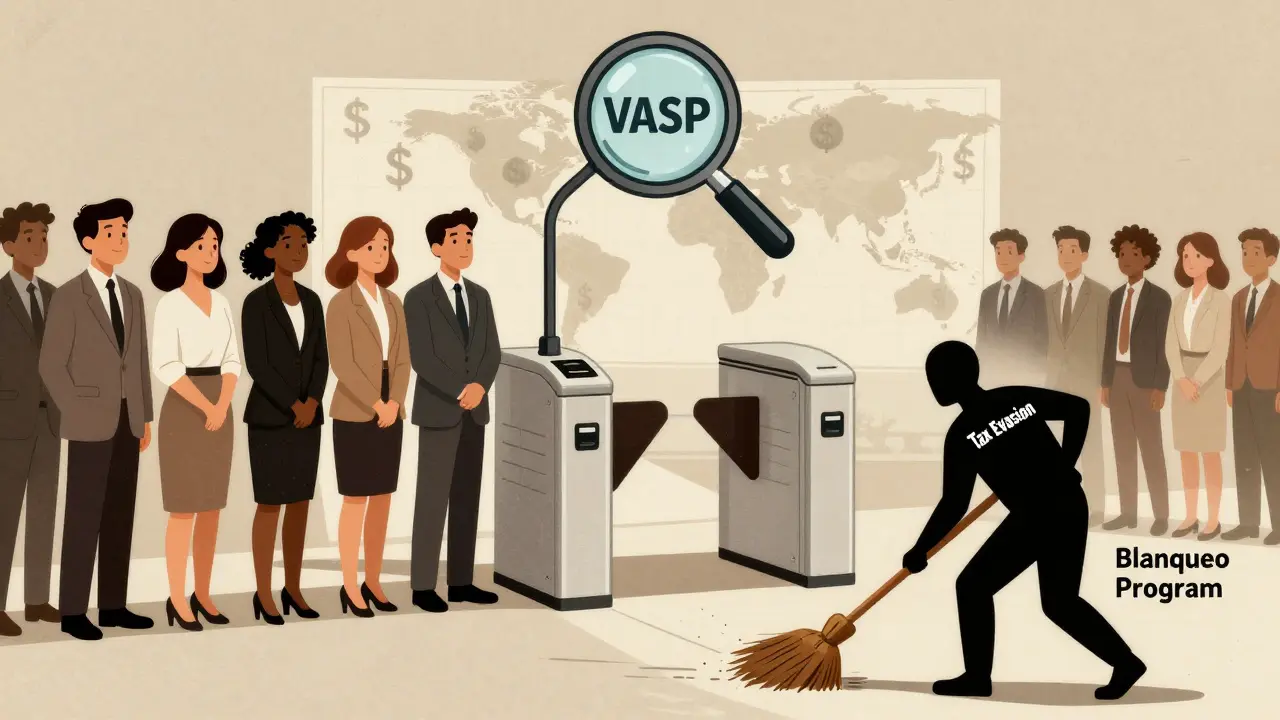
Then there’s the blanqueo program, which is an asset regularization initiative under Law 27,743 requiring citizens to declare crypto holdings for tax purposes. Under Law 27,743, citizens had to declare their crypto holdings. The window closed on September 30, 2025. If you missed it, you’re now fully subject to standard tax laws. The government wants every coin accounted for. The VASP reporting requirements make evasion nearly impossible. Monthly data submissions mean the tax authority has a real-time view of the market.
Comparison: Traditional Banking vs. VASP Operations
| Feature | Traditional Banks | Licensed VASPs |
|---|---|---|
| Crypto Services | Prohibited | Mandatory |
| Regulatory Body | BCRA | CNV |
| Registration Deadline | N/A | Varies (July-Sept 2025) |
| Reporting Requirements | Standard AML | Monthly Volume/Client Reports |
| Suspicious Activity Reporting | As per general law | Within 150 days (UIF) |
| Currency Controls | Lifted (April 2025) | Lifted (April 2025) |
Why This Matters for the Future
Argentina is walking a tightrope. They want to be a regional leader in crypto governance. They want innovation. But they also fear financial instability. The banking restrictions are their safety net. By keeping crypto separate, they hope to contain any shocks. If the crypto market crashes, the banking system remains intact. If the peso struggles, the crypto ecosystem can operate independently.
This model positions Argentina uniquely in Latin America. Other countries are integrating crypto into banking slowly. Argentina hit the fast-forward button on separation. It’s risky. It’s complex. But it’s deliberate. As we move past the December 31, 2025 deadline, the true test will be how well VASPs handle the load. Can they provide seamless service? Can they maintain security? Or will the friction drive users back to the shadows?
For now, the message is clear. Banks are off the table. VASPs are the new gatekeepers. Adapt or stay out.
Can I still use my bank account to buy crypto in Argentina?
No. The BCRA explicitly bans traditional banks from providing crypto services. You must use a registered Virtual Asset Service Provider (VASP) for all crypto transactions.
What happens if I miss the VASP registration deadline?
Operating as a VASP without registration after the deadlines (July-September 2025) is illegal. Entities face penalties, potential shutdowns, and inability to legally facilitate transactions.
Are currency controls completely gone in 2025?
Yes, the cepo cambiario was largely lifted on April 14, 2025. Individuals can buy US dollars freely, including for crypto transactions, but these must occur through VASPs, not banks.
How much tax do I pay on cross-border crypto transactions?
Cross-border crypto transactions are subject to taxes ranging from 5% to 15%, aimed at increasing transparency and managing economic risks.
Is it safe to use VASPs instead of banks?
Registered VASPs must meet strict security, AML, and CFT standards set by the CNV and UIF. While regulated, they operate outside traditional banking protections, so due diligence is essential.
When does the full regulatory framework take effect?
The complete regulatory framework, including all VASP obligations and enforcement measures, takes effect on December 31, 2025.