

Can you use Bitcoin or Ethereum to pay for groceries, rent, or a coffee in Russia? The short answer is no-not legally, not for everyday purchases inside the country. But the full picture is far more complicated than a simple ban.
Crypto Ownership vs. Crypto Payments: A Clear Line
It’s not illegal to own cryptocurrency in Russia. Thousands of people hold Bitcoin, Ethereum, and other digital assets in wallets. The government doesn’t go after individuals just for holding crypto. But using it to buy something? That’s a different story. The Central Bank of Russia has been clear: the ruble is the only legal tender. Any attempt to pay for goods or services with Bitcoin, USDT, or any other coin within Russia breaks the law. This isn’t about stopping people from investing. It’s about protecting the ruble’s dominance. The government sees crypto as an investment asset, not a payment tool. That’s why you can trade it, mine it, or hold it as a store of value-but you can’t use it to pay your electric bill or buy a car from a local dealer.The One Exception: International Trade Under the Experimental Regime
There’s one big loophole, and it’s not for regular people. Russia created an Experimental Legal Regime (ELR) to let companies send and receive crypto payments across borders. This isn’t about convenience-it’s about survival. After Western sanctions hit in 2022, Russian businesses lost access to SWIFT, PayPal, and many international banking channels. Crypto became a lifeline. Now, Russian exporters can accept Bitcoin or stablecoins from foreign buyers. Importers can pay overseas suppliers in crypto. The Russian Treasury and Finance Ministry quietly support this. In 2025, crypto-facilitated international trade reached 1 trillion rubles ($11 billion USD). That’s not small change. It’s real economic activity happening outside the traditional banking system. But here’s the catch: this only works for cross-border deals. If a Russian company tries to pay its local supplier in Ethereum, even if the supplier agrees, it’s illegal. The ELR is tightly controlled, limited to a small group of licensed firms, and monitored closely by regulators.Who Can Use Crypto Payments? Almost No One
The experimental regime doesn’t open the door for ordinary Russians. You can’t use crypto to pay your landlord, order food online, or buy a phone from a Russian retailer. Even if a store says they accept Bitcoin, it’s either a scam or a violation waiting to happen. Only a few hundred companies-mostly large exporters in energy, metals, and agriculture-are allowed to operate under the ELR. Even then, they must report every transaction to the tax authorities and convert crypto values to rubles for accounting. There’s no public list of these companies. No public registry. No transparency. Just a quiet, state-approved backchannel for international trade. For everyday people, crypto remains an investment or savings tool. Many Russians use it to protect savings from ruble inflation, especially after the 2022 currency crash. But they can’t spend it. They have to sell it first, convert it to rubles, and then use the money. That adds fees, delays, and risk.
Big Fines Are Coming-And They’re Serious
Russia isn’t just saying "no" to crypto payments. They’re building a legal trap to catch anyone who tries. New laws set to take effect in 2026 will impose heavy penalties:- Individuals: 100,000 to 200,000 rubles ($1,100-$2,200 USD) fine
- Companies: 700,000 to 1 million rubles ($7,700-$11,000 USD) fine
- Any crypto used in illegal payments will be seized
What’s Taxable? Everything
Even if you’re not using crypto to pay for things, you still owe taxes. Russia treats all crypto income as taxable. That includes:- Selling Bitcoin for rubles
- Earning interest from staking or lending
- Receiving airdrops or mining rewards
- Selling NFTs
Why Is Russia So Strict? It’s Not Just About Control
Some people think Russia hates crypto. That’s not true. The government sees its value-just not as a payment tool. The real goal is to prevent crypto from replacing the ruble. If people start using Bitcoin to buy bread, the ruble loses its role. That threatens the state’s ability to control the economy, set interest rates, and manage inflation. At the same time, Russia needs to bypass sanctions. Crypto offers a way to trade with countries like China, India, Turkey, and Iran without using Western banks. That’s why the ELR exists. It’s a strategic tool: ban crypto domestically, but let it flow internationally. It’s a paradox-but it’s working. The Central Bank wants a full ban. The Finance Ministry wants to expand crypto use for trade. The State Duma is caught in the middle. That’s why the rules feel inconsistent. One day, you hear about a crackdown. The next, you hear about a new crypto export deal.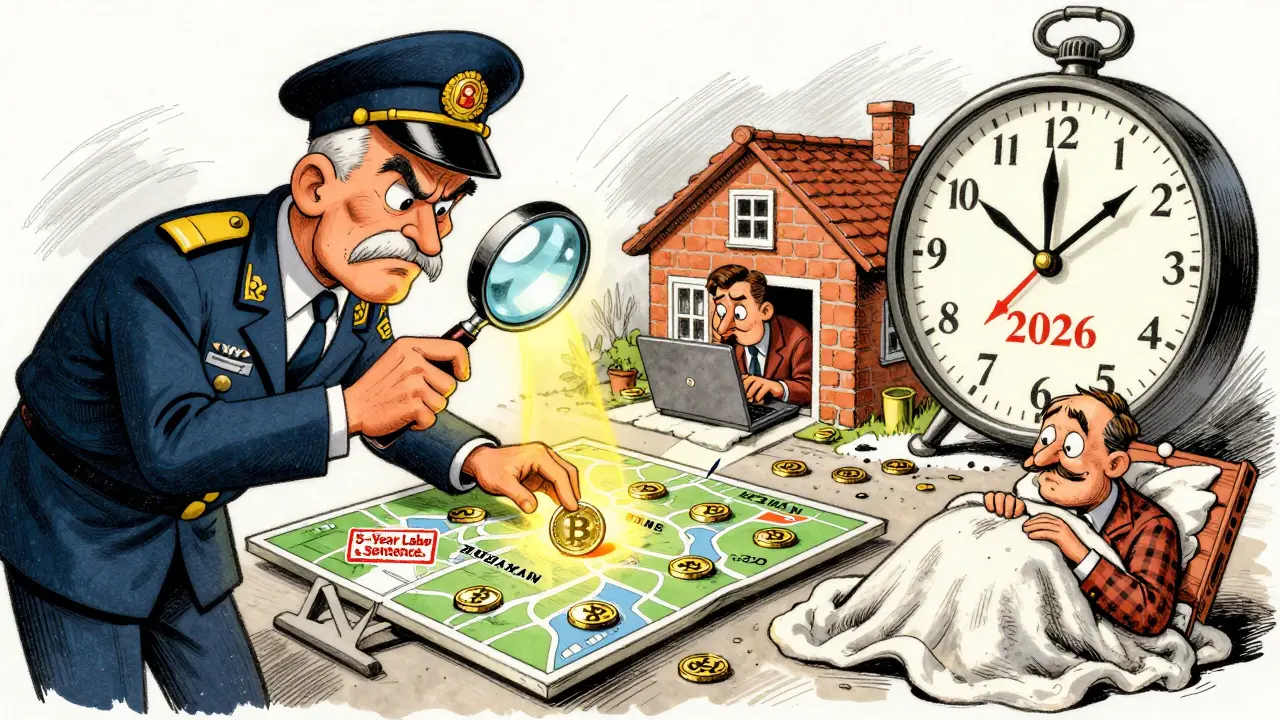
What’s Happening Now? The Numbers Tell the Story
Russia’s crypto adoption has dropped in global rankings. In 2024, it was 7th on Chainalysis’s Global Adoption Index. In 2025, it fell to 10th. Why? Because people can’t use crypto to pay for daily life. The lack of local exchanges makes it harder to buy crypto legally. Most Russians still use foreign platforms like Binance or Bybit, which aren’t regulated in Russia. But usage hasn’t dropped. The market value of crypto held by Russians is over $40 billion. That’s up 15% every year since 2021. People still buy. They still hold. They just can’t spend it. The demand is there. The legal path isn’t. Some lawmakers are pushing to license domestic exchanges. The Finance Ministry has asked to expand access to crypto for investors. But none of these proposals touch the core rule: no crypto payments for goods and services inside Russia.What Should You Do If You’re in Russia?
If you’re a Russian citizen:- Don’t use crypto to pay for anything locally. It’s illegal and risky.
- Report all crypto income. Even small gains. The tax system is watching.
- If you’re a business owner, check if you qualify for the Experimental Legal Regime. Otherwise, avoid crypto payments entirely.
- Keep records of every transaction-buy, sell, stake, earn. You’ll need them.
- You can accept crypto from Russian partners-if they’re under the ELR.
- Don’t assume every Russian company can pay you in crypto. Ask for proof of ELR registration.
- Use stablecoins like USDT for smoother settlements. They’re easier to track and convert.
- Be ready for delays. Russian banks may still block crypto-related transfers.
Earlene Dollie
December 22, 2025 AT 21:41why does it feel like we're living in a dystopian bank ad?
Dusty Rogers
December 23, 2025 AT 04:40Kevin Karpiak
December 24, 2025 AT 05:47Amit Kumar
December 25, 2025 AT 10:42chris yusunas
December 27, 2025 AT 00:16you got the wheels but the road's blocked
still cool to own though
Mmathapelo Ndlovu
December 28, 2025 AT 21:07people are holding crypto to survive inflation but can't even use it to buy bread?
why does the system always punish the ones trying to adapt?
the fact that they're monitoring every wallet... it's chilling
Luke Steven
December 29, 2025 AT 12:31Ellen Sales
December 31, 2025 AT 02:06roxanne nott
December 31, 2025 AT 12:04Rachel McDonald
December 31, 2025 AT 18:46Vijay n
January 2, 2026 AT 16:25crypto is not real money
and the 1tr ruble trade number? fake
they are printing rubles and calling it crypto
trust no one
Collin Crawford
January 4, 2026 AT 01:21Jayakanth Kesan
January 4, 2026 AT 16:04Aaron Heaps
January 6, 2026 AT 04:58Tristan Bertles
January 7, 2026 AT 03:43Megan O'Brien
January 7, 2026 AT 23:32