

If you are standing in a Lagos market or running an online business in Abuja, you might have heard conflicting stories about using Bitcoin or USDT. For years, the message from banks was simple: "Stay away." But by mid-2026, that narrative has completely flipped. The short answer to whether crypto payments are allowed in Nigeria is yes, but with strict conditions. You cannot use cryptocurrency as legal tender like the Naira, but you can legally trade, hold, and transfer digital assets if you follow the new rules set by the government.
The landscape shifted dramatically after March 2025. If you are still operating under the old fears of account freezes, you need to update your playbook. This guide breaks down exactly what is legal, who regulates it, how much tax you owe starting in 2026, and which platforms are safe to use right now.
The New Legal Reality: ISA 2025 Explained
For a long time, crypto existed in a gray zone. Then came the Investments and Securities Act (ISA) 2025. Signed into law by President Bola Ahmed Tinubu, this legislation changed everything. It officially recognized cryptocurrencies as securities. This means they are no longer just speculative internet tokens; they are regulated financial instruments.
Here is what this means for you:
- Crypto is not illegal: Owning Bitcoin, Ethereum, or stablecoins is perfectly legal.
- Not legal tender: You cannot force a shopkeeper to accept Bitcoin instead of Naira. It does not replace the official currency.
- Securities status: Digital assets fall under the supervision of the Securities and Exchange Commission (SEC), similar to stocks and bonds.
This clarity ended the era of regulatory uncertainty. Before 2025, banks were often forced to block crypto transactions because the Central Bank of Nigeria (CBN) had previously discouraged them. Now, the law explicitly allows licensed entities to operate. The key word here is licensed. Operating without a license is where the trouble starts.
Who Regulates Crypto in Nigeria?
You might wonder who watches over these digital markets. It is not just one agency. The current system uses a multi-agency approach to ensure safety and compliance. Understanding these players helps you know who to trust and who to watch out for.
| Agency | Role in Crypto Regulation |
|---|---|
| SEC (Securities and Exchange Commission) | Primary regulator. Issues licenses to exchanges and VASPs (Virtual Asset Service Providers). Enforces the ISA 2025. |
| CBN (Central Bank of Nigeria) | Oversees banking relationships. Allows banks to serve licensed crypto firms. Monitors monetary stability. |
| NFIU (Nigerian Financial Intelligence Unit) | Focuses on Anti-Money Laundering (AML) and Counter-Terrorism Financing (CFT). Tracks suspicious flows. |
| EFCC (Economic and Financial Crimes Commission) | Investigates fraud and Ponzi schemes involving crypto assets. |
The SEC is your main point of contact for legitimacy. If a platform claims to be compliant, it should be registered with the SEC. The CBN’s role has softened significantly since December 2023, when they issued guidelines allowing banks to open accounts for SEC-licensed crypto businesses. This bridge between traditional banking and crypto is crucial for smooth payments.
Licensing and Compliance: What It Means for Users
Under the ISA 2025, all Virtual Asset Service Providers (VASPs)-which includes exchanges, wallet providers, and payment processors-must register with the SEC. This isn't just paperwork; it involves strict vetting.
Early adopters like Quidax and Busha secured their licenses in 2024. These platforms are now considered "safe havens" for Nigerian users. They comply with local laws, integrate with Nigerian banks, and offer customer protection mechanisms required by the SEC.
What happens if a platform ignores these rules? The penalties are severe. Non-compliant operators face fines of ₦10 million ($6,693) for the first month of violation, plus ₦1 million ($669) for every additional month. The SEC can also suspend or revoke licenses entirely. For you as a user, sticking to licensed platforms reduces the risk of losing funds to unregulated entities that might vanish overnight.

Crypto Taxes in Nigeria: The 2026 Changes
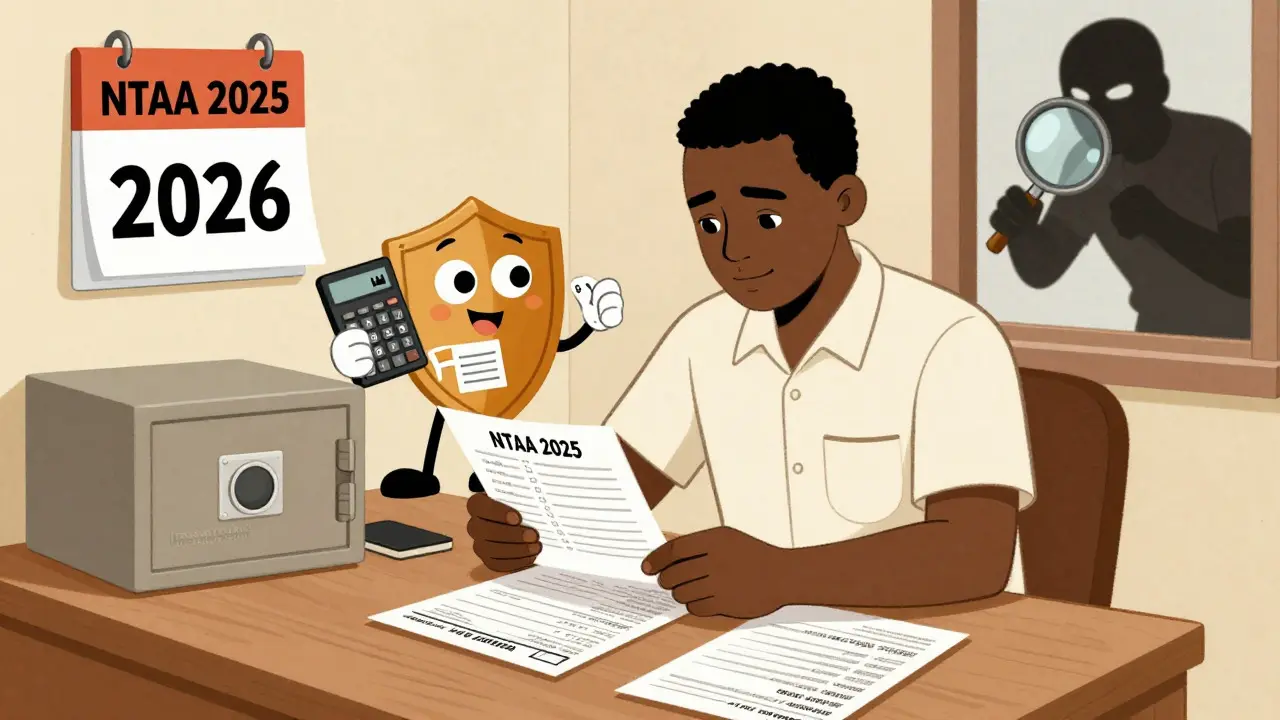
If you thought regulation was only about licenses, think again. Starting January 1, 2026, the Nigerian Tax Administration Act (NTAA) 2025 took effect. This is a big deal for anyone making money through crypto.
Previously, many Nigerians operated in a tax gray area. Now, the Federal Inland Revenue Service (FIRS) has clear rules. Here is how it works:
- Holding is tax-free: Simply owning Bitcoin or Ethereum does not trigger a tax bill. You are only taxed when you realize a gain.
- Taxable events: Selling crypto for Naira, exchanging one crypto for another at a profit, or using crypto to buy goods/services triggers tax liability.
- Individual rates: Personal income tax applies to profits on a sliding scale, capped at 25%.
- Corporate rates: Companies earning ₦25 million to ₦100 million annually pay 20% corporate income tax. Those earning over ₦100 million pay 30%.
- VAT on fees: All companies charging transaction fees must pay 7.5% Value Added Tax (VAT) on those fees.
Experts call this regime "progressive" because it provides clarity. Instead of arbitrary seizures or hidden costs, you know exactly what you owe. However, it means you need to keep records of your transactions. Ignorance of the law is no longer a valid excuse for non-payment.
How to Make Safe Crypto Payments Today
With the legal framework in place, how do you actually move money? The most common method in Nigeria remains Peer-to-Peer (P2P) trading. Nigeria consistently ranks first globally in P2P crypto volume. Between July 2024 and June 2025, the country saw an estimated $92.1 billion in crypto value flow through these channels.
To stay safe and compliant:
- Use Licensed Exchanges: Stick to platforms like Quidax, Busha, or other SEC-approved VASPs. They offer integrated bank transfers that are less likely to be frozen.
- Avoid Unverified P2P Traders: While P2P is popular, individual traders may not always follow AML rules. Use escrow services provided by the exchange to protect your funds.
- Check Your Bank’s Policy: Most major banks now support transactions with licensed crypto firms. Confirm with your bank manager to avoid unexpected holds.
- Keep Records: Save screenshots of trades and deposit slips. You will need these for tax purposes under the NTAA 2025.
International platforms like Binance or Coinbase may still be accessible, but they face hurdles. If they don’t pursue Nigerian licensing, they might restrict services to Nigerian residents to avoid regulatory friction. Local platforms currently have the advantage because they are built for the Nigerian regulatory environment.
Risks and Pitfalls to Avoid
Even with legalization, risks remain. The SEC and EFCC are actively cracking down on fraud. The ISA 2025 explicitly prohibits Ponzi schemes and gives regulators enhanced tools to investigate telecom records.
Watch out for:
- High-Yield Investment Programs (HYIPs): If a scheme promises guaranteed daily returns of 1-5%, it is likely a scam. Legitimate crypto investments fluctuate with market prices.
- Unlicensed Wallets: Using obscure wallets that don’t comply with AML standards can flag your accounts for suspicious activity.
- Tax Evasion: With the new NTAA 2025, failing to declare significant crypto gains can lead to audits and penalties. The government has better data tracking capabilities now than before.
The goal of the regulators is to balance innovation with consumer protection. They want the industry to grow, but they want it clean. By staying informed and using licensed channels, you position yourself on the right side of history.
Future Outlook: What Comes Next?
As we move through 2026, expect more clarity. The SEC is still processing license applications, so the list of approved platforms will grow. This competition among licensed providers should drive down fees and improve user experience.
Global trends also matter. As countries like the US and EU tighten their own crypto regulations, cross-border payments involving Nigeria may become more standardized. The integration of blockchain technology into traditional finance is inevitable, and Nigeria’s early adoption of a structured regulatory framework puts it ahead of many peers in Africa.
For businesses, this means new opportunities. Accepting crypto payments via licensed processors can reduce reliance on volatile foreign exchange markets and lower remittance costs. For individuals, it means safer savings options and access to global investment opportunities.
The days of fear are over. The era of responsibility has begun. Stay compliant, stay informed, and leverage the tools available to you.
Is Bitcoin legal in Nigeria in 2026?
Yes, Bitcoin and other cryptocurrencies are legal in Nigeria. The Investments and Securities Act (ISA) 2025 recognizes them as securities. However, they are not legal tender, meaning they cannot replace the Naira for official government transactions.
Which crypto exchanges are licensed in Nigeria?
Platforms like Quidax and Busha were among the first to receive licenses from the Securities and Exchange Commission (SEC) in 2024. Always check the SEC’s official registry for the most up-to-date list of approved Virtual Asset Service Providers (VASPs).
Do I have to pay tax on my crypto profits?
Yes, starting January 1, 2026, under the Nigerian Tax Administration Act (NTAA) 2025. Individuals pay personal income tax on profits from sales or exchanges, capped at 25%. Holding crypto without selling is not taxed.
Can Nigerian banks still freeze crypto accounts?
Banks are now permitted to serve SEC-licensed crypto businesses. If you use licensed platforms and follow AML guidelines, the risk of account freezing is significantly reduced compared to the pre-2025 era. However, suspicious transactions may still trigger reviews.
What is the penalty for operating an unlicensed crypto exchange?
Non-compliant operators face fines of ₦10 million for the first month of violation, plus ₦1 million for each subsequent month. The SEC can also suspend or revoke operations, effectively shutting down the business.