
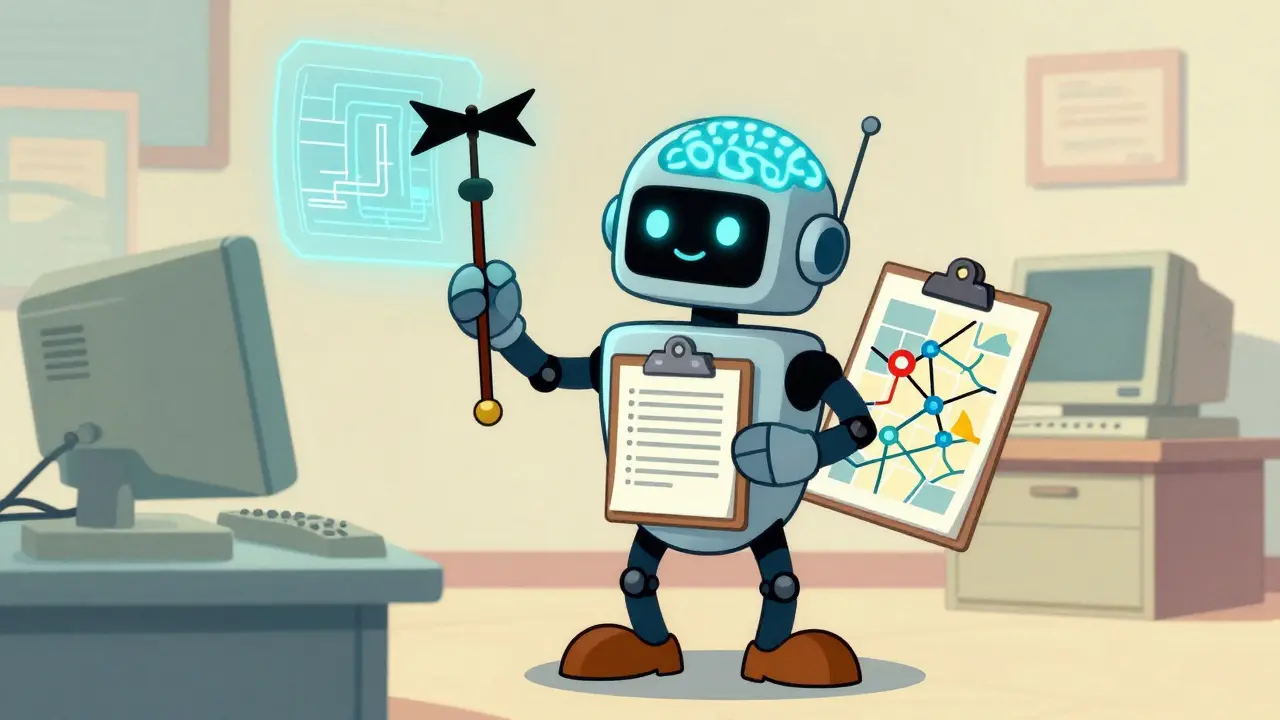
Imagine a contract that doesn't just follow rigid rules but actually learns from experience. It checks the weather, analyzes traffic patterns, and decides whether to reroute a shipment before you even know there's a delay. This isn't science fiction anymore. By 2026, AI-powered smart contracts are self-executing digital agreements that combine blockchain security with artificial intelligence to make dynamic, data-driven decisions. They represent a massive leap forward from the basic 'if-then' scripts of early blockchain days.
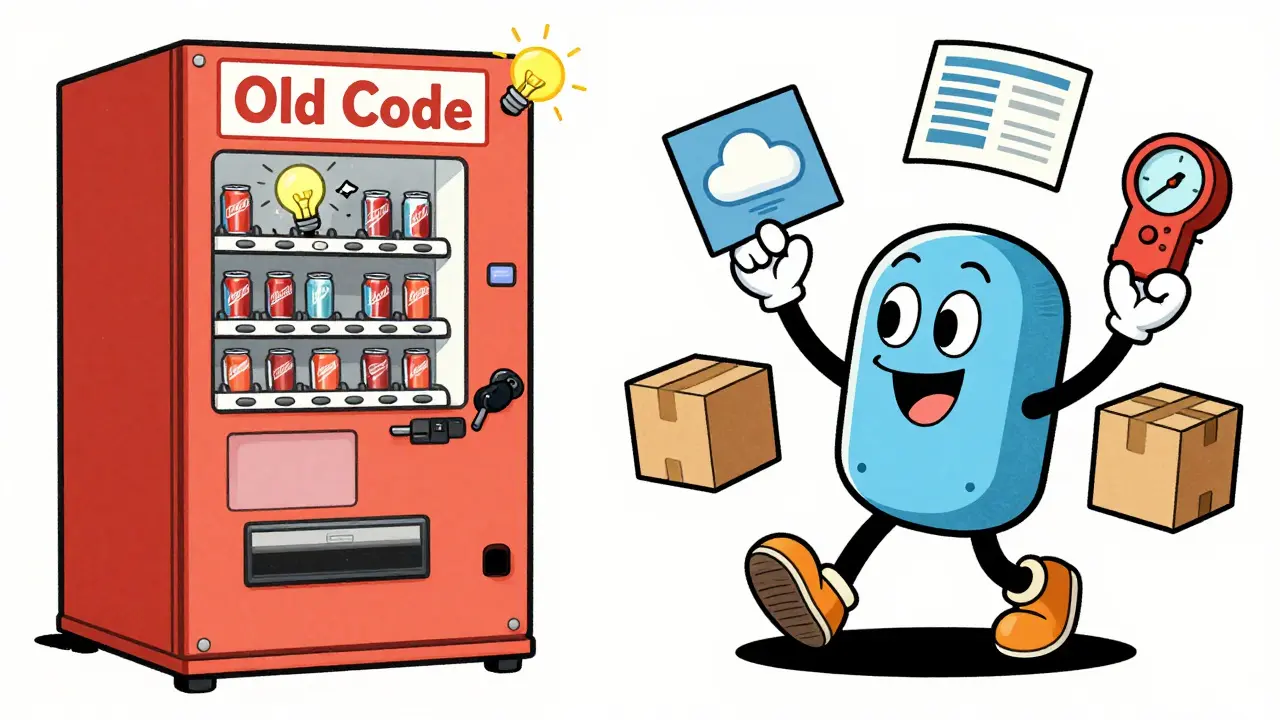
We used to think of smart contracts as simple vending machines: you put in money, you get out soda. If the machine broke, nothing happened until a human fixed it. Today’s intelligent contracts are more like autonomous agents. They process real-world data, predict outcomes, and adjust their behavior accordingly. For businesses tired of manual oversight and static code, this shift is transformative. But it also brings new complexities. Let’s break down how these systems work, why they matter now, and what you need to know before jumping in.
From Static Code to Dynamic Intelligence
To understand where we are, we have to look at where we started. The concept of smart contracts was proposed by computer scientist Nick Szabo back in 1994, but it remained theoretical for two decades. When Ethereum launched in 2015, it finally gave us a practical framework. Those early contracts were powerful because they removed intermediaries, but they were limited by their rigidity. They could only execute actions based on predefined conditions hardcoded into the system.
Traditional smart contracts operate on fixed logic parameters that cannot adapt to changing external variables without manual code updates. If a supply chain contract said "pay when delivery is confirmed," it couldn't account for a hurricane delaying the ship or a port strike increasing costs. It just waited. Or worse, it executed incorrectly if the data input was flawed.
Enter artificial intelligence. By integrating machine learning (ML) models and natural language processing (NLP) into the blockchain layer, developers created contracts that can analyze complex datasets in real time. According to analysis from Codora in late 2024, this integration moved from experimental labs to mainstream adoption across multiple industries by 2025. These advanced contracts maintain the core blockchain benefits-autonomy, transparency, and security-but add adaptive intelligence. They don't just react; they anticipate.
How AI Smart Contracts Actually Work
The technical architecture behind an AI-powered smart contract is significantly more complex than its traditional counterpart. At its heart, the system relies on four key capabilities that distinguish it from standard blockchain code:
- Historical Learning: The contract uses ML models to study past transaction data. Komodo Platform’s March 2025 analysis showed that after processing over 10,000 transaction records, prediction accuracy improved by 15-22%. The more data it sees, the smarter it gets.
- Self-Correction: Unlike static code, these contracts refine their execution logic over time. Case studies from Fetch.AI indicate that error rates dropped by approximately 37% after six months of operation as the model adjusted to real-world nuances.
- Pattern Recognition: The AI identifies trends and anomalies instantly. In insurance applications, Sirion’s 2024 whitepaper documented fraud detection accuracy reaching 98.7%, flagging suspicious claims that human reviewers might miss.
- Dynamic Decision-Making: The contract processes multi-variable conditions in real-time. Instead of waiting for a single trigger, it evaluates weather, market prices, and logistics data simultaneously to choose the best path forward.
This technology stack typically involves TensorFlow or PyTorch for machine learning frameworks that train the predictive models, combined with Solidity for the programming language used to write the blockchain execution logic. Crucially, these contracts connect to external data sources via blockchain oracles. Without reliable oracles, the AI is blind. Performance benchmarks show that handling complex conditional logic is 40-65% faster with AI integration compared to traditional methods when dealing with multi-variable decision trees.
AI vs. Traditional Smart Contracts: A Real-World Comparison
Is an AI-powered contract always better? Not necessarily. The choice depends entirely on your use case. Simple transactions don’t need heavy machinery.
| Feature | Traditional Smart Contract | AI-Powered Smart Contract |
|---|---|---|
| Logic Type | Fixed 'If-Then' Rules | Adaptive Machine Learning Models |
| Best Use Case | Binary Transactions (e.g., token swaps) | Complex Scenarios (e.g., supply chain routing) |
| Processing Speed (Simple) | 0.2 seconds (Ethereum) | Slower due to computation overhead |
| Gas Fees (Avg.) | 0.015 ETH | 0.045 ETH (Q1 2025 Data) |
| Data Requirement | Minimal | Minimum 5,000 historical records |
| Error Reduction | None (Static) | Up to 37% over 6 months |
For a straightforward payment release upon delivery confirmation, traditional contracts excel. They process 98% of such transactions with near-zero latency. However, when variables multiply, AI shines. Take Maersk’s 2024 supply chain pilot using Fetch.AI. The system dynamically rerouted shipments based on weather patterns, port congestion, and fuel prices. The result? Logistics costs dropped by 22.4%. A traditional contract couldn't have made those nuanced calls.
But there’s a trade-off. Computational costs are higher. Gas fees on Ethereum averaged 0.045 ETH for AI contracts versus 0.015 ETH for traditional ones in early 2025. You also need significant training data. Trying to run an AI contract with less than 5,000 historical transactions often leads to poor performance. The model needs depth to learn effectively.
Industry Adoption and Real-World Results
The hype around AI smart contracts has turned into tangible results in several sectors. Financial services lead the pack, accounting for 41% of enterprise implementations, followed by supply chain and logistics at 29%. Insurance follows closely at 18%.
A standout example comes from AXA’s insurance division. They implemented AI-powered contracts for flight delay compensation. Previously, processing a claim took 14 days of manual review. With the new system, eligibility determination happens in 47 minutes with 99.2% accuracy. Customers get paid almost instantly, and AXA reduces administrative overhead drastically.
However, not every story ends well. A major European bank suffered a $1.2 million loss in Q4 2024 when an AI model misinterpreted market volatility data. The Financial Conduct Authority’s incident report highlighted how the model failed to distinguish between normal fluctuation and a crash signal, triggering erroneous transactions. This underscores a critical point: AI is only as good as its data and its safeguards.
User feedback reflects this duality. On Gartner Peer Insights, enterprise users rated AI smart contracts 4.2 out of 5 stars. Seventy-eight percent cited improved decision-making in complex scenarios as the primary benefit. Yet, 63% complained about high initial setup complexity. Data quality remains the biggest hurdle, with 87% of technical support threads in the Fetch.AI community revolving around issues caused by incomplete or inconsistent historical data.
Challenges: The Black Box Problem and Costs
If you’re considering implementing these contracts, you need to be aware of the risks. The most significant concern is the "black box problem." Dr. James Lovejoy warned in IEEE Spectrum about how AI decision-making processes can become unexplainable even to developers. In regulated industries like finance or healthcare, this creates legal liability. If a contract denies a loan or rejects a claim, regulators demand to know why. An opaque neural network doesn't provide a clear audit trail.
The Ethereum Foundation’s CTO, Danny Ryan, noted in March 2025 that current implementations still face the oracle problem at scale. AI models introduce new attack vectors. If bad actors manipulate the data fed into the oracle, the AI makes bad decisions autonomously. Novel cryptographic solutions are being developed, but they aren't fully mature yet.
Cost is another barrier. Beyond higher gas fees, the implementation requires specialized talent. ConsenSys Academy data shows developers need 300-400 hours of additional training beyond standard blockchain skills. A typical team includes one blockchain architect, two AI specialists, and one domain expert. For smaller companies, this resource requirement is prohibitive.

Implementation Roadmap for Businesses
Getting started with AI-powered smart contracts isn't a weekend project. It’s a structured journey that typically takes four to five months for enterprise implementations. Here’s what the process looks like based on IBM’s 2025 implementation guide:
- Data Preparation (8-12 weeks): Clean and aggregate your historical data. You need at least 5,000 relevant records. Garbage in means garbage out. Ensure data silos are integrated so the AI has a holistic view.
- Model Training (4-6 weeks): Train your machine learning models using TensorFlow or PyTorch. Test for bias and accuracy. Aim for incremental improvements up to 50,000+ records for optimal performance.
- Blockchain Integration (2-3 weeks): Write the Solidity code that interacts with the AI model. Integrate with oracles like Chainlink to fetch real-time data securely.
- Testing and Deployment (3-5 weeks): Run simulations. Stress-test the contract against edge cases. Deploy to a testnet first, then mainnet.
Hybrid architectures are gaining traction to mitigate risks. Many companies use AI for complex decision points while relying on traditional smart contracts for final execution. This balances flexibility with certainty. Tools like Chainlink’s AI oracle framework help reduce gas costs by 35% through off-chain model processing, making the solution more viable for budget-conscious teams.
Future Outlook: Where Is This Heading?
The trajectory for AI-powered smart contracts is steep. Gartner positioned them at the "Peak of Inflated Expectations" in their 2025 Hype Cycle, predicting mainstream adoption between 2028 and 2030. Forrester projects that 47% of enterprise blockchain implementations will incorporate AI elements by 2026, up from just 12% in 2024.
Several developments are accelerating this growth. Ethereum’s Shanghai upgrade in March 2025 reduced gas costs for complex computations by 28%. Chainlink launched its Decentralized Oracle Network for AI models in January 2025, addressing data reliability concerns. NVIDIA announced the "Blockchain AI Inference Engine" GPU architecture in May 2025, providing specialized hardware for faster processing.
Regulatory frameworks are catching up too. The EU’s updated MiCA framework, effective January 1, 2025, specifically addresses AI in smart contracts, requiring "sufficient explainability mechanisms" for financial markets. ISO/IEC JTC 1 initiated work on standard 23091-7 in February 2025 to verify AI models. These steps aim to solve the black box problem and build trust.
By 2030, Forrester predicts AI smart contracts will handle 40% of global commercial transactions. The MIT Digital Currency Initiative goes further, projecting 85% of complex business agreements will incorporate AI by 2035. While the Bank for International Settlements warns of systemic risks like financial contagion from autonomous errors, the consensus is clear: this is an inevitable evolution. The question isn't if you'll adopt it, but how prepared you'll be when it becomes standard.
What is the minimum data requirement for an AI smart contract?
You need a minimum of 5,000 historical transaction records for basic functionality. However, performance improves incrementally as you add more data, with optimal results seen at 50,000+ records. Insufficient data leads to poor predictions and higher error rates.
Are AI-powered smart contracts more expensive than traditional ones?
Yes. Due to the computational intensity of running machine learning models on-chain or via oracles, gas fees are higher. In Q1 2025, average gas fees were 0.045 ETH for AI contracts compared to 0.015 ETH for traditional contracts on Ethereum. Off-chain processing tools can help mitigate these costs.
What is the "black box problem" in AI contracts?
The black box problem refers to the lack of transparency in AI decision-making. Deep learning models often cannot explain why they made a specific decision. This creates legal and regulatory challenges, especially in industries like finance and insurance where audit trails are mandatory.
Which industries are adopting AI smart contracts fastest?
Financial services lead with 41% of implementations, followed by supply chain and logistics at 29%, and insurance at 18%. These sectors benefit most from the ability to process complex, multi-variable data in real-time.
Do I need to hire AI specialists to implement these contracts?
Yes. Implementation requires a specialized team. A typical setup includes one blockchain architect, two AI/ML specialists, and one domain expert. Developers also need 300-400 hours of additional training beyond standard blockchain development skills.