
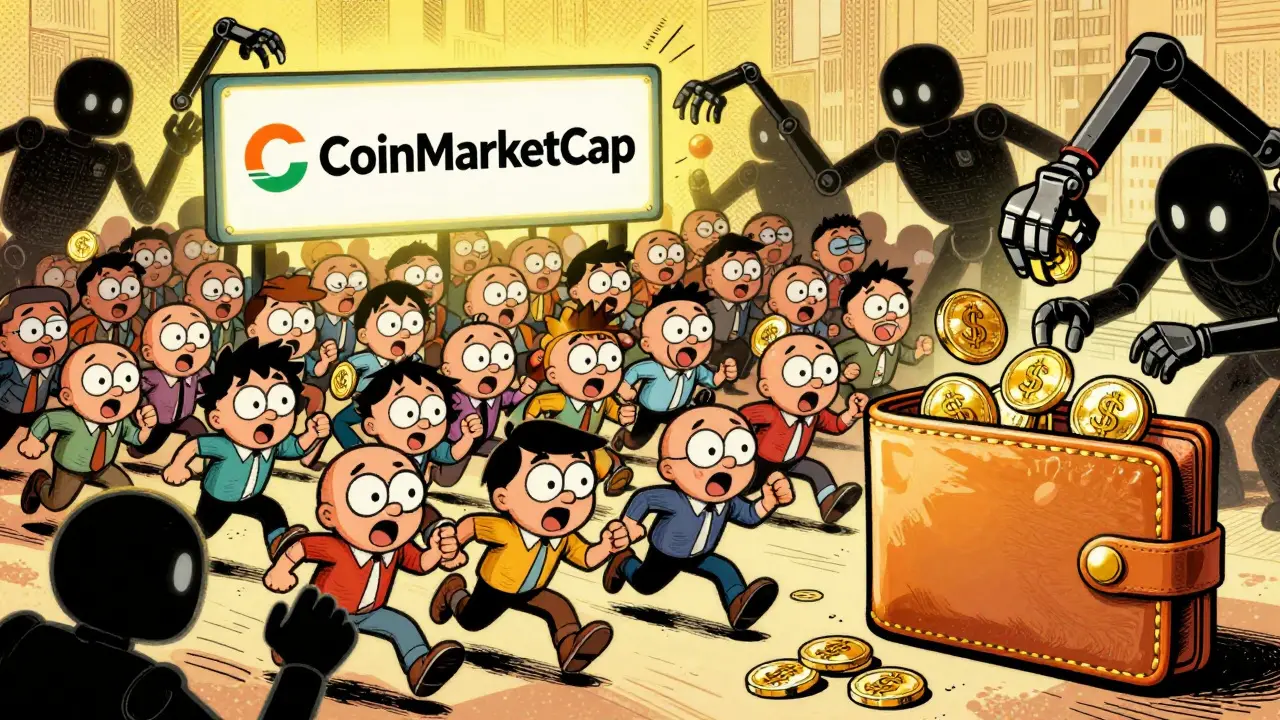
The 2CRZ airdrop by 2crazyNFT on CoinMarketCap was supposed to be a free way to get in on a new NFT platform. Thousands of people signed up, thinking they were getting a shot at early access to a project that promised to change how gamers interact with NFTs. But what actually happened? And why does it matter for anyone still chasing free crypto tokens?
What Was the 2crazyNFT (2CRZ) Airdrop?
2crazyNFT positioned itself as more than just another NFT marketplace. It claimed to be an eSports NFT platform where players could compete against real pro gamers using digital assets tied to real performance data. The native token, 2CRZ, was meant to power everything: buying NFTs, entering tournaments, and claiming rewards. The maximum supply was set at 500 million tokens, with nearly 498 million already in circulation and about 153 million actively traded on exchanges. The CoinMarketCap airdrop was promoted as a way to spread awareness. Users were told to create a CoinMarketCap account, verify their email, follow 2crazyNFT on Twitter, join their Discord, and complete a few simple tasks. In return, they’d receive a portion of 2CRZ tokens - free, no purchase needed. It sounded like a lottery ticket. And for many, it was.How CoinMarketCap Airdrops Are Supposed to Work
CoinMarketCap has long been one of the most trusted sources for crypto data. Its airdrop page used to be a gateway for new projects to reach millions of users. The process was straightforward:- Create a CoinMarketCap account
- Go to the Airdrops section
- Click on an active campaign
- Complete the required tasks (follow, like, share, join Discord)
- Wait for distribution
The SaTT Airdrop Scandal and What It Revealed
In December 2022, the SaTT token airdrop exposed a dark flaw in CoinMarketCap’s system. The campaign promised to distribute 4,000 SATT tokens to 25,000 wallets - roughly $6.30 per wallet at the time. Instead, 84% of all distributed tokens ended up in just 21 wallets. That’s not luck. That’s manipulation. How? The exploiters used bots to create thousands of fake CoinMarketCap accounts, complete the tasks, and then automatically forward every token they received to a single master wallet. Once the airdrop was done, those 21 wallets sold everything at once, crashing the SATT price by 70% in under a week. The damage wasn’t just financial. It shattered trust. Users who followed the rules got nothing. The people who exploited the system made hundreds of thousands of dollars. CoinMarketCap never fully explained how this happened or what changes they made afterward.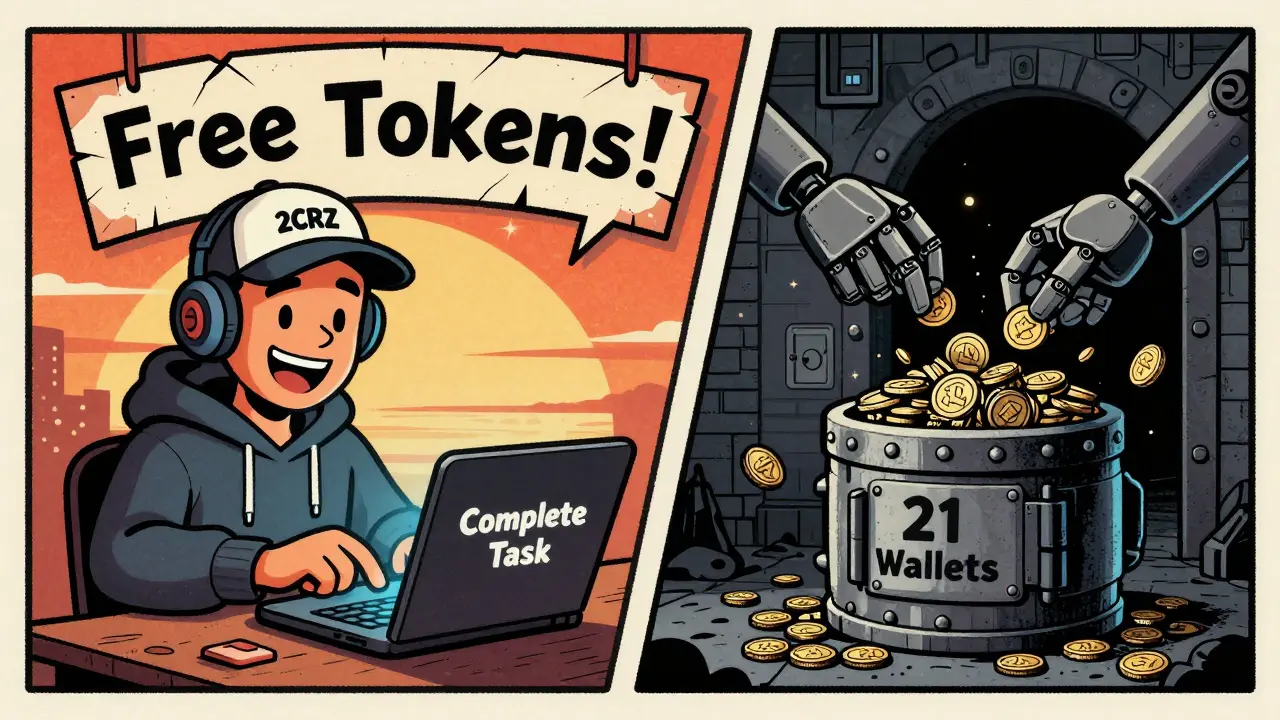
Did the 2CRZ Airdrop Suffer the Same Fate?
There’s no public data showing exactly how many wallets received 2CRZ tokens from the CoinMarketCap campaign. No official list of winners. No breakdown of distribution. The YouTube video titled “2crazyNFT Airdrop l CoinMarketCap free Airdrop” confirms the campaign happened - but that’s it. What we do know: CoinMarketCap’s airdrop page now shows zero current or upcoming airdrops. The “Previous airdrops” section just spins with loading animations. That’s not a glitch. It’s a signal. Given the SaTT scandal and the complete lack of transparency around 2CRZ’s distribution, it’s highly likely the same pattern occurred. The 2crazyNFT team may have intended to reward thousands. But if even 10% of the tokens went to a handful of exploiters - as happened with SaTT - then the vast majority of regular users got nothing. And here’s the kicker: 2CRZ’s price has remained stagnant since the campaign. No major exchange listings. No new partnerships announced. No clear roadmap updates. The project didn’t explode. It faded.Why You Should Be Skeptical of “Free” Airdrops
Airdrops still sound appealing. Free money. No risk. Just follow a few links. But here’s what no one tells you:- Most airdrops are marketing stunts - not investments.
- Token value is rarely tied to real utility. It’s tied to hype.
- CoinMarketCap doesn’t vet projects. They just list them.
- The system is still wide open to bot attacks.
- If you didn’t get airdropped, you probably never had a chance.
What Happened to 2CRZ After the Airdrop?
The 2crazyNFT team never released a clear update post-airdrop. No announcement about how many wallets actually received tokens. No breakdown of how many were real users versus bots. No plan to fix the trust issue. The token still trades on a few small exchanges, but volume is low. The website hasn’t been updated in months. The Discord server has gone quiet. The Twitter account posts occasional memes but no real progress. This isn’t uncommon. Many projects use airdrops as a one-time splash. They get attention, then vanish. The 2CRZ token is now just another ghost in the crypto graveyard.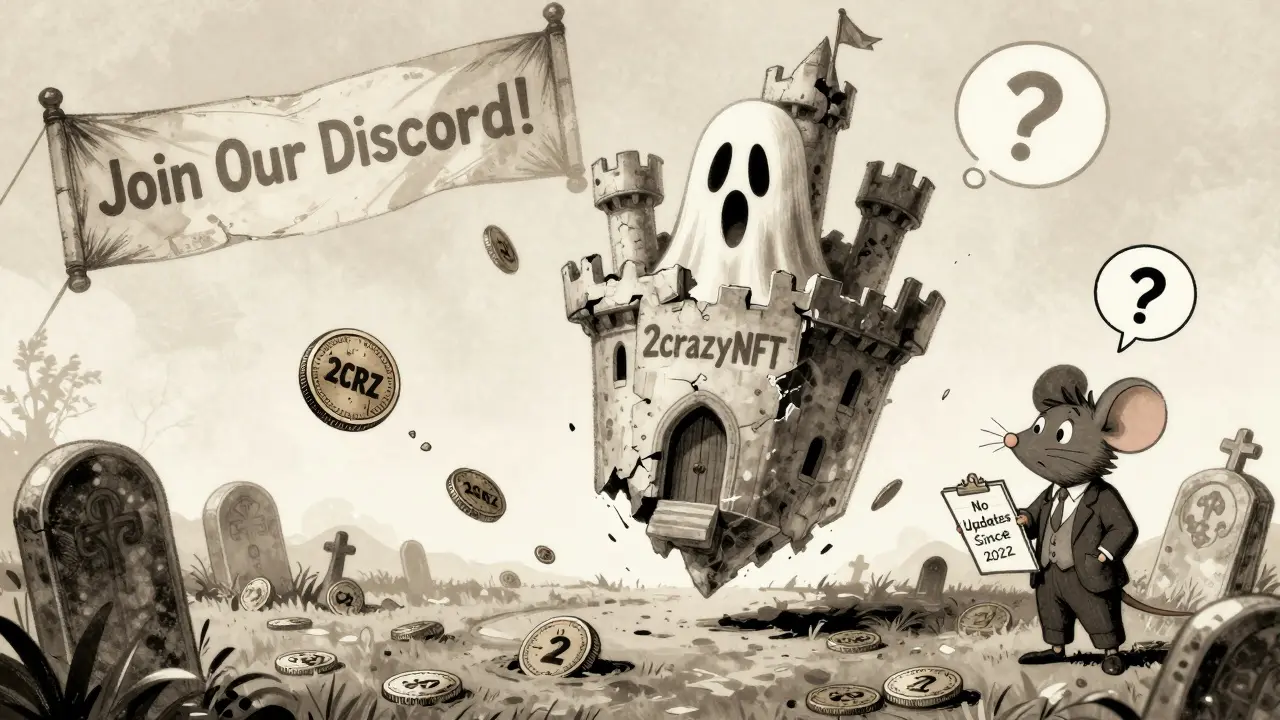
What You Can Learn From This
If you’re still thinking about joining the next CoinMarketCap airdrop, ask yourself:- Do I know who’s behind this project? (Not just a whitepaper with buzzwords)
- Is there real product development happening? Or just social media posts?
- Has the team ever shared transparent data about past distributions?
- Is CoinMarketCap even running active airdrops anymore?
Is There Still Hope for 2CRZ?
Technically, yes. The token still exists. The blockchain still records transactions. But without transparency, community trust, or active development, it’s just a number on a chart. If 2crazyNFT wanted to rebuild, they’d need to:- Release a full audit of the airdrop distribution
- Refund or reissue tokens to genuine users
- Launch real gameplay features, not just NFTs
- Partner with actual eSports leagues, not just influencers
What Should You Do Now?
Stop chasing free tokens on CoinMarketCap. The system is broken. The incentives are misaligned. The platforms don’t care if you win - they care if the project pays them. If you want to get involved in a real NFT or crypto project:- Look for teams with public GitHub activity
- Check if they’ve shipped working code, not just a website
- Join their Discord and ask hard questions
- Look for audits from reputable firms like CertiK or Hacken
- Wait for real utility - not just promises
Was the 2CRZ airdrop on CoinMarketCap real?
Yes, the 2crazyNFT (2CRZ) airdrop did take place. Evidence includes a YouTube video titled "2crazyNFT Airdrop l CoinMarketCap free Airdrop" and listings on CoinMarketCap. However, no official data was released about how many users participated, how many tokens were distributed, or who received them. This lack of transparency raises serious concerns about whether the distribution was manipulated.
Why did CoinMarketCap stop showing airdrops?
CoinMarketCap stopped listing active airdrops after the SaTT token scandal in December 2022, where 84% of distributed tokens went to just 21 wallets. The platform was exploited using bots to create fake accounts and siphon rewards. CoinMarketCap never publicly explained the fix, but its airdrop page now shows zero current or upcoming campaigns, suggesting a pause or permanent shutdown of the program.
Did anyone profit from the 2CRZ airdrop?
It’s likely that a small number of users - possibly using bots - received the majority of 2CRZ tokens. Without public distribution data, we can’t confirm exact numbers. But based on patterns from similar airdrops like SaTT, it’s probable that 10-20 wallets received the bulk of the supply, while thousands of regular users got nothing. The 2CRZ token price has not moved significantly since the campaign, suggesting no major market impact.
Is 2CRZ still tradable today?
Yes, 2CRZ is still listed on a few smaller decentralized exchanges, but trading volume is extremely low. There are no major exchange listings, no new partnerships announced, and no updates from the 2crazyNFT team since the airdrop. The project appears inactive, and the token has lost nearly all momentum.
Should I join future CoinMarketCap airdrops?
No, not unless CoinMarketCap proves it has fixed its security flaws. The platform has no public track record of preventing bot exploitation. Projects using it for airdrops are essentially betting on users getting scammed. Instead, focus on projects with transparent development, active code commits, and verified audits. Real value comes from building - not from clicking links.
Cerissa Kimball
March 9, 2026 AT 03:34Basil Bacor
March 10, 2026 AT 13:13Ethan Grace
March 11, 2026 AT 22:17Jamie Hoyle
March 13, 2026 AT 00:55Brian T
March 13, 2026 AT 11:39Nash Tree Service
March 15, 2026 AT 08:48jack carr
March 16, 2026 AT 05:24Eva Gupta
March 17, 2026 AT 11:31Nancy Jewer
March 18, 2026 AT 08:00Ken Kemp
March 18, 2026 AT 20:42Julie Potter
March 20, 2026 AT 07:42nalini jeyapalan
March 20, 2026 AT 22:52Christina Young
March 22, 2026 AT 07:30Drago Fila
March 23, 2026 AT 04:57Steven Lefebvre
March 23, 2026 AT 14:17Leah Dallaire
March 24, 2026 AT 07:24prasanna tripathy
March 25, 2026 AT 03:22James Burke
March 27, 2026 AT 03:22Jonathan Chretien
March 27, 2026 AT 08:24Bill Pommier
March 27, 2026 AT 17:56Olivia Parsons
March 28, 2026 AT 10:15Nick Greening
March 30, 2026 AT 03:02Issack Vaid
March 31, 2026 AT 15:26Shawn Warren
March 31, 2026 AT 15:30Jackson Dambz
April 1, 2026 AT 06:23Megan Lutz
April 2, 2026 AT 15:14